We're looking at the wrong things. Everyone obsessively tracks the latest software updates, public benchmarks, and shiny interfaces. You see a flashier chatbot or a faster text-to-video generator, and you think you're witnessing the peak of the revolution.
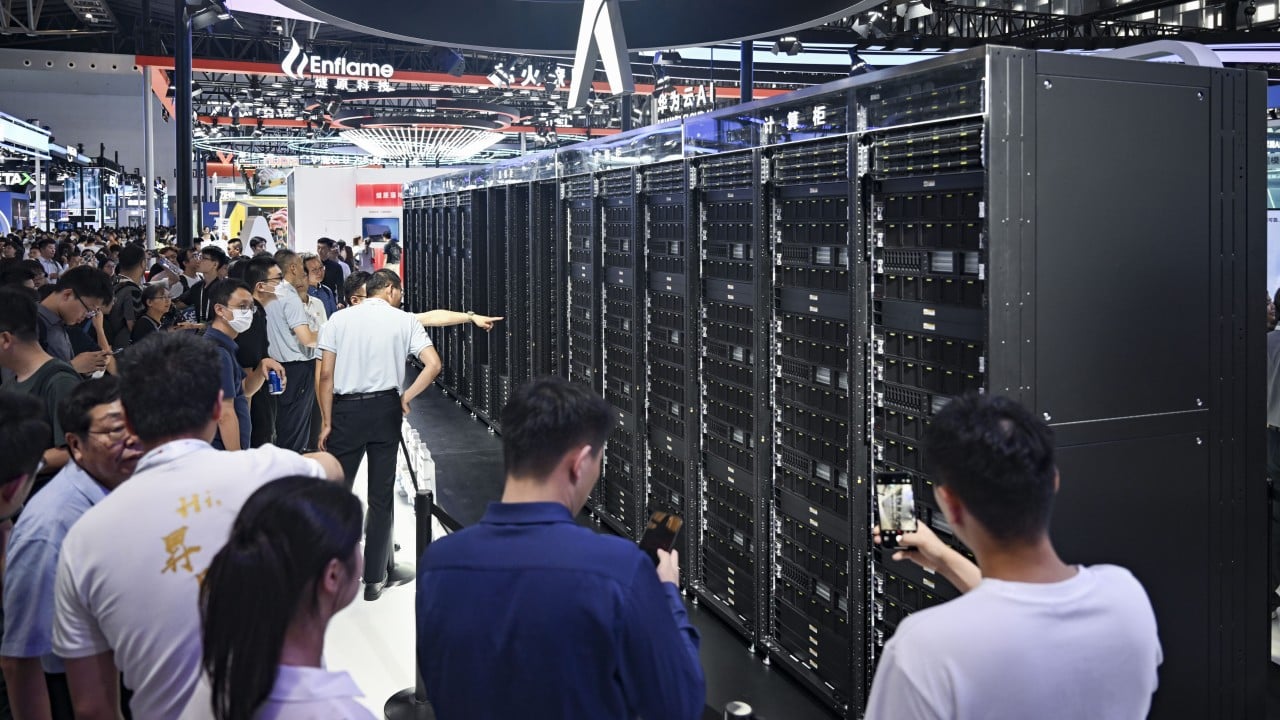
It's an illusion. The actual destiny of artificial intelligence isn't being shaped by clever code or smooth conversation windows. It's a game of raw hardware, power grids, and physical data centers. Just like the global power shifts of the previous century depended on coal mines and oil pipelines, this era belongs to whoever controls the infrastructure. Software can be copied overnight. A 100-gigawatt nuclear reactor hooked directly to a million-cluster server farm cannot.
The hype cycle tricks us into treating this like the mobile app boom of the 2010s. Back then, a couple of smart engineers in a garage could write code that shook the world. That era is dead. Today, building frontier models requires capital expenditures that resemble national defense budgets. We need to stop talking about algorithms and start talking about concrete, copper, and electricity.
The Physical Reality of Virtual Intelligence
We tend to think of data as weightless. The cloud sounds like a soft, fluffy place where information floats effortlessly. In reality, the cloud is a massive concrete fortress packed with screaming server fans, cooling pipes, and high-voltage transformers.
When you type a prompt into an advanced system, you aren't just activating a smart piece of software. You're triggering a chain reaction that draws immediate physical energy. A standard search query uses a fraction of a watt. A complex query sent to a multimodal neural network can require ten times that amount. Multiply that by billions of daily users, and you run into a hard wall of physical limits.
+--------------------------------------------------------+
|               THE REAL AI POWER TRAIN                  |
+--------------------------------------------------------+
|  [Power Grid / Nuclear / Hydro]                        |
|             │                                          |
|             ▼                                          |
|  [Substation & High-Voltage Lines]                     |
|             │                                          |
|             ▼                                          |
|  [Data Center Hyper-Scale Infrastructure]              |
|             │                                          |
|             ▼                                          |
|  [Cooling Systems & Liquid Chillers]                   |
|             │                                          |
|             ▼                                          |
|  [Silicon Hardware / Custom Processors]                |
|             │                                          |
|             ▼                                          |
|  [The Finished Product: Chatbots & Software Apps]     |
+--------------------------------------------------------+
The bottlenecks are everywhere. Tech giants are discovering that they can't scale their systems simply by hiring better mathematicians. They're being held back because local utility companies can't deliver enough megawatts to their build sites. We've entered an era where access to a stable energy grid is a bigger competitive advantage than owning a proprietary training methodology.
Why Software Is Becoming a Commodity
Let's look at what happened over the last year. Open-source models caught up to proprietary systems at an unbelievable pace. Whenever a company releases a closed model behind a paywall, a community-driven or heavily funded open alternative appears within months, sometimes weeks.
The underlying math behind these systems is largely public. Transformer architectures and neural network theories are taught in universities worldwide. When the code itself becomes accessible to everyone, the code ceases to be the moat.
The true differentiator is the ability to run these massive systems at scale. That requires custom chips and the physical footprints to house them.
- Chip Hoarding: The largest tech firms aren't just buying hardware for current needs; they're buying out entire multi-year production lines from semiconductor foundries. If you don't have the silicon, your brilliant algorithmic breakthrough sits on a hard drive doing nothing.
- Data Center Real Estate: Finding land with the right zoning, access to deep water for cooling, and proximity to fiber-optic trunk lines has become a cutthroat corporate race.
- Sovereign Clouds: Nations are realizing that letting foreign entities hold their data is a massive security risk. They don't just want local software; they want physical servers sitting inside their national borders.
The Energy Crunch is Already Here
The numbers are staggering. Large data centers can consume as much electricity as a small city. Tech companies are making unprecedented deals with energy providers to secure their supply. We are seeing tech corporations actively buying up output from nuclear power plants and investing directly in geothermal start-ups.
This isn't an environmental public relations campaign. It's survival. If a company runs out of power, its development roadmap halts.
This reality changes the geopolitical map. Countries with abundant, cheap, and reliable energy infrastructure are becoming the new tech hubs. It doesn't matter if a nation has the best software developers if its power grid suffers from routine brownouts. Physical reliability is the absolute prerequisite for computational dominance.
What to Track Next
If you want to know who is winning the tech race, stop reading software release notes. Start looking at infrastructure investments and policy shifts.
- Energy Partnerships: Pay close attention to which tech firms are securing long-term, dedicated power contracts. The closer a company is to owning its energy supply, the more insulated it is from grid capacity caps.
- Supply Chain Vertical Integration: Watch the companies that are building their own power substations, designing their own cooling loops, and co-developing specialized hardware.
- Sovereign Infrastructure Budgets: Monitor how governments in regions like Asia, Europe, and the Middle East allocate capital for physical data infrastructure rather than just software grants.
The future will be won by the builders, the grid operators, and the industrial giants who can turn raw electricity into organized thought. The algorithms are just the language the machines speak; the physical infrastructure is the machine itself.