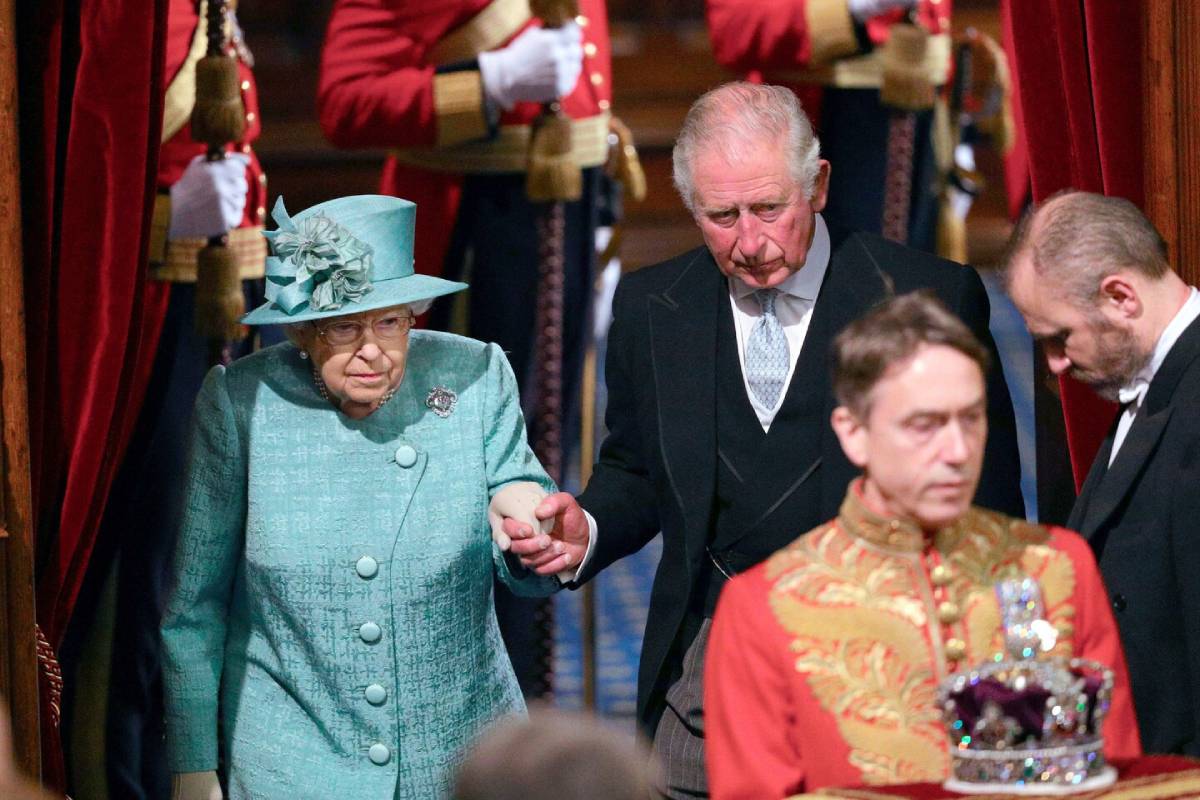
Think the British royal family lives entirely off the hard-earned money of UK taxpayers? You're not alone. It's one of those things everyone just assumes is true. But if you look at how the Windsor machine actually funds its sprawling operation, the reality is far more complicated—and honestly, a lot more like a corporate mega-conglomerate than a simple government handout.
The inner workings of royal wealth aren't just about a single check cut by parliament. It’s an intricate web of state funding, massive centuries-old property portfolios, and highly guarded private investments. King Charles III and Prince William run what is essentially a multi-billion-pound family business. Understanding where the money comes from means busting a few massive myths.
The Sovereign Grant is not a blank check
Let’s start with the most talked-about piece of the pie. The Sovereign Grant is the official annual payment from the UK government to the monarch. For the financial year 2026/27, this figure hit £137.9 million. That sounds like a jaw-dropping amount of public cash, but it isn't quite what it seems.
The grant doesn't go into King Charles’s personal bank account for him to spend on luxury cars or expensive hobbies. It’s strictly earmarked for official duties. We're talking about funding massive international tours, paying the salaries of hundreds of royal household staff, and maintaining historic properties like Buckingham Palace and Windsor Castle. In fact, a huge chunk of recent grants—around £40.3 million in a single year—went directly into a massive, ten-year emergency renovation project to keep Buckingham Palace from literally falling apart.
Here is the kicker. This money doesn’t actually drain standard tax revenues. It is directly tied to the profits of the Crown Estate.
What exactly is the Crown Estate
The Crown Estate is a massive portfolio of land and property across the UK. It includes prime retail space in central London, vast swaths of rural farmland, and almost the entirety of the UK’s seabed. It’s currently valued at well over £15 billion.
The Legal Twist
The monarch technically owns the Crown Estate by right of the Crown, but it isn't their private property. King Charles can't just sell off Regent Street to a foreign investor.
Since 1760, the reigning monarch has handed over all profits from this estate to the British government. In return, the government gives back a percentage of those profits to the royals a couple of years later as the Sovereign Grant.
Recently, that percentage sat at 12%. Profits absolutely skyrocketed because the Crown Estate started raking in billions by leasing out seabed rights to offshore wind farm developers. Because of this massive windfall, the government is actually planning a major reset. Between 2027 and 2032, the Sovereign Grant will be slashed down to a flat £99.9 million annually because the Buckingham Palace repairs are wrapping up and wind farm revenues are stabilizing.
The Duchies are the real cash cows
If the Sovereign Grant covers the public day job, how do the royals fund their actual private lives? Enter the duchies. These are two completely distinct, highly lucrative land and investment portfolios established in the Middle Ages. They operate exactly like modern real estate investment trusts.
The Duchy of Lancaster
This belongs to whoever sits on the throne. Established back in 1399, it covers over 41,000 acres of land, including lucrative commercial properties right in the middle of London.
In the 2025/26 financial year, the Duchy of Lancaster handed King Charles a net revenue surplus of £25.2 million. This money lands in what is historically called the Privy Purse. The King uses this private stream to pay for things the Sovereign Grant won't touch. That includes funding the private lifestyles of "working royals" who don't get their own direct funding but spend their lives cutting ribbons and attending charity galas—think Princess Anne or Prince Edward.
The Duchy of Cornwall
When Charles became King, Prince William inherited the Duchy of Cornwall. Established in 1337 to provide an income for the heir to the throne, this estate is even bigger. It spans more than 128,000 acres across England and Wales.
William’s net surplus from Cornwall for 2025/26 came out to £21.55 million. He uses this to fund his own family's public and private lives, as well as his ongoing charitable initiatives.
Neither Charles nor William can sell off the core assets of these duchies for a quick buck. They’re effectively trustees. They get to keep the annual profits, but they have to pass the capital down intact to the next generation.
Shrouded in secrecy, the private wealth
Then there is the money nobody outside a tiny circle ever really sees. Beyond the public grants and the semi-public duchies, the King holds a massive private fortune.
He personally owns two massive, historic estates:
- Balmoral Castle in Scotland
- Sandringham House in Norfolk
Unlike Buckingham Palace, these belong to Charles the individual, not Charles the King. They were passed down from Queen Elizabeth II. He also commands a highly confidential personal investment portfolio filled with blue-chip stocks and rare art. Because royal wills are traditionally sealed and shielded from the public eye after death, the true valuation of this personal hoard is impossible to pin down. It easily runs into the hundreds of millions.
The tax myth that drives critics wild
If you want to start a fiery debate in a British pub, bring up royal taxes.
By law, the monarch is completely exempt from paying income tax, capital gains tax, or inheritance tax. When Queen Elizabeth II passed away, King Charles inherited her massive private fortune completely tax-free—an exemption that saves the family tens of millions that any normal British citizen would have to pay.
However, public pressure changed the game in the early 1990s. Today, King Charles and Prince William voluntarily pay standard income tax on the profits they pull from the Duchy of Lancaster and the Duchy of Cornwall, as well as their personal investments. Recent financial disclosures showed King Charles paying over £30 million in total taxes over a multi-year period, landing him squarely among the UK's top taxpayers. But remember, it’s entirely voluntary. They don't pay a single penny of tax on the Sovereign Grant.
The massive hidden bills taxpayers still foot
Royal defenders always point out that the family brings in massive tourism revenue and that the Sovereign Grant is funded by the Crown Estate profits anyway. But critics point to a massive loophole in the public ledger: security.
The Sovereign Grant explicitly does not cover the cost of military protection or specialized police security. The Metropolitan Police and local constabularies handle that heavy lifting. The exact cost of keeping the royal family safe at home and abroad is kept strictly classified for national security reasons. Security experts generally estimate the real cost sits somewhere between £100 million and £150 million every single year. That bill goes straight to the British taxpayer.
What to do next if you're tracking royal money
Royal finances are constantly shifting, especially with the government rewriting the rules for the upcoming 2027-2032 fiscal cycle. If you want to keep tabs on the real data instead of relying on internet rumors, go straight to the official sources.
- Read the official breakdowns: Every summer, the Royal Household publishes its detailed Sovereign Grant Annual Report right on the official Royal Family Website. It outlines exactly how much was spent on travel, staff, and palace upkeep.
- Check the commercial performance: If you're interested in the real estate side, both the Duchy of Lancaster and the Duchy of Cornwall publish independent financial statements every year detailing their property yields and asset management strategies.