Nearly one billion people across Africa still cook their daily meals over open fires or charcoal burners. That reality drives an estimated 850,000 premature deaths every year from toxic household air pollution while chewing away at local forests. The technology to fix this exists, but stoves don't buy themselves. Enter carbon credit financing, the high-stakes financial mechanism currently reshaping the continent's entire clean cooking sector.
You can't talk about modern energy transitions in Africa without looking at how bills get paid. For decades, clean cooking struggled to attract venture capital or major infrastructure funds. Big energy projects always stole the spotlight. Now, carbon markets are changing the math by turning future emissions reductions into upfront cash subsidies.
How the Stovetop Subsidy Model Actually Works
The basic economic engine is straightforward. Private investors provide upfront capital to manufacturers so they can mass-produce efficient biomass stoves or subsidize electric induction units. Once those stoves are deployed in homes and displace charcoal or firewood, they generate verified emissions reductions. Investors later recover their returns through the sale of those carbon credits.
The price drop for everyday consumers is massive. A high-efficiency biomass stove that costs forty dollars to manufacture can land in a household's hands for as little as five dollars after carbon backing. In places like Kenya, companies such as BURN have used this exact structure to scale distribution across millions of homes in multiple countries.
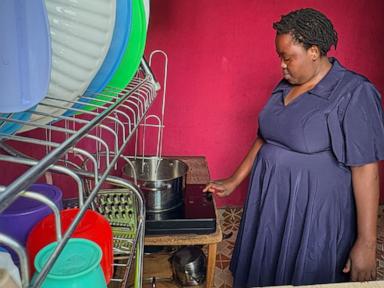
Families aren't switching because they care about carbon accounting spreadsheets. They are switching because the math in their kitchens makes sense. Mary Kavutha, a small business owner in Kiambu, Kenya, abandoned charcoal for an electric induction cooker. She spends less than a dollar daily on electricity tokens for multiple meals, down from the higher costs and heavy smoke she dealt with before. When the product is cheaper and faster, adoption takes care of itself.
The Policy Push and Fresh Capital
Political momentum is finally catching up with commercial reality. The International Energy Agency reported that Africa attracted roughly $900 million in fresh financial commitments for clean cooking. More than thirty governments representing about 80 percent of Africans lacking clean cooking access have rolled out over 120 new policies since the Paris climate agreement.
That capital helps build out fuel storage, bottling facilities, and supply chains that go far beyond handing out a single stove. You cannot scale modern cooking fuels without a robust logistics network behind them.
Why Experts Urge Caution
Despite the rapid growth, relying entirely on carbon finance carries serious structural risks.
Cash flow timing creates an immediate bottleneck. Companies must manufacture, ship, and distribute stoves long before a single ton of carbon is saved or monetized. That leaves businesses vulnerable to market shocks and capital crunches.
Regulatory uncertainty can kill operations overnight. When companies face sudden disputes over government authorization letters or shifting carbon rights, the fallout is severe. Regulatory hurdles and shifting compliance standards remind everyone that carbon markets are fickle foundations.
George Mwaniki, who heads air quality for World Research Institute Africa, points out that carbon revenue should remain a supplementary bridge rather than the absolute bedrock of the transition. If the sector depends solely on carbon markets, growth will stall due to market volatility and delayed payouts. The poorest households need affordable energy access today, not after a lengthy credit issuance cycle clears verification.
The Road Ahead
Carbon credit financing has successfully cracked open a market that conventional lending ignored for decades. It brings essential equipment within reach of low-income families and aligns climate action with immediate human health benefits.
The real test is whether the model can bridge the gap toward self-sustaining consumer markets before carbon credit integrity questions or regulatory disputes slow the momentum down. For now, it remains the most powerful financial engine driving Africa's clean kitchen revolution.