Sending an angry email to a government official might make you feel better, but it could also bring federal agents to your front door. That is exactly what happened to David Streever, a U.S. citizen from Rochester, New York. Streever decided to vent his frustration directly to the leadership of Immigration and Customs Enforcement. Months later, he found armed agents knocking on his door while he was thousands of miles away.
Now, Streever is firing back with a federal lawsuit. Filed in Washington, D.C., the suit alleges that ICE directly violated his First Amendment rights by treating harsh political speech as a physical threat. It raises a massive question about the line between protected dissent and criminal intimidation. If a citizen cannot use harsh, vitriolic language to criticize a public figure, what is left of the First Amendment?
The Email That Triggered a Federal Investigation
The trouble started in January. Streever was outraged after an immigration officer named Jonathan Ross shot and killed an anti-ICE demonstrator, Renee Good, during a protest in Minneapolis. Looking for answers and wanting to express his disgust, Streever sent a three-paragraph email to Todd Lyons, who was serving as the acting director of ICE at the time.
The email did not mince words. Streever called Lyons a "monstrous human being" and wrote that Lyons would "go down in history as America’s Reinhard Heydrich, the butcher." He added that Lyons would "never know peace" and would "torment yourself until your last day on Earth."
It was angry, deeply insulting, and steeped in historical hyperbole. But was it a threat? Streever and his legal team say absolutely not. There was no mention of physical violence, weapons, or a plan to harm anyone.
The Surprise Visit to Rochester
Fast forward to June. Streever was traveling in Finland, completely unaware that his months-old email had triggered a homeland security response. Two federal officers walked up to his Rochester home and handed his wife an official warning notice. The paperwork explicitly stated that Streever's email was considered a threat against a federal official.
The intimidation tactics did not stop at his doorstep. According to Streever's legal counsel, federal agents later tracked him down and tried to confront him at a hotel in New York City when he returned to the country. Fortunately, hotel staff turned the agents away.
ICE has defended its actions by stating that it investigates all credible threats against its employees and officers, including leadership. Homeland Security Secretary Markwayne Mullin is also named in the lawsuit, though his office has stayed quiet on the matter.
The Growing Pattern of Silencing Online Dissent
Streever is not an isolated case. He is one of at least two upstate New York residents targeted by federal agents in June for online activities critical of ICE.
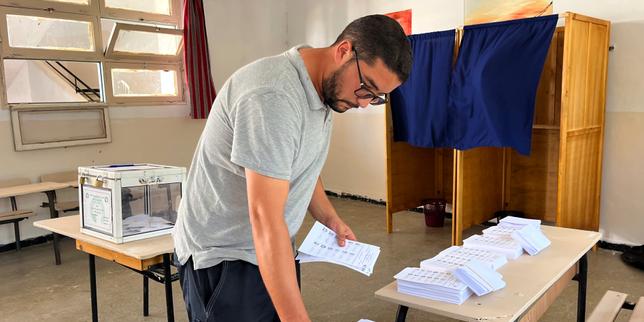
The other resident, Paigelynne Gonyea, worked as a poll worker. Federal agents disrupted her workday, tracking her down at a voting location during New York's primary elections. Gonyea had posted a photo of Officer Jonathan Ross on social media in January with the caption, "I think today is a great day for Jonathan to be indicted."
The Department of Homeland Security took a different stance on Gonyea's case. DHS spokesperson Lauren Bis claimed Gonyea shared Ross's home address online, calling it a federal crime. DHS stated that if you doxx officers, you will be investigated and brought to justice. Gonyea maintains her post was about legal accountability, not doxxing. The New York Attorney General’s Office has stepped in to review the interaction between federal agents and Gonyea at the polling site.
Where the Law Draws the Line on True Threats
The legal battleground here centers on what constitutes a "true threat." The Supreme Court has repeatedly protected offensive, hateful, and emotionally charged political speech.
To lose First Amendment protection, speech must cross a clear line. It has to express a serious intent to commit an act of unlawful violence to a particular individual or group. Hyperbole, even when invoking Nazi war criminals, does not meet that standard.
The Philadelphia-based Foundation for Individual Rights and Expression is representing Streever. His attorney, Adam Steinbaugh, points out that the email was clearly political speech. Saying someone will "never know peace" because of their moral failures is an expression of cosmic justice or psychological guilt, not a promise of a physical ambush.
What This Means For Your Right to Protest
When federal law enforcement labels vitriolic political commentary as a security threat, it creates a dangerous chilling effect. Most regular citizens do not have the time, money, or emotional bandwidth to fight a federal agency in court. If a simple email results in armed agents scaring your family, most people will choose to just keep their mouths shut.
That is exactly why this lawsuit matters. It forces the court to remind federal agencies that public officials are subject to harsh public scrutiny. Protecting free speech means protecting the speech we hate, including the speech that makes powerful people uncomfortable.
If you plan to contact public officials or post about ongoing federal controversies, you need to understand your rights and the current climate.
- Avoid sharing personal data. Never post home addresses, personal phone numbers, or private schedules of federal employees. Even if your intent is pure, agencies will use doxxing allegations to justify an investigation.
- Keep the focus on accountability. Use clear language demanding legal action, indictments, or policy changes rather than ambiguous statements that bad actors could twist into physical threats.
- Know who to call. If federal agents knock on your door regarding your speech, you do not have to answer their questions without an attorney. Document the interaction and reach out to civil liberties organizations like FIRE or the ACLU immediately.
The federal court in Washington, D.C., will now decide whether ICE overstepped its bounds. Given the explicit protections of the First Amendment, the government faces a steep uphill climb to prove an angry email is a federal crime. Streever's pushback ensures that the line between a citizen's anger and a criminal threat remains fiercely protected.