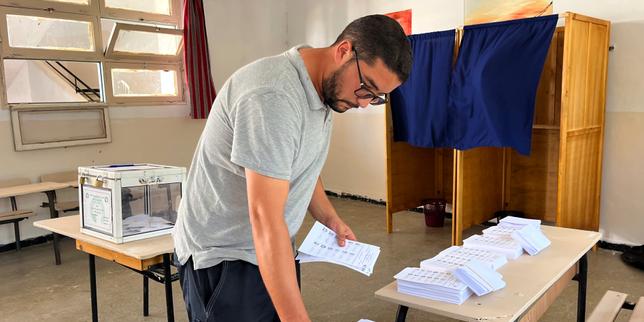
Algeria just held its legislative elections, and almost nobody showed up. On July 2, 2026, the country recorded its lowest voter turnout in history. Only about 21% of registered voters cast a ballot. Think about that for a second. Nearly four out of five citizens decided that staying home was better than participating in a system they no longer trust.
The state media tried to put a positive spin on things. Karim Khalfane, the interim head of the National Independent Electoral Authority (ANIE), brushed it off by saying low turnout happens in old democracies too. But let's be real. This wasn't a normal democratic slowdown. This was a silent, massive rejection of a managed political theater. If you found value in this piece, you might want to look at: this related article.
The Illusion of Choice under Article 200
You can't talk about these elections without looking at how the candidate lists were cleaned up beforehand. Back in April 2026, the government amended the electoral law. They introduced Article 200, which was officially designed to keep "dirty money" out of politics. On paper, it sounds great. Nobody wants corrupt business magnates buying parliament seats.
In practice, it became a massive political filter. For another look on this story, see the latest coverage from Reuters.
The electoral authority barred more than 3,700 prospective candidates from even entering the race. They approved around 10,000. The problem is the wording of Article 200. It's incredibly vague. It gives local officials and intelligence services the power to block anyone suspected of "suspicious activities" or vague ties to past corruption. This didn't just hit small opposition groups. It wiped out incumbent lawmakers from established parties like the National Liberation Front (FLN) and the National Democratic Rally (RND).
When you eliminate that many candidates behind closed doors, you aren't running an election. You're curating a parliament. Voters saw right through it. They realized the choices were already made for them, so they didn't bother opening the ballot box.
Old Faces in a Fragmented Chamber
When the official results came out, the historical ruling party, the FLN, took the top spot again. They grabbed 90 seats out of the 407 available in the National People's Assembly. The RND followed with 73 seats, and El Moustakbal took 59. The main Islamist party, the Movement of Society for Peace (MSP), dropped significantly down to 43 seats.
Even though the FLN won, they don't hold absolute power anymore. The new assembly is deeply fragmented. The government points to this fragmentation as proof of a new pluralism. They want you to think it means power is shared.
Don't buy it.
This fragmentation is calculated. When parliament is split into a dozen tiny factions and independent blocks, it becomes completely toothless. It can't form a unified front against executive overreach. The system ensures that no single political party gains enough momentum to challenge the presidency or demand real accountability. It changes parliament from a legislative body into a simple megaphone for local complaints. The representatives don't even question ministers anymore. They just pass along complaints about water shortages or roads while the executive branch calls all the shots.
Football Heat and Complete Political Apathy
The timing of the election didn't help either. The official campaign started on June 9, right in the middle of a brutal summer heatwave. On top of the blistering weather, the entire country was glued to the 2026 Football World Cup. Candidates held rallies in empty halls because people preferred watching matches or staying in the shade.
But blaming the heat or football is lazy analysis. The real reason for the silence was deep, systemic exhaustion.
Seven years ago, the Hirak protest movement brought millions of Algerians to the streets. They ousted the long-time president Abdelaziz Bouteflika. They demanded a total overhaul of the ruling elite. Today, that energy is gone. The government used a mix of pandemic-era gathering bans and targeted arrests of activists to dismantle the movement. President Abdelmadjid Tebboune secured his second term back in 2024, and the regime has spent the last two years locking down the civic space.
Even some opposition parties that boycotted past elections, like the Socialist Forces Front (FFS), decided to run this time. They fielded 30 lists, arguing that it's better to occupy whatever constitutional space is left than to stay completely silent. They won 12 seats. But their presence couldn't convince ordinary citizens that voting mattered. For the average person in Algiers, Oran, or Constantine, the political class is just playing a game where the house always wins.
Economic Stress over Political Promises
While politicians were giving speeches about institutional stability, regular Algerians were dealing with everyday survival. Earlier this year, during Ramadan, inflation hit hard. Basic food items became expensive, and purchasing power dropped.
When you're struggling to afford groceries, promises of parliamentary reform sound incredibly hollow. People don't care about a 407-seat assembly that has no power over economic policy. Prime Minister Sifi Ghrieb handles the administration, but the real economic choices come straight from the presidency and the military leadership. The legislative branch has essentially been sidelined from the real decision-making loops.
What Happens Next
If you want to understand where Algeria goes from here, stop looking at the parliament building. Look at the economic indicators and the presidential transition timeline.
President Tebboune's term ends in 2029, and by law, he can't run again. The current political lockdown is less about managing the present and more about securing the future transition. The ruling establishment wants a completely predictable, quiet domestic arena before the succession maneuvers begin.
For international observers and investors, this election confirms that Algeria has achieved a superficial stability. There won't be sudden legislative surprises or radical policy shifts from this fragmented parliament. The regime has successfully insulated itself from the ballot box. But by locking the doors to formal political participation, they've also built a pressure cooker. When you give people no peaceful way to influence the system, you don't eliminate discontent. You just hide it until it boils over.
The practical step for anyone analyzing North African stability is to ignore the official pronouncements of electoral success. Track the food subsidy budgets, watch the youth unemployment figures, and monitor how the regime handles the upcoming regional administrative appointments. That's where the real power lies, and that's where the next crisis will start.