Walk down a street in the European capital, and you will stare at a twelve-story glass corporate block standing directly across the street from a sixteenth-century guildhouse. Nobody planned it this way. It happened because Brussels is a city that never stops tearing itself down and building right back up over the rubble.
If you view the Belgian capital as just a bureaucratic maze of EU offices and cold concrete, you are missing the entire point. It is a city fractured by language borders, architectural experiments, and conflicting urban ambitions. That fragmentation is precisely what gives the place its messy, electric character.
The Architectural Chaos Nobody Warns You About
Visitors land expecting a uniform medieval postcard like Bruges or Ghent. Instead, they hit a chaotic collision of styles. You get grand neoclassical boulevards built under King Leopold II smashed right into brutalist office complexes from the 1960s.
Urban planners have a term for what happened here: Brusselization. It means unchecked, chaotic real estate development that completely ignores the existing neighborhood fabric. Entire historical blocks vanished in the mid-twentieth century to make room for highways and concrete towers.
Yet, paradoxically, that destruction left behind fascinating pockets. Because the city was chopped into a thousand distinct pieces, every neighborhood feels like an independent village. You cross a canal or a railway line, and the language flips from French to Dutch, the corner shops change entirely, and the street signs tell a completely different story.
Living Inside a Linguistic Borderline
You cannot understand the streets without understanding the institutional split. Brussels is officially bilingual—French and Dutch—though French dominates the daily rhythm for the vast majority of residents.
This linguistic friction isn't just an administrative footnote. It shapes everything from public schooling to comedy clubs and local politics. It means street names carry a double identity, and public services must navigate two distinct cultural frameworks under a single city sky.
Expats working for the European Commission or NATO tend to live in distinct bubbles around the European Quarter or Ixelles, rarely interacting with working-class districts like Molenbeek or Schaerbeek. This creates parallel worlds within the exact same municipal boundaries. You can spend a week eating tapas in Saint-Gilles, working in a glass tower in the EU district, and drinking lambic beer in Anderlecht without ever feeling like you were in the same city.
Where to Find the Real Soul
Skip the Grand-Place for a moment. Yes, the central square is stunningly ornate, but it is also a tourist trap filled with overpriced waffles and mediocre chocolate shops.
If you want to feel the pulse of the town, head to the Marolles district. This historic working-class neighborhood fought off multiple waves of demolition. Today, it hosts the daily Jeu de Balle flea market, where locals have rummaged through old junk and antiques every single morning since 1873. It is loud, cluttered, and utterly authentic.
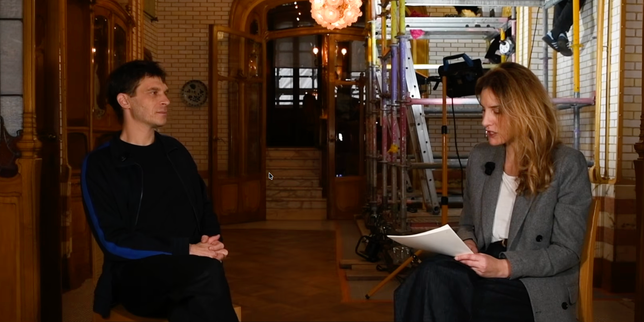
Or walk through the art nouveau townhouses designed by Victor Horta in Saint-Gilles. These structures prove that when architects in this city chose elegance over quick concrete profits, they created some of the most stunning residential design on the continent.
Navigating the Fragmented Capital
If you plan to explore Brussels beyond the tourist brochures, drop the expectation of finding a neat, predictable itinerary.
- Ditch the rigid schedule. The best discoveries happen when you take a wrong turn off a grand boulevard and stumble into a quiet, hidden interior courtyard or a neighborhood square filled with local markets.
- Ride the tram. Skip the underground metro when you can. Taking the surface trams lets you watch the architectural style shift block by block, showing you firsthand how the city changes its skin.
- Talk to the locals. Ask a resident whether they consider themselves French-speaking Bruxellois, Flemish, or international expats, and you will instantly unlock the complex identity debates that define modern Belgium.
Brussels does not hand you its history on a silver platter. It hands it to you in pieces. Pick them up slowly.