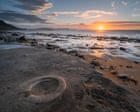
You’re walking along a Dorset beach. You kick a loose rock. Inside, a prehistoric creature, locked away for millions of years, stares back. It’s an ichthyosaur or maybe a rare ammonite. For decades, the UK has treated these finds as little more than beachcombing souvenirs. Now, that lax attitude is costing the country its history.
The recent sale of a massive, privately held collection from the Jurassic Coast to a museum in Abu Dhabi has exposed a glaring hole in British heritage law. While a painting by a minor artist or an antique chair might trigger an export bar, a fossil of world-class scientific importance can be shipped abroad without so much as a government permit.
It’s time to stop pretending this is just about rocks. This is about national identity and the preservation of biological archives that we are letting slip through our fingers.
The loophole that is emptying our museums
The problem is legally archaic. Under current British export controls, "national treasure" status is reserved for objects that have been "made" or manufactured. Fossils, because they are organic remains—or at least the geological results of them—don't fit the category. They aren't considered human-made artifacts.
This creates a dangerous blind spot. You can sell a priceless, unique ichthyosaur skeleton to the highest international bidder, and there isn't a single lever in Whitehall to pause the transaction. Bridget Houseago, director of the Lyme Regis Museum, has rightly pointed out that our cultural export system is fundamentally misaligned with the reality of natural history.
Museums like those in Lyme Regis and the Natural History Museum in London are often the last to know a collection is even on the block. By the time they catch wind of a sale, the non-disclosure agreements are signed, and the money has moved. It’s a quiet, rapid erosion of our scientific heritage.
Why scientific context matters
Collectors often argue that they have spent years, and thousands of pounds, rescuing these specimens from the destructive force of the sea. They aren't wrong. The Jurassic Coast is a high-energy, eroding environment. If someone doesn't collect these specimens, the tide will destroy them.
However, moving a collection into a private vacuum—or sending it thousands of miles away—strips it of its context. Fossils aren't just curiosities. They are the primary data points for understanding how life responded to ancient climate shifts. When we lose the ability to keep these specimens in the communities where they were found, we lose the geological stories tied to that specific landscape.
The argument that small museums lack the budget is also becoming tired. When the public knows a collection is being sold, they respond. We’ve seen time and again that communities rally to save their history, whether through crowdfunding, grants, or the involvement of regional benefactors. The barrier isn't money; it’s the lack of transparency.
What needs to change right now
If we want to stop the drain, we need to stop treating fossils as secondary to traditional art. The solutions are practical, if the government would bother to implement them.
- Extend the Waverley Criteria: The benchmarks used to define a "national treasure" must be updated to include natural history specimens of exceptional scientific importance. If it meets the criteria for scientific rarity, it deserves a stay of export.
- Implement a National Register: We need a mandatory, transparent registry for significant fossil collections. This doesn't mean the government owns your rocks, but it does mean that if you intend to sell a collection of national importance, the state and the relevant regional institutions must be notified.
- Prioritize Right of First Refusal: Give public museums a defined window to raise funds when a major collection hits the market. This isn't about blocking private enterprise; it's about giving our own institutions a fighting chance to keep heritage in the country.
We have a long history of fossil discovery. Mary Anning didn't pull those treasures out of the cliffs in Lyme Regis for them to end up as decorative items in a private display in a foreign capital.
The government has been silent on this issue for too long. If they don’t step in to classify our most important fossils as the national treasures they actually are, the next major discovery won’t be part of the British story. It’ll be a trophy on a shelf halfway across the world.
It’s time for the Department for Culture, Media and Sport to stop the silence and act. We’re losing our past at low tide.