The sky didn't fall on June 24, 2016. That's the first thing you need to remember if you want to understand why Britain is still fighting over a ballot paper from ten years ago.
When the United Kingdom voted to walk away from the European Union, the immediate apocalyptic predictions didn't happen. ATMs didn't run out of cash. The economy didn't slide into an instant, catastrophic depression. Because the disaster wasn't sudden, the architects of the exit claimed total victory.
But a decade of data exposes a much quieter, far more damaging reality. Brexit wasn't a sudden car crash. It's a slow leak in the tire of the British economy, dripping away growth, investment, and productivity year after year.
If you're trying to figure out why your British friends are still arguing about this over pints, or why UK public services look so broke, here is the unvarnished reality of what a decade outside the EU actually looks like.
The Trillion Pound Missing Link
The economic debate is over, even if politicians are terrified to admit it out loud. Leaving a massive, frictionless trading bloc of 500 million neighbors to go it alone always carried an economic penalty.
Let's look at the actual numbers. The Office for Budget Responsibility (OBR) and groups like the Centre for European Reform (CER) peg the long-term hit to British gross domestic product (GDP) at somewhere between 4% and 8% lower than it would have been if the UK stayed.
UK GDP Drop: 4% to 8% below counterfactual trends
Business Investment: Stalled 18% behind comparable peer nations
Total Goods Exports to EU: Down roughly 12% to 16%
Think about it this way. A 4% drop in potential GDP means roughly £100 billion in lost economic output every single year. That's money that isn't circulating in businesses, isn't generating tax revenue, and isn't funding public services.
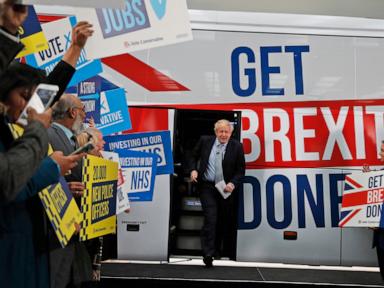
Remember that big red bus? The one Nigel Farage and Boris Johnson stood in front of, promising that leaving the EU would free up £350 million a week for the National Health Service (NHS)? It turned out to be an incredibly expensive piece of fiction. Instead of an infusion of cash, the NHS is struggling with historic wait times and understaffing, partly because the broader economy lacks the growth to properly fund it.
The Nightmare of Non-Tariff Barriers
Pro-Brexit politicians loved to use the phrase "free trade" because the Trade and Cooperation Agreement (TCA) signed with Europe avoided flat tariffs on most goods. But tariffs are only a tiny part of modern commerce.
What actually kills small businesses is the paperwork.
The moment Britain exited the single market and customs union, companies ran face-first into a wall of customs checks, rules-of-origin forms, regulatory declarations, and health certificates for food products.
Big corporate giants can hire teams of lawyers and compliance officers to handle this mountain of forms. Small family-run businesses can't. If you're a small British cheese maker or an independent fashion label, sending a shipment to France used to be as simple as mailing a package to Manchester. Now, it requires hours of mind-boggling bureaucracy. Consequently, tens of thousands of smaller British firms simply stopped exporting to Europe altogether.
The Great Immigration Switcheroo
If there was one core promise that drove the leave vote, it was "taking back control" of Britain's borders. The end of EU free movement was supposed to dramatically lower immigration and protect domestic jobs.
It didn't work out that way.
While net migration from Europe completely collapsed—in fact, more EU citizens have left the UK than arrived in recent years—overall migration actually spiked to record highs, peaking at over 900,000 in 2023 before cooling off to 171,000 recently.
What changed was the composition. When cheap, flexible European labor disappeared overnight, critical sectors like agriculture, hospitality, and social care faced devastating staff shortages. To keep the country running, the government had to issue hundreds of thousands of work visas to non-EU nationals from countries like India, Nigeria, and the Philippines.
So, Britain didn't actually end mass migration. It just traded European baristas and fruit pickers for non-EU health workers and students. For many voters who supported leave specifically to see lower immigration numbers, this feels like a massive bait-and-switch.
Blind Spots in the Global Trade Chase
To make up for the European shortfall, Britain tried to pitch itself as a "buccaneering, global trading nation." The plan was to sign fast, lucrative deals with dynamic economies around the world.
The crown jewel of this strategy was supposed to be a massive free trade agreement with the United States. Ten years later, that deal is entirely dead in the water, caught up in shifting American political priorities and protectionist sentiments.
Britain did manage to join the Comprehensive and Progressive Agreement for Trans-Pacific Partnership (CPTPP) and signed deals with nations like India and the Gulf Cooperation Council. These aren't worthless. The India deal alone drops tariffs on British whisky and luxury cars, potentially adding billions to bilateral trade over time.
But geography is stubborn. A trade deal with a country 5,000 miles away can't easily replace seamless, overnight access to your largest trading partners right across the English Channel.
What to Do Next If You Are Navigating the UK Market
The political landscape is shifting. Center-left politicians who spent years staying quiet about the costs of Brexit to avoid alienating voters are finally starting to speak up. Prime Minister Keir Starmer has acknowledged the deep damage done to the economy, and his cabinet is actively exploring ways to rebuild relationships with Europe.
If you operate a business or invest in the UK today, you shouldn't hold your breath for a total reversal. Rejoining the EU isn't on the cards anytime soon. Instead, focus on these practical strategies to mitigate the ongoing drag.
- Audit your supply chains for regulatory exposure. Assume that regulatory divergence between the UK and the EU will continue to cause friction. Pivot toward regional supply chains that minimize border crossings.
- Build compliance capacity inside your business. Stop viewing customs paperwork as a temporary headache. Treat cross-border administrative capacity as a core capability that requires dedicated funding and staff.
- Rethink your labor and recruitment strategy. The days of relying on a steady stream of European seasonal labor are gone forever. You must invest heavily in automated systems, domestic training pipelines, or formal visa sponsorship infrastructure to secure talent.
The Brexit vote didn't bankrupt Britain, but it did make the country's existing structural problems—like terrible productivity and low business investment—much harder to solve. The lesson of the last ten years is simple: you can vote to leave a trading bloc, but you can't vote away the economic realities of geography.