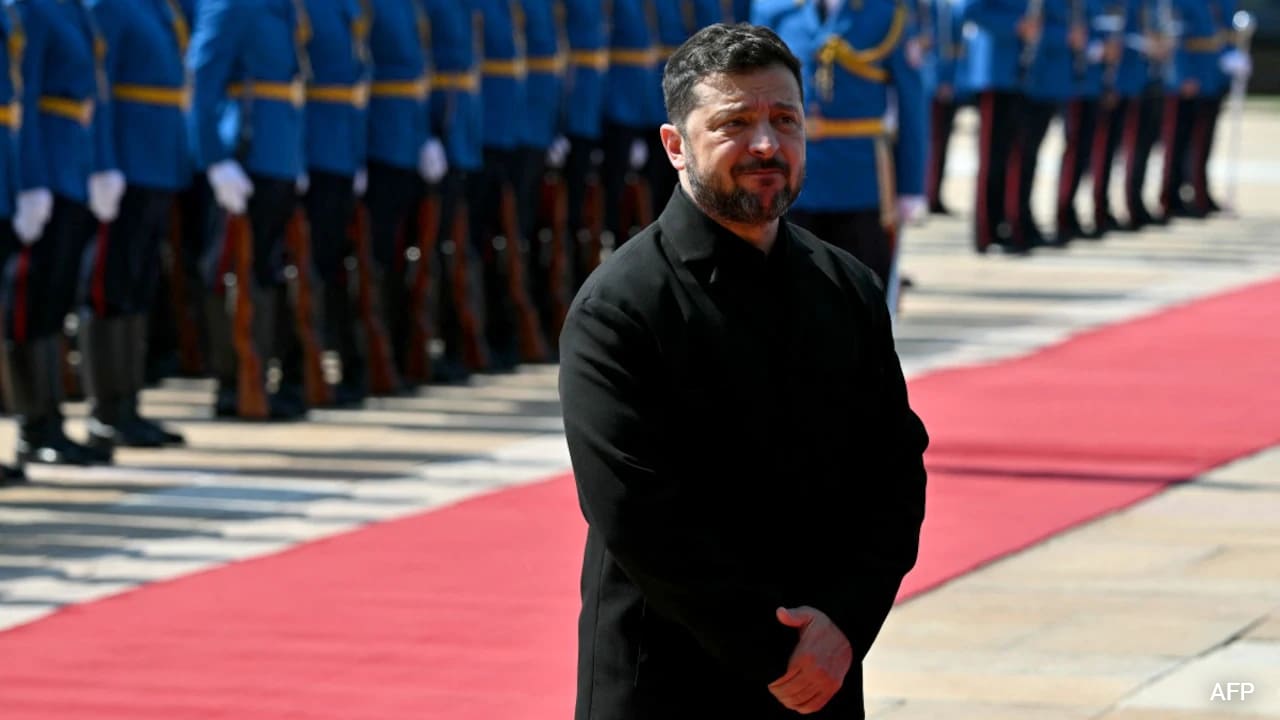
Geopolitical chess moves rarely happen in comfortable places. When Ukrainian President Volodymyr Zelenskyy touched down in Belgrade for his first-ever official visit to Serbia, diplomatic circles across Europe stopped to watch. Serbia isn't just any European capital. For years, Belgrade stood out as one of Moscow's most reliable political and economic anchors on the continent, refusing to join Western sanctions while maintaining heavy reliance on Russian natural gas.
So why go there now?
As missile strikes continue to tear through Ukrainian cities and air defense inventories face brutal strain, Kyiv is aggressively rewriting its diplomatic playbook. Pulling regional players away from Moscow's gravitational pull isn't just about symbolism anymore. It's about survival.
Breaking Down the Belgrade Pivot
You can't understand this visit without looking at how much the ground has shifted beneath Serbian President Aleksandar Vučić's feet. Serbia wants to join the European Union. Brussels has made it abundantly clear that straddling the fence between Western integration and Russian allegiance has an expiration date.
While Vučić made it clear before the talks that Belgrade still won't slap sanctions on Russia, hosting Zelenskyy marks a massive psychological and diplomatic departure from business as usual. A senior Ukrainian official speaking to AFP didn't mince words, calling the trip an explicit attempt to pull Serbia away from Russia's corner.
The timing couldn't be sharper. Just hours before the formal meetings in Belgrade, another wave of deadly Russian ballistic missile and drone attacks struck Kyiv and its surrounding regions, killing civilians, including a child. Standing alongside Vučić at a joint press conference, Zelenskyy used the platform to highlight the grim reality on the ground and point out that deliveries of crucial Patriot air defense interceptors have slowed down compared to previous years.
What’s Actually on the Table
外交 (diplomacy) runs on practical interests, not just photo ops. Beyond the geopolitical shockwaves sent toward the Kremlin, the agenda in Belgrade tackled hard economics and regional security.
- European Integration: Both nations are navigating the complex, often frustrating path toward EU membership, creating a shared incentive to coordinate diplomatic efforts.
- Bilateral Trade and Energy: Discussions heavily featured expanding economic cooperation, agricultural safety protocols, and reducing vulnerability in energy sectors.
- The Free Trade Push: Teams from both countries have accelerated talks regarding a formal bilateral free trade agreement.
Vučić referred to Ukraine as a friendly nation during the meetings, a noticeable evolution in rhetoric from a leader who historically walked a tightrope to avoid alienating Vladimir Putin.
The Broader Fallout for Moscow
Russia's influence in the Balkans isn't evaporating overnight. Moscow still supplies the bulk of Serbia's energy, and cultural ties run deep among conservative factions in the country. But optics matter in international relations. When a staunchly Moscow-friendly government rolls out the red carpet for the leader of a nation locked in a bitter war with Russia, the Kremlin's monopoly on regional loyalty fractures.
Kyiv knows it can't afford to ignore any European partner, regardless of past alignments. By securing face-to-face negotiations in Belgrade—hot on the heels of Vučić's recent visits to Ukraine—Zelenskyy is chipping away at Russia's remaining diplomatic comfort zones.
The war isn't just being fought with artillery and drones in the trenches. It's won or lost in the capital cities where neutral countries decide which way the future leans. Belgrade just took a long, hard look at the map and realized neutrality has a vanishing point.