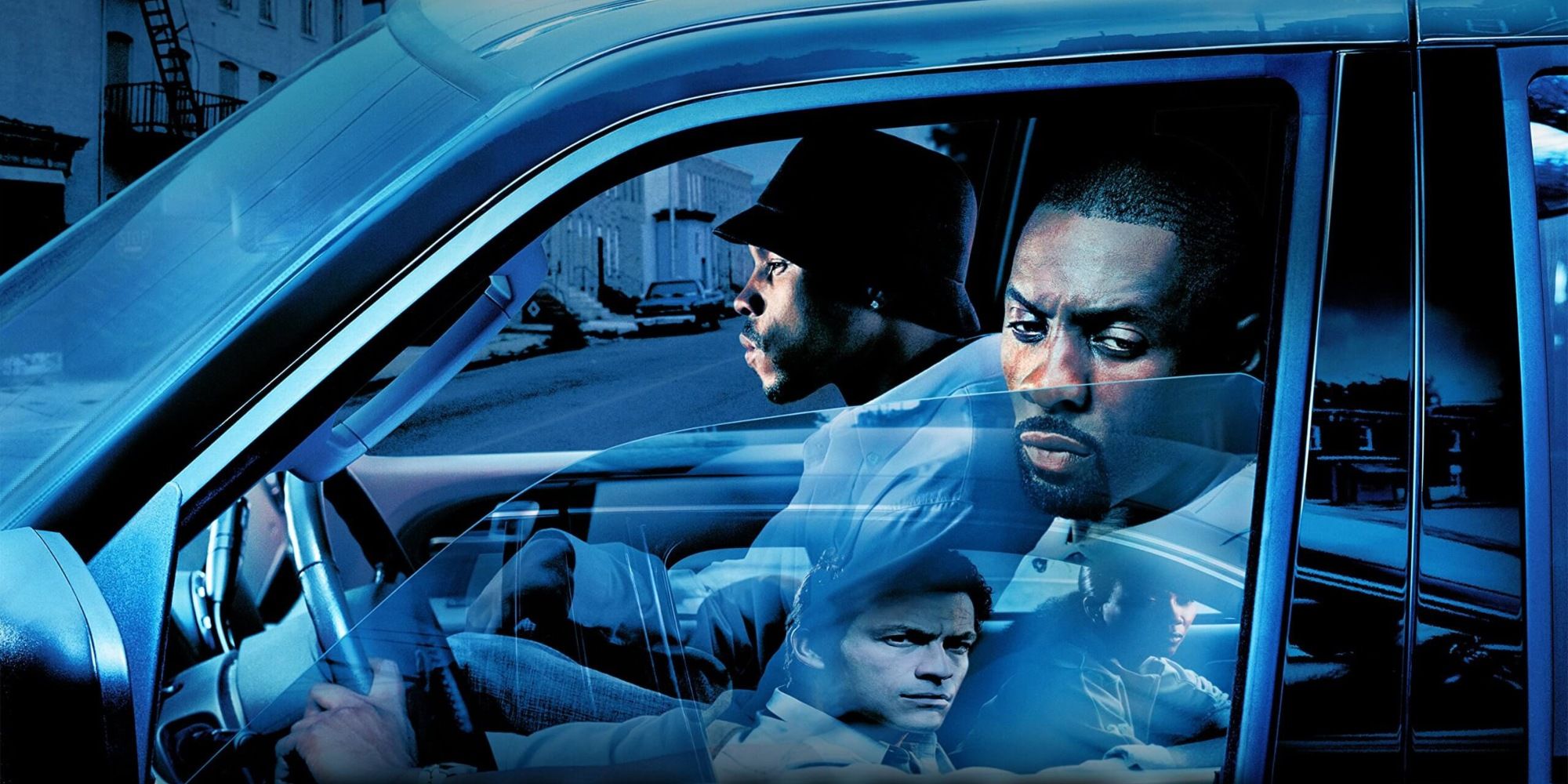
Most television viewers treat a prestige drama like a grocery list, checking off episodes to reach a satisfying conclusion. They think of a season as a bridge between a beginning and an end, where the middle bits are just transit. If you’re currently scanning the web for The Wire S3e6 Watch Now, you’re likely participating in this same linear obsession. But David Simon’s masterpiece wasn't designed for the binge-watching era of instant gratification and narrative payoffs. This specific installment, titled Homecoming, isn't a mere plot point in a crime saga; it’s the precise moment where the show’s thesis about the death of the American city becomes undeniable. To treat it as something to be consumed and discarded is to miss the point of the most sophisticated piece of sociology ever put to film. We’ve been conditioned to look for "the big moment" or the "shocker," yet this episode argues that the real tragedy is how nothing actually changes despite the frantic movement of every character on screen.
The Illusion of Progress and The Wire S3e6 Watch Now
The frantic desire to find a digital doorway to this hour of television misses the quiet irony of its content. In this stretch of the story, Major Colvin’s "Hamsterdam" experiment is in full swing, creating a literal and metaphorical vacuum in the heart of Baltimore. When people look for The Wire S3e6 Watch Now, they’re usually hunting for the visceral thrill of the drug war or the sharp tongue of Omar Little. What they find instead is a meditation on the failure of reform. Colvin thinks he’s found a loophole in the system by legalizing the drug trade in a few desolate blocks. He’s wrong. The system doesn't have loopholes; it has a digestive tract, and it’s currently swallowing Colvin whole.
I’ve spent years analyzing how the show uses these mid-season episodes to trap its audience. Most dramas use the sixth episode to ramp up the stakes for a finale. This story does the opposite. It slows down to show you the bureaucratic sludge that prevents actual heroes from doing their jobs. You see Stringer Bell trying to turn a criminal empire into a legitimate real estate conglomerate, only to realize that the "straight" world of downtown developers is just as crooked as the corners he left behind. The irony is thick. Stringer wants to be a titan of industry, but he’s just a man buying a different kind of poison. If you’re rushing through the narrative just to see who dies next, you’re ignoring the fact that the show isn't about people. It’s about the city, and the city always wins.
The False Hope of Reform
The central argument of this season, and this episode in particular, is that institutions are inherently self-preserving and immune to the efforts of individuals. Whether it’s the police department, the drug trade, or the city hall, these structures exist to protect themselves. We want to believe that a "great man" can step in and fix the broken gears. We want to believe that Colvin’s radical experiment with decriminalization is a spark of genius that will save lives. It isn't. It’s a temporary reprieve that highlights just how much the "war on drugs" is a war on the poor.
Critics often point to the third season as the peak of the show’s political commentary. They’re right, but for the wrong reasons. They think it’s a critique of drug policy. It’s actually a critique of the human ego. Colvin thinks he can play god with the geography of Baltimore. Stringer thinks he can play god with the economy. Both men are undone by the very systems they thought they could master. When you watch the events unfold, pay attention to the background noise. It’s the sound of paper being filed, phones ringing in empty offices, and the steady hum of a machine that doesn't care about your morality.
The Narrative Trap of the Mid-Season
There is a specific cadence to this hour of television that defies the conventions of the medium. In a typical show, the sixth episode is where the "B-plot" merges with the "A-plot" to create tension. Here, the plots stay stubbornly apart, mirroring the actual silos of a failing city. The police don't understand the politicians; the politicians don't understand the streets; and the streets don't understand that they're being used as pawns in a larger game of chess.
The genius of the writing lies in how it forces the viewer to sit with the discomfort of stagnation. We’re used to stories where effort equals result. If a detective works hard, they find the killer. If a criminal is smart, they get away. This episode rejects that contract. It shows us that you can be the smartest person in the room and still get played by someone who doesn't even know your name. It’s a bitter pill to swallow for an audience raised on the hero’s journey. There are no heroes in Baltimore. There are only people trying to survive the week without getting crushed by the weight of their own organization.
Why You Should Stop Chasing the Plot
If you’re still focused on finding a way to get The Wire S3e6 Watch Now onto your screen, you’re likely worried about missing a beat in the war between the Barksdale crew and Marlo Stanfield’s rising empire. That rivalry is the candy that gets you to eat your vegetables. The real meat of the story is the tragedy of Cutty, the soldier who comes home from prison and realizes he no longer has the heart for the game. His arc in this episode is one of the most moving things the show ever produced, precisely because it’s so quiet. It’s a story of a man trying to find a soul in a place that has no use for one.
Cutty’s struggle isn't about bullets or territory. It’s about the terrifying realization that he was a cog in a machine that replaced him the second he was gone. His "homecoming" is to a world that doesn't recognize him and a life that offers no easy path to redemption. This is where the show separates itself from every other police procedural. It cares about the human cost of the statistics. It forces you to look at the face of the man who walked away, rather than just the one who stayed to pull the trigger.
The Architecture of a Dying City
To understand why this specific chapter matters, you have to look at how it builds the world. The show’s creator, David Simon, worked as a reporter at the Baltimore Sun for thirteen years. He didn't write this as a television show; he wrote it as a eulogy for the American dream. The architecture of the city—the row houses, the abandoned storefronts, the gleaming towers of the Inner Harbor—is as much a character as McNulty or Bunk.
In this episode, we see the physical manifestation of policy. We see how a decision made in a wood-paneled office results in a pile of trash on a street corner five miles away. This isn't "entertainment" in the traditional sense. It’s a map of a crime scene. The crime isn't murder; it’s the systematic abandonment of an entire class of people. When we treat the show as a series of cliffhangers to be binged, we ignore the architectural detail of the tragedy. We treat the suffering of these characters as a recreational activity.
Dismantling the Skeptics of Slow Television
There’s a common complaint that the show is "too slow" or that "nothing happens" in the middle of the seasons. People who say this are looking for a story, but they’re being given a world. A story has a climax; a world just continues. The skeptics want the adrenaline hit of a shootout, but the show insists on giving them the boredom of a stakeout. It’s a deliberate choice to align the viewer’s experience with the characters’ experience.
If the show felt like a thriller, it would be lying to you. Real life in a failing city isn't a thriller. It’s a grind. It’s waiting for a bus that never comes. It’s filing a report that no one will read. It’s selling a product that kills your neighbors because it’s the only job available. By slowing down the pace, the writers force you to feel the entropy. They make you complicit in the waiting. If you find yourself checking your phone or wishing for more action, you’re reacting exactly the way the characters do. You’re looking for an escape from a reality that offers none.
The Finality of the Game
The episode ends not with a bang, but with the chilling realization that the cycle is ready to repeat itself. Every gain made by the police is offset by a loss in the community. Every victory for a drug lord is a death sentence for a subordinate. The scoreboard might change, but the game stays the same. This is the truth that the show hammered home for five seasons, and it’s a truth that we still struggle to accept in our own lives.
We want to believe in progress. We want to believe that if we just find the right leader or the right policy, we can fix the world. The Wire tells us that the world is more resilient than our ideals. It tells us that our institutions are built to survive us, not to serve us. It’s a dark message, but it’s an honest one. And in an age of manufactured outrage and easy answers, that honesty is the most valuable thing on television.
The search for a quick link or a fast stream is a symptom of the very culture the show despises. We want the result without the process. We want the payoff without the pain. But you can't understand the sixth episode of the third season if you haven't felt the weight of the five hours that came before it. You can't appreciate the tragedy of Cutty if you haven't seen the walls of his cell. You can't understand the failure of Hamsterdam if you haven't seen the desperation that created it.
The city of Baltimore as depicted here is a warning. It’s a mirror held up to every American city that has traded its soul for a tax break or its people for a statistic. When you finally sit down to watch, don't look for the plot. Look for the people caught in the machinery. Look for the way the light hits the broken glass on a West Baltimore street. Look for the way a seasoned detective sighs when he realizes he’s just arrested the same kid for the third time this month. That’s where the truth lives. It’s not in the big speeches or the dramatic arrests. It’s in the quiet moments of realization that the game is rigged, and we’re all just players who don't know the rules.
Television is rarely this brave. Most shows want you to feel good about yourself or the world. This show wants you to feel the cold, hard reality of how things actually work. It’s a difficult, demanding, and ultimately transformative experience. If you’re looking for a distraction, look elsewhere. If you’re looking for the truth, you’ve come to the right place. Just don't expect it to be easy.
The tragedy of the series isn't that the characters fail; it’s that their failure is the only thing the system knows how to produce.