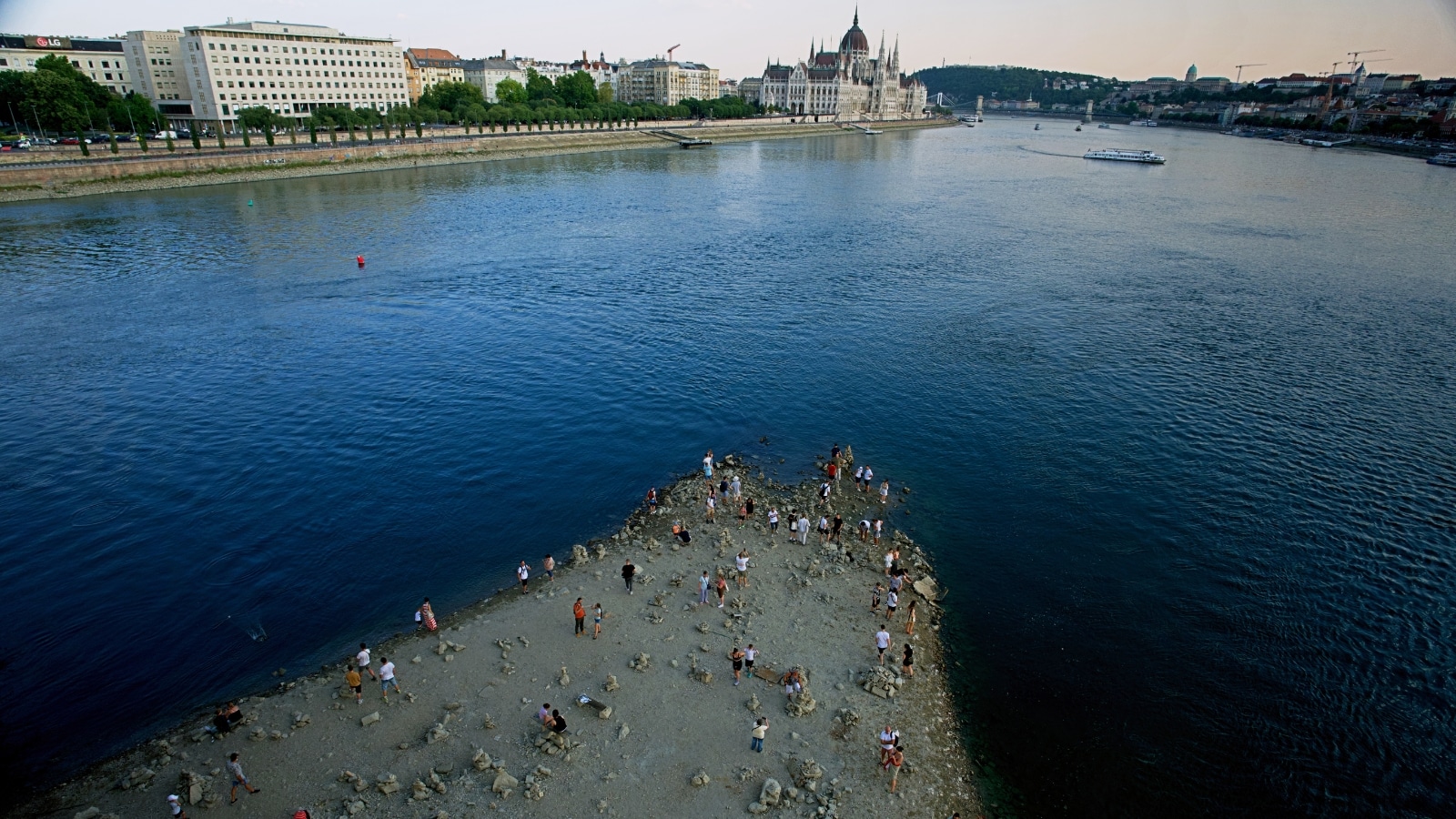
You can't ignore the numbers coming out of the European Union's Copernicus Climate Change Service. Western Europe just logged its hottest June and July combination in recorded history, shattering previous benchmarks and leaving scorched earth in its wake. We aren't just talking about a mild summer spike. The average temperature for this two-month stretch hit a blistering 21.62°C (70.92°F), beating out the fierce records set back in 2022.
If you live outside the region, it's easy to write this off as standard summer weather. Don't. What's happening across France, Spain, Germany, and the UK is a masterclass in how extreme heat and relentless drought feed on each other, creating a feedback loop that local infrastructure simply wasn't built to handle. In related news, we also covered: Why Most Americans Are Done Trusting Big Tech With Kids.
The Mechanics of a Scorched Continent
Why is Western Europe cooking while other regions see normal variances? High-pressure systems are parking themselves over the continent, trapping hot air like a lid on a pot. Samantha Burgess from the European Centre for Medium-Range Weather Forecasts points out the core issue: as soils dry out, they lose their natural cooling capacity.
Without moisture evaporating from the earth to moderate the air, the sun's energy pours straight into heating the atmosphere. It's a vicious cycle. BBC News has analyzed this fascinating topic in great detail.
- Soil moisture collapse: Ground levels are significantly drier than they were during the infamous 2022 drought.
- Relentless heatwaves: The region has already endured four distinct heatwaves since May alone.
- Spiking thermometers: National records fell as places like Germany hit 41.7°C and France crossed into unprecedented territory at 43.8°C.
When the ground turns to dust, everyday life shifts from uncomfortable to dangerous.
When Forests Turn to Tinder
The most terrifying symptom of this prolonged dry spell isn't just the sweat; it's the fire. Western Europe is facing wildfire seasons that resemble apocalyptic movie sets rather than normal forestry cycles.
In France's Gironde region, massive blazes have scorched areas multiple times the size of Paris. These aren't ordinary brush fires. The heat has been so intense that some mega-fires created their own localized weather systems, spawning pyrocumulonimbus clouds—fire-generated storm clouds that throw lightning and spark fresh blazes.
Roughly 330,000 people have faced evacuation orders across France and Spain. Towns near Bordeaux are emptying out. Even iconic landmarks and cities, from Edinburgh's Arthur's Seat to regions across Spain, are battling flames. Emergency crews are completely overwhelmed, fighting fires that move faster than tactical ground units can retreat.
Human Cost Beyond the Headlines
We tend to measure weather disasters in acres burned or degrees registered, but the real toll is human. Heat is a silent killer. Public health monitors note thousands of excess deaths tied directly to these consecutive summer heatwaves.
Nighttime offers zero relief. When overnight temperatures stay artificially high, the human body never gets a chance to cool down or recover from daytime strain. Vulnerable populations—older adults, outdoor workers, and those without adequate air conditioning—bear the absolute brunt of this crisis.
Cities are scrambling to adapt. Urban planning across Western Europe historically focused on keeping heat in during cold winters, not venting massive thermal loads during tropical-grade summers. Older apartments lack insulation designed for 40°C-plus days, turning urban centers into concrete ovens.
What Needs to Happen Next
If you're traveling to Western Europe or managing operations in the region, hope is not a strategy. You have to treat these summer extremes as the baseline, not an anomaly.
- Audit your climate resilience: If you run properties or supply chains in France, Spain, or Germany, plan for zero-water mandates and unexpected transit halts.
- Prioritize radical hydration and scheduling: Shift physical outdoor work to the early morning hours, mirroring practices used in desert climates.
- Monitor local air quality closely: Mega-fire smoke plumes travel hundreds of miles, tanking air quality in unexpected regions and triggering respiratory risks far from the burn zones.
Stop treating these records as one-off events. The baseline has shifted, and the landscape is rewriting itself in real time.
Heatwave causes deadly wildfires in Europe. What to know
This video provides an on-the-ground look at how the record-breaking heatwaves are fueling destructive wildfires across France, Spain, and Italy.
http://googleusercontent.com/youtube_content/1