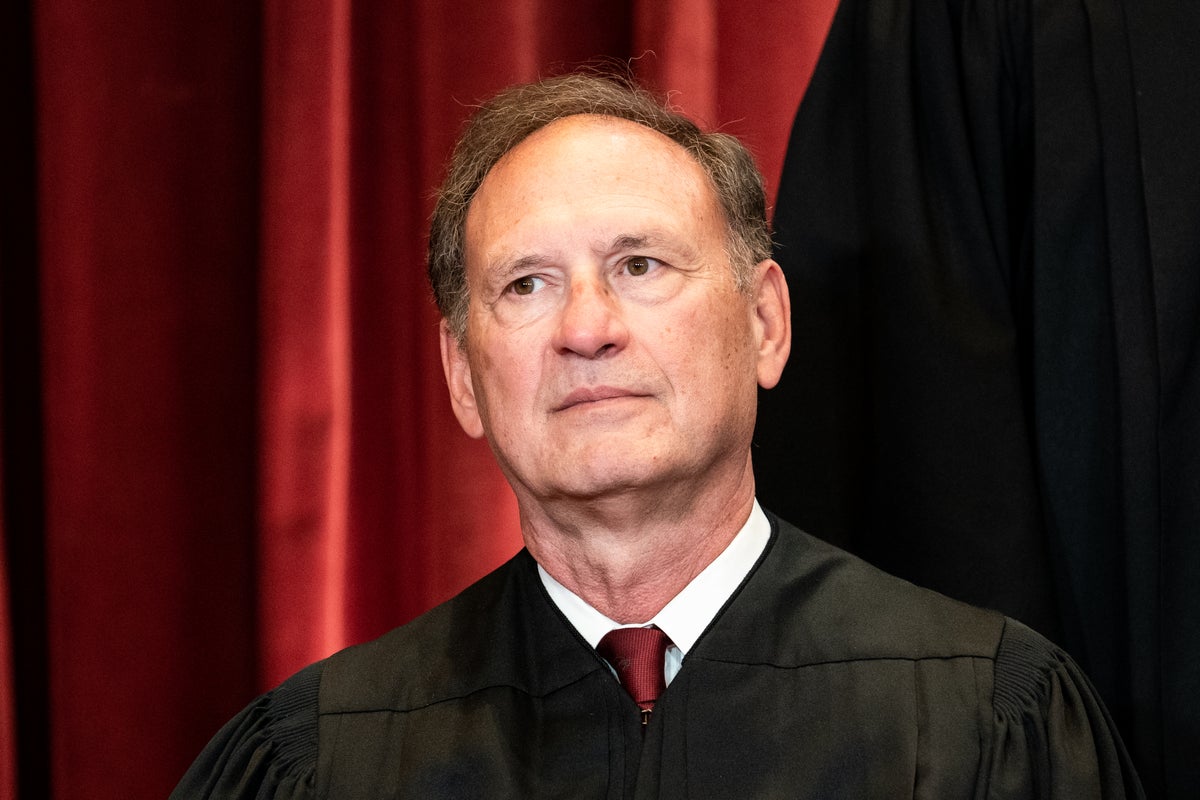
Journalism moves fast. Sometimes it moves too fast. Yesterday morning, a sudden alert flashed across news feeds and radio waves that sent Washington into an absolute panic. National Public Radio published a massive, 1,200-word scoop claiming that conservative Supreme Court Justice Samuel Alito was retiring.
The story was written by Nina Totenberg. She is an absolute legend in legal journalism who has covered the high court since 1969. If anyone had the inside scoop on a historic retirement, it would be her. Within minutes, Bloomberg blasted the news to its terminal subscribers, and Vox picked it up. Capital hill scrambled. The implications of a Supreme Court vacancy under President Donald Trump were staggering.
Then everything evaporated.
The Supreme Court Public Information Office threw cold water on the report. Spokesperson Patricia McCabe announced that NPR's reporting was completely inaccurate and that no such court statement existed. NPR yanked the article down after five frantic minutes, leaving an empty page and a brief editor's note admitting they made a mistake. Alito was not going anywhere.
This was not a minor typo. It was a massive institutional breakdown at one of the country's most respected media outlets. The error reveals how the modern news business really works, the dangers of pre-written journalism, and why even the most seasoned experts can fall victim to a simple misunderstanding.
How a Single Missing Letter Sparked a National Panic
The whole mess boiled down to a simple auditory error. Yesterday was the final day of the Supreme Court's 2025-2026 term. The court had just finished delivering major opinions on birthright citizenship, campaign finance, and transgender athletes. The courtroom was packed, loud, and chaotic.
As the session wound down, Chief Justice John Roberts did what he traditionally does at the end of every term. He took a moment to thank and announce the retirements of several long-serving court employees.
Totenberg was rushing out of the courtroom early to file her reports on the massive legal rulings. As she made her exit, she noticed that the usual rush of reporters and public members leaving the building had not started yet. She asked someone nearby what was still happening inside the courtroom.
The person answered that there were retirement announcements.
Totenberg missed the "s" at the end of the word. In her mind, she instantly connected the phrase "retirement announcement" to the fact that conservative justices Neil Gorsuch and Samuel Alito were noticeably absent from the bench that morning. She jumped to a massive conclusion. She assumed Samuel Alito was retiring.
It is a basic error that any first-year journalism student is taught to avoid. You never assume. You always double-check. But Totenberg let her instincts override standard operating procedure.
The Danger of Pre-Written Newsroom Obits
Once Totenberg had the wrong idea in her head, the editorial machinery at NPR took over with alarming speed. She did not hear the news directly from the Chief Justice. She did not confirm it with the court's press office. Instead, she communicated what she thought she heard to her intern and then called NPR Executive Editor Krishnadev Calamur.
Calamur trusted her completely. Totenberg is the preeminent Supreme Court reporter in the country. If she says a justice is retiring, editors do not usually ask her to show her receipts. They move.
Calamur immediately pulled up a lengthy background article that the newsroom had prepared months in advance. Every major news organization keeps pre-written obituaries and retirement profiles for aging, high-profile public figures. It is standard practice. It allows media outlets to publish comprehensive analysis within seconds of a major event breaking.
The pre-written draft focused heavily on Alito's legacy as a consequential conservative. It detailed his 2006 appointment by George W. Bush to replace Sandra Day O'Connor. It walked through his aggressive stances on religious rights, labor unions, and voting laws. Most importantly, it centered on his authorship of the historic 2022 decision that overturned Roe v. Wade.
The draft was so ready to go that it even contained a slight typo in the final paragraphs, quoting a law professor who said Alito "took sown" Roe v. Wade. Calamur bypassed the usual verification steps, hit the publish button, and sent the unverified story live to the world.
Owning the Worst Mistake of a Fifty Year Career
To their credit, the leadership at NPR did not try to hide behind vague corporate speak once the blunder became obvious. They owned it quickly. NPR Public Editor Kelly McBride published a detailed autopsy of the failure on Tuesday afternoon, laying out exactly how the breakdown happened.
Totenberg appeared on the evening broadcast of All Things Considered to address the audience directly. She did not make excuses about the chaotic courtroom or her age. She called it a rookie mistake.
She read aloud a personal letter of apology that she sent directly to Justice Alito. In the letter, she confessed that she rushed out of the room, misheard a phrase, and assumed something no reporter should ever assume. She called it the worst professional mistake of her more than 50 years in journalism.
NPR Editor-in-Chief Thomas Evans also took to the airwaves to accept ultimate responsibility for the publishing failure. He noted that while Totenberg made the initial error, the newsroom's internal systems failed to catch it before it hit the public website and radio broadcasts.
This blunder is particularly bruising for Totenberg because her career has faced scrutiny before regarding her relationships with Supreme Court figures. Critics have long pointed out her close personal friendships with the late conservative Justice Antonin Scalia and the late liberal Justice Ruth Bader Ginsburg. While she has always maintained that these relationships helped her understand the court better, critics argue that such proximity can sometimes blur a reporter's objective distance. In this case, irony struck hard. Her mistake did not come from being too close to a justice, but from being too far away from the microphone when the actual announcements were read.
The Long Term Impact on Media Trust
While Kelly McBride argued in her column that this error will eventually be forgotten as a brief blip by most news consumers, the timing could not be worse for the media industry. Public trust in journalistic institutions is hovering near historic lows. For a major, publicly funded organization like NPR to completely botch a story of this magnitude gives immediate ammunition to critics who claim the media is reckless and biased.
The fake scoop also caused actual, brief disruptions in the political world. For about ten minutes, political operators on both sides of the aisle thought they were entering a massive, high-stakes confirmation battle in the middle of a tense political year.
If Alito were to retire, the replacement process would fall directly to President Donald Trump and a Republican-led Senate. The stakes could not be higher. When news organizations publish false alarms on issues of this scale, it damages the credibility of every legitimate reporter trying to cover the capital honestly.
What Newsrooms Must Do Next to Prevent Fast Press Blunders
The NPR breakdown is a case study in why speed should never replace verification, even when dealing with trusted veterans. Newsrooms across the country need to use this moment to evaluate their own breaking news protocols.
First, the rule of two independent sources must apply to prepared copy. No matter how legendary a reporter is, an unconfirmed verbal report from a chaotic courtroom should never trigger the publication of a pre-written story. Editors must require formal confirmation from an official press representative or a secondary independent source before hitting publish.
Second, digital publishing software needs better guardrails. Pre-written preparedness copy should be stored with clear, system-wide warnings that prevent accidental publishing. A simple two-step verification prompt for profiles marked as sensitive could prevent an editor from accidentally sending an obituary or retirement announcement live during a fast-moving news event.
Finally, media consumers need to change how they digest breaking news on social media and news feeds. When a massive story drops, wait five minutes before sharing it. See if other independent outlets are confirming the details, or if the source is relying entirely on a single unverified report. Speed is a commodity in modern media, but accuracy is the only thing that actually keeps the lights on.
The Supreme Court term has ended, and Samuel Alito remains on the bench. NPR is left picking up the pieces of a battered reputation, proving that in journalism, the letters you fail to hear can destroy decades of built-up trust.