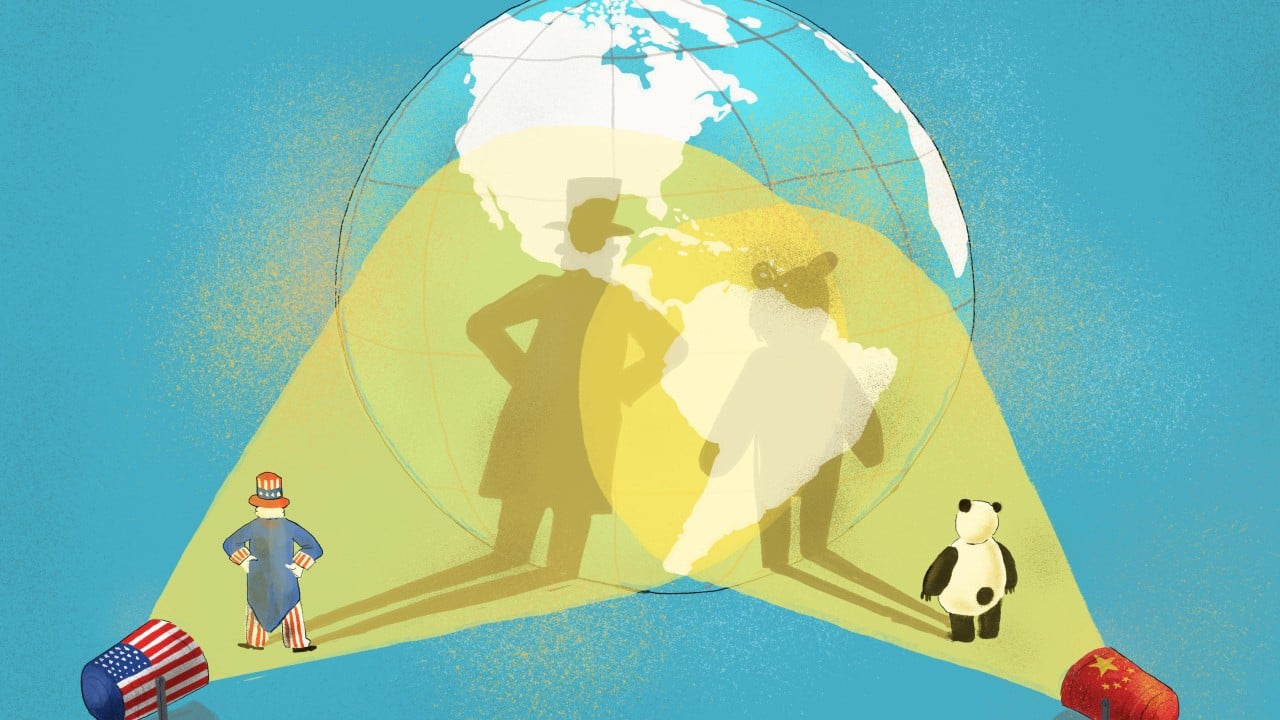
The United States is celebrating its 250th birthday with massive fireworks, military parades, and plenty of grand speeches about enduring global leadership. But thousands of miles south of the Washington Mall, a much quieter, more significant shift is happening. America is losing its grip on its original neighborhood.
For over two centuries, the Western Hemisphere was considered Washington's exclusive domain. The Monroe Doctrine of 1823 made it clear that foreign powers were to keep their hands off the Americas. It was the foundation of American global power. If you can't secure your own backyard, you can't project power across the Atlantic and Pacific.
Today, that foundation is cracking. Beijing has moved in, not with warships, but with checkbooks, state-backed construction crews, and massive trade agreements. As the US looks inward, grappling with intense political polarization and protective tariffs, Latin America is looking east. The region has become the ultimate test of American influence, and right now, Washington is losing.
The Death of the Backyard Mentality
Treating Latin America and the Caribbean as a "backyard" was always an arrogant strategy. It was also an effective one for American interests during the nineteenth and twentieth centuries. Now, that paternalistic approach has backfired.
Latin American leaders don't want to be told who they can trade with by a neighbor that frequently ignores their economic needs. Beijing understands this frustration perfectly. While American diplomats arrive with lectures on governance, human rights, and the dangers of Chinese debt, Chinese executives arrive with blueprints for ports, railways, and hydroelectric dams.
Look at the trade data. For a dozen countries in South America, China has already replaced the US as the top trading partner. This isn't a temporary trend. It is a structural realignment. Brazil, Chile, Peru, and Argentina all export far more commodities to Chinese markets than to American ones.
The economic gravity has shifted. When a nation's economic survival depends on selling soy, copper, lithium, and oil to Beijing, Washington's security warnings start to sound like empty rhetoric.
The Concrete Reality of Chancay
You want to see what the loss of American influence looks like in real life? Look at the small fishing town of Chancay, Peru.
There, Chinese state-owned shipping giant Cosco Has built a massive, multi-billion-dollar deep-water port. It is designed to completely reshape Pacific trade. Before this port opened, South American cargo bound for Asia had to stop in Mexico or California, or squeeze through the Panama Canal. Now, giant container ships can sail directly from Peru to Shanghai, cutting transit times by more than ten days.
This is a massive win for South American exporters. It is a logistical nightmare for southern command military planners in Miami.
The Chancay mega-port gives Beijing a direct logistics hub on the South American Pacific coast. Washington raised serious alarms about the dual-use capabilities of the facility, fearing the Chinese military could eventually use it for intelligence gathering or naval logistics. Peru ignored the warnings. Why? Because the US offered no viable alternative.
Washington told Lima not to build the port with Chinese capital, but didn't offer American capital to build it instead. That is the core policy failure that has repeated itself across the continent.
The Battle for the Transition
The geopolitical contest isn't just about shipping lanes and traditional logistics. It is about who controls the next century of industrial manufacturing. Latin America holds the keys to that future.
The region sits on the world's largest reserves of lithium, a critical component for electric vehicle batteries and grid-scale storage systems. The "Lithium Triangle" of Bolivia, Argentina, and Chile contains more than half of the planet's known supplies.
Lithium Triangle Global Share: 50%+
Key Players: Bolivia, Argentina, Chile
Main Investor: Chinese State-Owned Enterprises
Chinese companies have quietly bought up mining rights, processing facilities, and local infrastructure across this triangle. They didn't just invest in the raw material extraction either. They integrated these supply chains directly into their domestic manufacturing ecosystem.
American policymakers are currently scrambling to build domestic supply chains that exclude Chinese inputs. They are realizing that the very raw materials they need are being pulled from countries right next door, under contracts signed with companies based in Beijing. The US wanted to win the green industrial race but forgot to secure the fuel.
Why lecturing fails as diplomacy
For decades, the standard American diplomatic playbook in Latin America followed a predictable pattern. It combined development aid through organizations like USAID with strict conditions tied to economic reforms, anti-corruption initiatives, and governance metrics.
Then came the Belt and Road Initiative. Beijing offered an entirely different proposition. No political strings. No human rights lectures. No demands for fiscal austerity. Just pure, transactional business.
To a regional president facing an upcoming election and desperate to show progress on infrastructure, the Chinese offer is incredibly enticing. If you need a new bridge or a five-hundred-megawatt solar farm, and the Chinese government offers to finance and build it within three years, you take the deal. You don't wait for a five-year environmental impact review from a multilateral bank based in Washington.
This transactional approach has allowed Beijing to build deep relationships across the political spectrum. It doesn't matter if a country is governed by a left-wing populist or a right-wing technocrat. China adapts. They deal with Nicolas Maduro in Venezuela, and they deal with Javier Milei in Argentina.
The Tariffs Dilemma and Squeezed Allies
The political climate in Washington has turned sharply protectionist. Both major political parties have embraced tariffs, trade restrictions, and buy-American mandates. While this might play well with voters in industrial swing states, it sends a damaging signal to economic partners in the Americas.
When the US erects trade barriers, it pushes Latin American economies closer to China. If a Colombian agricultural exporter or a Mexican auto-parts manufacturer faces rising barriers in the American market, they have no choice but to diversify their buyers. Beijing is always waiting with open arms and market access.
Mexico is a great example of this delicate dance. It surpassed China as the top exporter of goods to the US, driven by the nearshoring trend. Yet beneath the surface, much of that manufacturing relies on Chinese components. Chinese component manufacturers have set up operations in northern Mexican states like Nuevo Leon to bypass US tariffs.
Washington now pressures Mexico to restrict Chinese investment. This puts Mexico City in an impossible position. They must choose between their largest customer and a major source of manufacturing investment. It is an aggressive, heavy-handed approach that breeds deep resentment.
Moving Past the Empty Promises
If Washington wants to regain its footing in its historic sphere of influence, it has to stop acting like the region owes it loyalty. The historical memory of American interventionism during the Cold War is still very real in Latin America. Respect must be earned through genuine partnership, not assumed through geographic proximity.
The US cannot match China dollar for dollar in state-directed infrastructure spending. The American system doesn't work that way. Private capital decides where to go, not the White House. But the US does have major structural advantages that it consistently underutilizes.
First, the deep institutional, cultural, and familial ties between the US and Latin America are unmatched. Millions of citizens have feet in both worlds. Remittances from workers in the US form the financial backbone of multiple Central American economies.
Second, the US can offer high-value collaboration that goes beyond just digging up minerals and shipping them away. Latin American nations are tired of being treated as commodity colonies. They want tech transfers, research hubs, and high-skilled jobs.
The Immediate Action Plan
To actually change the trajectory of this geopolitical contest, Washington needs to pivot immediately. The old strategy of offering warnings without alternatives is dead.
- Fund the Alternatives: The US International Development Finance Corporation needs its capital limits lifted and its mandate expanded. It must be able to compete directly against Chinese state banks for major infrastructure projects like ports, telecommunications grids, and energy plants.
- Modernize Trade Agreements: Existing trade pacts like CAFTA-DR and USMCA need updates to encourage regional supply chains. The US should offer tax incentives for American companies that move manufacturing from Asia to Latin America, rather than just bringing it back to the US homeland.
- Drop the Lecture Series: Diplomatic engagement needs to be practical, regular, and respectful. Stop treating high-level visits to the region as an afterthought or a tool used only when a crisis erupts.
The next quarter-century of global power won't be decided in the Taiwan Strait or the plains of Eastern Europe alone. It will be decided by whether the United States can maintain its position as the partner of choice in the very hemisphere that gave rise to its global dominance. If Washington fails that test, the grand celebrations for its 250th anniversary will mark the peak of its global influence, not its continuation.
This expert discussion on the geopolitical shifting tides provides deeper historical context regarding the evolution of regional power balances: American foreign policy strategies. It features prominent policy scholars breaking down how domestic polarization and shifting international priorities directly impact the country's credibility and long-term authority in its traditional spheres of influence.
(mh=IdJOBUeICKmrckGc)4.jpg)