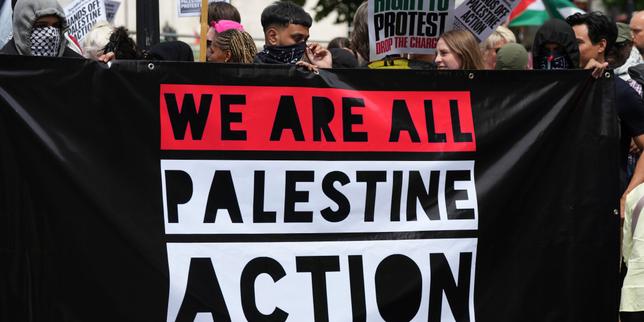
When Washington targets a direct-action network, the fallout hits far beyond traditional security circles. The United States government officially designated Palestine Action as a foreign terrorist entity, aligning itself with a controversial path previously paved by British authorities.
For years, the United Kingdom-based group operated primarily through disruptive property damage, targeting defense contractors like Elbit Systems and occupying military installations. Now, the Trump administration has swept these militant protest tactics under the umbrella of violent far-left extremism. This escalation marks a massive shift in how western governments handle radical political activism.
The Shift From Civil Disobedience to National Security
You might wonder how a protest network escalates to the level of global terrorism sanctions. The transformation didn't happen overnight. Founded in 2020, Palestine Action built its identity on direct action—breaking into facilities, smashing equipment, and spray-painting property to protest corporate ties to the Israeli military.
Things changed drastically after high-profile stunts, such as activists breaching a British Royal Air Force base to damage military aircraft. When domestic property destruction crosses into compromising military infrastructure, governments stop viewing it as civil disobedience. Instead, they treat it as an active security breach.
The U.S. Treasury Department didn't act in a vacuum. Secretary Scott Bessent made it clear that financial networks backing these tactics face total asset freezes and severe economic isolation. Alongside Palestine Action, Washington also sanctioned the Italian digital collective Autistici/Inventati and the network Masar Badil, signaling a broad trans-national crackdown on far-left networks.
What the Sanctions Actually Mean in Practice
Don't mistake this designation for a simple diplomatic warning. Being classified under these counterterrorism frameworks carries severe financial and legal penalties.
- Any assets the group holds within the United States are frozen immediately.
- American citizens and corporations are strictly barred from conducting any business transactions with the network.
- Individuals providing material support face criminal prosecution under federal statutes.
Civil liberties organizations argue that stretching terrorist definitions to cover property damage sets a dangerous precedent. They claim the policy criminalizes fierce political dissent. On the flip side, security officials argue that violent sabotage and destruction of critical infrastructure go well beyond protected speech.
The International Ripple Effect
Britain set the legal blueprint when it banned the organization under its Terrorism Act, leading to thousands of arrests for simple demonstrations. By mirroring that move, Washington is institutionalizing a shared western strategy. Governments are treating disruptive radical networks with the same financial tools historically reserved for traditional armed combatants and cartels.
Co-founder Huda Ammori slammed the decision, stating that their operations aimed to halt military supply chains rather than harm individuals. Yet, law enforcement points to escalating violence—including incidents where officers suffered severe injuries during facility raids—as justification for the heavy hand of the state.
Expect other allied nations to evaluate their own domestic threat matrices in the coming months. As governments close financial loops and tighten definitions of domestic radicalism, the space for aggressive, property-targeting activism is shrinking fast.