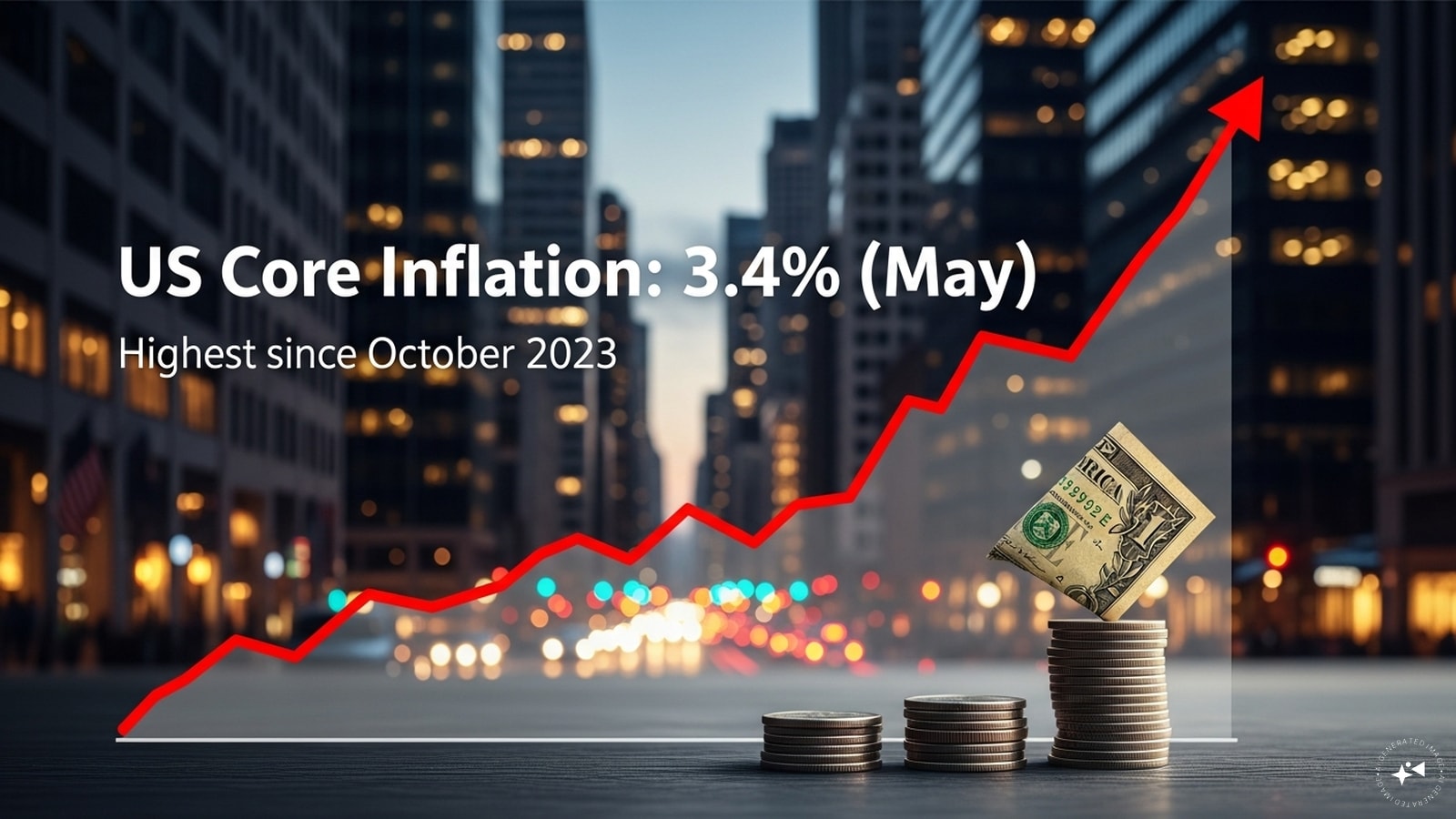
The headlines want you to breathe a sigh of relief. They are pointing to the latest Consumer Price Index data and declaring a win because core inflation, which strips out food and energy, slowed down. If you look at the year-over-year data, it seems like the wild price hikes of the last few years are finally cooling off.
But your bank account tells a completely different story.
When you look at what it actually costs to live right now, the financial pressure is ramping up. There is a massive disconnect between the technical economic definitions of inflation and the actual cash flowing out of your pocket. Understanding this gap is the only way to protect your money.
The Mirage of Falling Core Prices
The government heavily relies on the core inflation rate to judge where the economy is heading. By ignoring gas and groceries, policymakers try to capture the underlying, long-term trend of the economy. The latest data reveals that this core number came in lower than many analysts expected.
That sounds great on paper. Economists love it. Wall Street celebrates it.
The problem is that you cannot choose to stop buying gas or skip buying groceries. While the core metric cooled, headline inflation—which includes absolutely everything—accelerated significantly. Driven by structural changes in global markets, energy prices skyrocketed. Gasoline and fuel oil spiked over the last year, completely erasing any breathing room you might have gained from stabilizing prices in electronics or apparel.
When your daily commute costs 40% more at the pump than it did a year ago, a slight dip in the cost of a new television does not help your budget. The reality of the current economic environment is that essential costs are growing faster than discretionary ones.
Shelter and Energy Are Doing the Heavy Lifting
If you want to know where your paycheck is vanishing, look at two specific categories: housing and energy. These are not minor fluctuations; they are structural shifts rewriting the rules of personal finance.
The index for shelter continues to climb month after month. Rent prices and owners' equivalent rent (what homeowners estimate their home would rent for) have shown stubborn resilience against high interest rates. Because housing makes up roughly one-third of the total consumer price index weight, even a small uptick here exerts immense upward pressure on the overall cost of living.
Combine that with the massive shock in the energy sector. Geopolitical tensions and regional supply disruptions pushed global energy markets into hyperdrive. We are seeing electricity bills and heating costs reach heights that force families to make hard tradeoffs.
The standard economic playbook says that raising interest rates should cool down demand and lower prices across the board. But nobody can reduce their housing demand to zero, and nobody can stop heating their home. These sticky, non-negotiable expenses are keeping headline numbers high, leaving the Federal Reserve trapped in a corner.
Why Interest Rates Might Stay Higher for Much Longer
For months, the conventional wisdom among retail investors and market spectators was that the central bank would start cutting interest rates. Everyone wanted a return to cheap borrowing costs for mortgages, car loans, and business expansion.
That hope is effectively dead for the foreseeable future.
With headline inflation marching upward, the Federal Reserve cannot risk cutting rates. Doing so would pour fuel on the inflationary fire. In fact, major asset managers and economic research groups are quietly preparing for the opposite scenario: another interest rate hike.
A rising rate environment alters how you should manage your money. Credit card debt becomes vastly more expensive as variable rates tick upward. Mortgages become tougher to secure, forcing more people into the already bloated rental market, which further drives up shelter costs. It is a vicious cycle.
If the central bank pushes interest rates higher to combat the energy-driven spike, the risk of an economic slowdown increases. As a consumer or small business owner, planning for "higher for longer" borrowing costs is no longer a pessimistic view—it is a baseline requirement for financial survival.
Practical Steps to Protect Your Cash Right Now
Waiting for macroeconomics to fix your personal finances is a losing strategy. The data proves that top-line economic indicators do not protect individual purchasing power. You have to take direct action to offset the reality of rising essential costs.
First, attack variable interest debt immediately. If you are carrying a balance on a credit card, look into a 0% APR balance transfer card or a fixed-rate personal consolidation loan. Do this before another potential central bank rate hike pushes your current card's APR past the 25% mark.
Second, recalculate your emergency fund parameters. The old advice of keeping three to six months of expenses in a standard savings account is outdated. With inflation eating away at stagnant cash, that money is actively losing value. Move those reserves into a high-yield savings account or short-term Certificates of Deposit (CDs) that yield high returns. You need your cash reserves to work hard enough to match the rising cost of living.
Third, audit your recurring fixed contracts. Because shelter and energy are driving inflation, your home insurance, auto insurance, and utility options need intense scrutiny. Shop your insurance policies annually. Call providers. Ask for retention discounts. A few hours of administrative boredom can easily claw back hundreds of dollars that are currently being drained by escalating corporate pricing strategies.
The gap between economic theory and kitchen-table reality is wide. By focusing on the hard numbers of your own cash flow rather than the smoothed-out core inflation statistics, you can position your finances to weather whatever the central bank decides to do next.
For a deeper look into how the financial markets are reacting to the underlying shifts in consumer data, this detailed market analysis breaks down the immediate impact on investment strategies and interest rate projections: CNBC Market Update on Inflation Data. This breakdown illustrates the sharp contrast between market expectations and real-world consumer impacts.