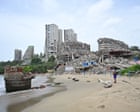
The ground split open on June 24, 2026, and Venezuela hasn't stopped shaking since. A rare doublet earthquake sequence—a massive 7.2 magnitude shock followed just 39 seconds later by an even more violent 7.5 tremor—shattered the north-central coast. Today, the country faces a catastrophic humanitarian disaster. The official death toll has surged past 3,342, with more than 16,700 injuries reported by the information ministry. Sadly, those numbers are just the tip of an iceberg that continues to widen by the hour.
Public anger is boiling over. Everyday citizens, volunteer crews, and international aid agencies are accusing the new government of reacting with agonizing slowness. In the middle of this storm stands Interim President Delcy Rodríguez, who took office in January following the US-led ouster of Nicolás Maduro. Facing her first major national test, Rodríguez is pushing back aggressively against critics. Speaking during a military ceremony marking Venezuela’s independence day, she flatly rejected the idea that her administration failed the public.
But out on the streets of La Guaira, the epicenter of the destruction, words don't clear rubble. The true scale of the disaster reveals a massive gap between official rhetoric and the grim reality on the ground.
The Chaos Behind Venezuela's Emergency Earthquake Response
Interim President Delcy Rodríguez insists that her administration mobilized immediately. According to government statements, officials deployed 4,000 workers within hours of the initial shocks. That number supposedly grew to 14,000 the next day, and stands at roughly 19,000 personnel right now. Rodríguez claims that emergency decrees and civil protection protocols were activated instantly.
“There will be no social unrest here—what we have here is deep social solidarity,” Rodríguez announced, addressing the growing friction across the nation. She argues that the double earthquake was an unprecedented natural disaster that would have overwhelmed any government.
Yet, if you look at how the disaster is actually playing out, the official narrative falls apart. Local families and volunteer paramedics tell a completely different story. For the first few days following the tremors, formal government help was virtually invisible in the hardest-hit neighborhoods. Defenseless citizens were forced to dig through tons of crushed concrete with their bare hands and simple shovels. There was—and still is—a severe shortage of heavy machinery required to lift large structural slabs. Because of this structural gridlock, the critical 72-hour window for finding survivors slammed shut with thousands of people still trapped beneath the debris.
The government maintains tight control over information. They haven't released an official count of the missing. Instead, an unofficial database managed by opposition groups and digital networks has tracked the names of the unaccounted. That list peaked at nearly 60,000 people right after the disaster and still hovers around 38,500. When international journalists questioned Rodríguez about the United Nations reportedly procuring 10,000 body bags, she deflected, claiming the government refuses to speculate and only provides verified figures.
Why the Destruction Was So Total
You have to look at the unique geology and structural failures to understand why this double hit was so uniquely destructive. According to structural dynamics experts from Loughborough University, the disaster was a perfect storm of shallow rupture and weak infrastructure.
The earthquakes didn't happen deep underground. The rupture occurred at a shallow depth of just 10 to 22 kilometers along the Boconó-Morón-El Pilar fault system. Deep earthquakes lose a lot of their energy as the seismic waves travel to the surface. Shallow crustal events don't. They dump their kinetic energy directly into the topsoil.
Even worse, the fault line directed the seismic pulse straight into the dense urban corridor connecting La Guaira and Caracas. This directivity effect meant the cities weren't just shaken; they were struck by a concentrated, high-velocity wall of energy.
Three specific vulnerabilities doomed the buildings in La Guaira:
- Saturated Alluvial Soils: Much of the coastal strip sits on soft, reclaimed land. When the seismic waves hit, these soils acted like jelly, amplifying the ground motion.
- Soft-Story Failures: The dominant local building style relies on reinforced concrete frames with masonry infill. Many of these structures feature weak ground floor columns beneath heavier upper floors. The shaking deformed these flexible lower levels instantly, causing columns to snap and triggering progressive floor-to-floor pancake collapses.
- Faulty Public Housing Construction: Several signature social housing high-rises built under the previous regime collapsed into dust. While Rodríguez claims that 80% of the destroyed buildings were privately developed, she hasn't provided any evidence to back that up. Local residents strongly suspect corruption and corner-cutting left public blocks completely defenseless against seismic activity.
A Humanitarian Crisis Pileup
This disaster didn't hit a stable nation. It struck a country that was already suffocating under a complex humanitarian crisis. Before the first tremor even registered on June 24, an estimated 7.9 million Venezuelans required basic humanitarian aid. More than 90% of households faced chronic shortages of basic services like clean water, electricity, and domestic gas.
The double earthquake essentially broke what little infrastructure remained. Clean drinking water lines have ruptured across seven states. Power grids are down across major swathes of the northern coast. Hospitals are completely overwhelmed, facing critical shortages of basic medical supplies, antibiotics, and surgical tools.
Consider the case of Rosa López in Catia La Mar. Her 25-year-old son-in-law, José Antonio Toledo, was crushed while working as a security guard. When volunteer crews finally recovered his body, the local hospital turned them away because the morgue was already full. His body had to be moved to an open parking lot alongside dozens of others just to wait for a forensic examination. This isn't an isolated incident. It's the standard operating reality right now.
Funding is another massive hurdle. Global humanitarian relief for Venezuela has been desperately underfunded for years. By June 2026, international agencies had received less than 26% of the financial resources required to manage the country's pre-existing crisis. Now, organizations like the UN Office for the Coordination of Humanitarian Affairs (OCHA), World Vision, and Oxfam are trying to scale up operations with empty pockets. They are distributing food parcels, hygiene kits, and temporary shelter materials, but the demand completely dwarfs the supply.
What Happens Next
The immediate search for survivors is wrapping up. International rescue teams are beginning to exit the disaster zones as the probability of finding living victims approaches zero. The focus is shifting toward the recovery of bodies and the management of a massive displacement crisis. Over 15,000 families have completely lost their homes, and more than 26,000 people are currently living in temporary camps, public schools, or out in the open air.
If you are looking to support the relief efforts or keep track of the evolving situation, these are the critical steps that require immediate focus:
Support Localized Aid Networks
Large international organizations are essential, but local volunteer networks and grassroots medical teams are the ones actually moving supplies into isolated coastal communities. Directing aid through established non-governmental organizations on the ground ensures that resources bypass bureaucratic bottlenecks.
Address the Secondary Health Risks
With thousands of bodies still buried under collapsed concrete and water systems completely offline, the risk of waterborne disease outbreaks is incredibly high. Relief efforts must prioritize mobile water purification units and professional sanitation kits to prevent a secondary health crisis from taking hold.
Push for Structural Accountability
The rebuilding process cannot simply replicate the mistakes of the past. Future reconstruction in Caracas and La Guaira must enforce strict seismic engineering standards, eliminating soft-story designs and ensuring proper soil analysis before any new foundations are poured.