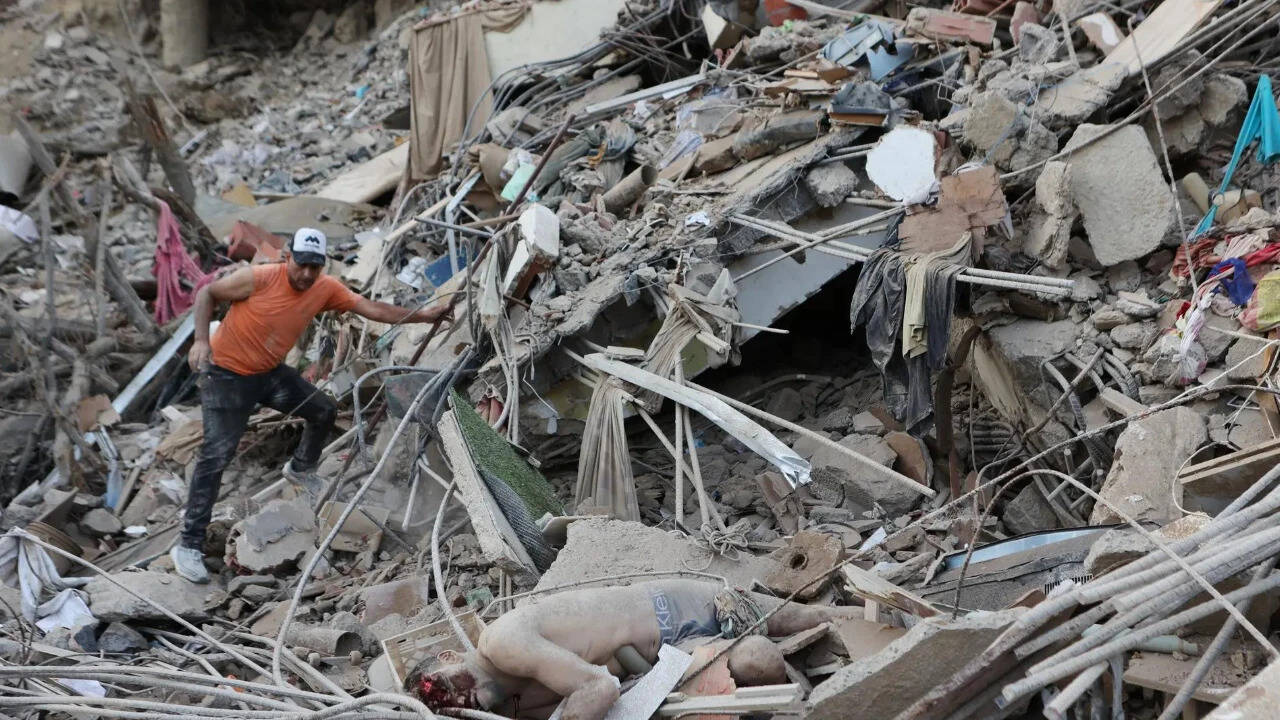
Venezuela just experienced its most violent seismic event in over a century. Two massive tremors hit the country's northern coast in less than a single minute, shattering concrete, shutting down the main international airport, and leaving hundreds of families searching through piles of debris for missing relatives. The Venezuela twin earthquakes have pushed the official death toll to 164 people, while local emergency teams struggle to reach the hardest-hit coastal communities. Over 900 people are hospitalized with severe injuries. The scale of this disaster isn't just about the raw power of the earth. It is a harsh reminder of how structural decay and economic strain make natural disasters much more lethal.
The numbers are terrifying, but the human reality on the ground is worse. Acting President Delcy Rodríguez announced the updated casualty figures during a late broadcast, confirming that rescue squads are racing against the clock to pull survivors out from collapsed apartment complexes. The disaster hit right around 6:00 PM local time on Wednesday, a moment when thousands of people were commuting home from work or preparing dinner. Within less than forty seconds, two distinct massive shocks tore through the crust, creating a chaotic echo effect that amplified the destruction across several states.
The science behind a double seismic punch
Geologists are calling this a doublet earthquake. It is a rare and devastating event where one large shock triggers an almost immediate second shock of equal or greater intensity nearby. The United States Geological Survey reported that the nightmare began with a magnitude 7.2 foreshock. That first rumble struck at exactly 6:04 PM local time near Morón on the Caribbean coast, located roughly 105 miles west of the capital city of Caracas.
As people ran into the streets to escape swaying buildings, the real catastrophe hit. Just 39 seconds later, a second, more powerful magnitude 7.5 mainshock erupted. This one hit at a shallow depth of just 10 kilometers. Shallow earthquakes cause far more violent surface shaking than deeper ones because the seismic energy doesn't have time to dissipate before reaching buildings.
Think of it as a physical assault on infrastructure. The first 7.2 quake weakened concrete structures, cracked columns, and compromised the stability of hundreds of buildings. Before these structures could settle or shed the stress, the 7.5 mainshock struck. This double blow caused immediate, catastrophic failures. Buildings that might have survived a single isolated tremor simply pancaked under the weight of the second shock.
Seismic waves traveled so far that high-rise office buildings were evacuated as far away as the Brazilian Amazon, nearly 1,100 miles from the epicenter. The region hasn't felt anything this violent since a magnitude 7.7 earthquake shattered the country back in the year 1900.
Crisis zones in La Guaira and Caracas
The narrow coastal strip of La Guaira has been declared an official disaster zone. This area sits directly between the steep coastal mountains and the Caribbean Sea, crowded with tightly packed concrete homes and high-rise beach apartments. Acting President Rodríguez described the situation in La Guaira as a true tragedy. Entire apartment blocks have shifted off their foundations.
In downtown Caracas, the scene during the night was one of pure survival. The government cut off natural gas lines to prevent massive explosions from ruptured pipes. Large swaths of the capital lost electricity and mobile phone coverage, leaving families in the dark and unable to check on loved ones. Thousands spent the night sleeping in public plazas, soccer fields, and asphalt parking lots because they were terrified of aftershocks.
The structural damage to critical infrastructure has crippled the immediate response. Simón Bolívar International Airport, the primary aviation gateway into Venezuela, suffered severe structural damage. Terminal ceilings collapsed, windows shattered, and the runway infrastructure required immediate inspection, forcing authorities to close the facility to commercial traffic. The Caracas metro system and major rail lines were also suspended, forcing thousands of panicked residents to walk miles through dust-choked streets to reach safety.
Structural vulnerability meets economic reality
You can't talk about this earthquake without talking about the state of Venezuelan infrastructure. For more than a decade, the country has navigated severe economic problems. This prolonged crisis meant that building codes were rarely enforced strictly, and routine maintenance on older concrete structures was pushed aside.
Many of the buildings that collapsed in affluent neighborhoods like Altamira, as well as the crowded informal settlements climbing the hillsides of Caracas, were structural accidents waiting to happen. Unreinforced masonry, aging concrete, and unpermitted vertical expansions are common across northern Venezuela. When you hit those types of structures with back-to-back quakes above magnitude 7, the outcome is predictable.
Emergency services are also under-resourced. Local fire departments and civil defense teams lack heavy lifting equipment, advanced concrete-cutting tools, and specialized canine search units. This has forced neighbors to dig through heavy concrete rubble with their bare hands, using car jacks and crowbars to lift slabs while listening for cries from trapped survivors.
The international aid standoff
The geopolitical reality of Venezuela is complicating how help arrives. Following the disaster, several governments offered immediate assistance. US Secretary of State Marco Rubio stated that Washington is ready to deploy search and rescue teams, medical resources, and humanitarian aid. He noted that the United States will have to rely on the Department of Defense to manage the logistics of moving these heavy assets into Venezuelan territory.
International coordination requires clear communication. Rodríguez confirmed she spoke with US officials by phone, though specific details about how American military transport planes would logistically enter Venezuelan airspace remain sensitive. Meanwhile, other international leaders have stepped up. Turkish President Recep Tayyip Erdogan offered his condolences and promised immediate technical search teams, while neighboring nations like Brazil and Colombia are organizing overland supply convoys filled with medical goods, clean water, and temporary shelter materials.
The Ministry of Education has canceled school classes across the nation for several days. School buildings that survived the shaking without structural cracks are being converted into emergency centers. These locations serve as makeshift shelters for the newly homeless and central hubs for food and water donations.
Essential steps for following the recovery
If you are trying to keep track of this situation or look for ways to support the relief efforts, you need to follow reliable channels. The ground reality is changing every hour as heavy machinery clears roads and reaches isolated coastal towns.
First, rely on verified tracking maps from international seismic networks like the USGS to see where aftershocks are clustering. Aftershocks are hitting the central coast frequently, and weak structures remain at risk of secondary collapse.
Second, monitor official air traffic updates regarding the reopening of Simón Bolívar International Airport. Until that airport opens, heavy international rescue flights cannot land directly near the capital, meaning aid must flow through smaller regional ports or overland routes from Colombia.
Third, look for established international aid groups that already have a physical footprint inside Venezuela, such as the International Federation of Red Cross and Red Crescent Societies. These groups can distribute medical supplies and clean drinking water immediately without waiting for complex political agreements to clear.
Keep your attention on the rescue window. The first 72 hours are vital for finding people alive beneath collapsed concrete. As emergency crews push deeper into the damaged neighborhoods of La Guaira, the focus remains entirely on finding survivors before time runs out.