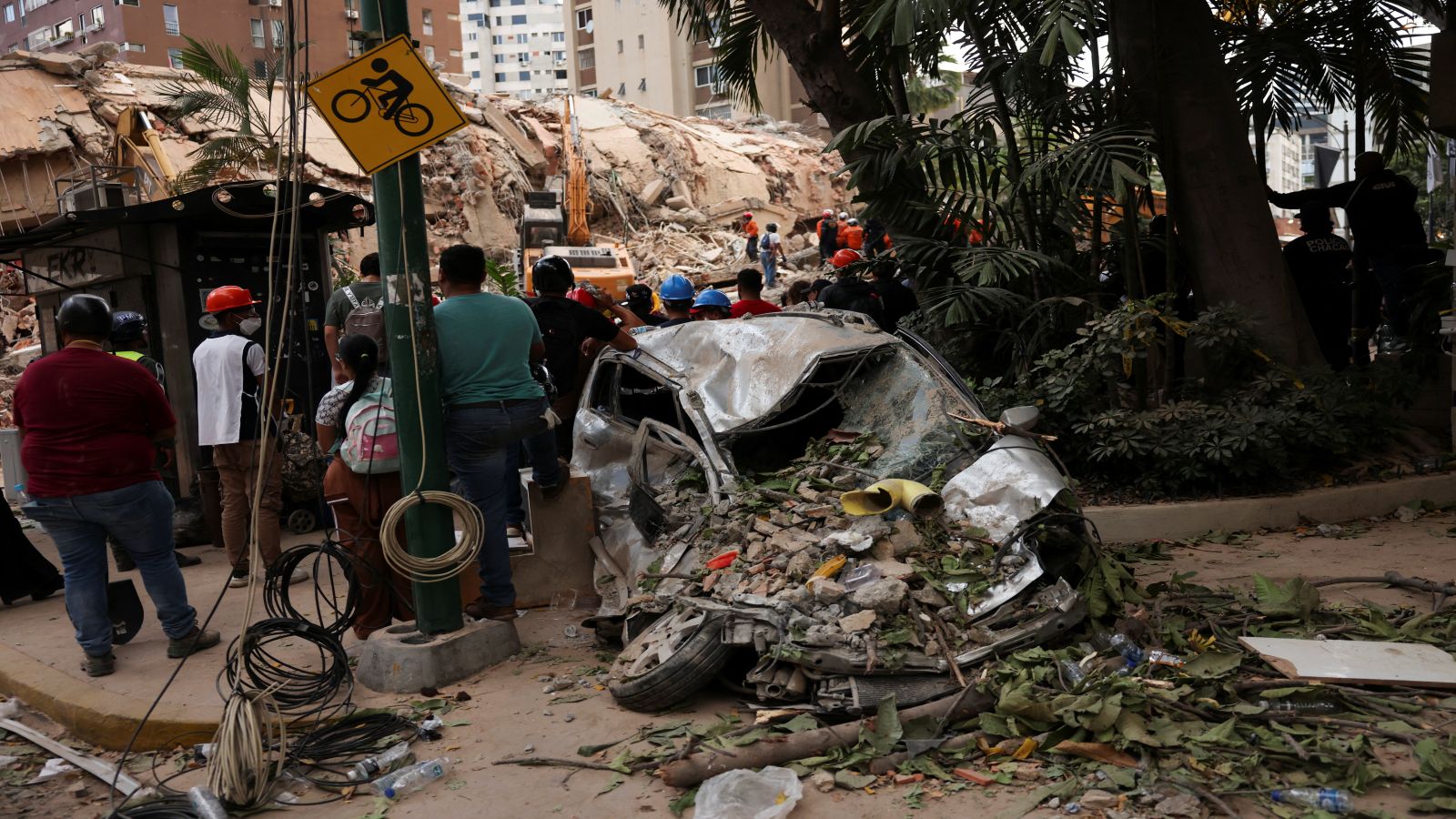
Juan Zapata was ready to wash off the heat of a June evening in his fifth-floor apartment when the world tore open. It was June 24, 2026. Within 39 seconds, two violent strike-slip earthquakes—a 7.2 foreshock followed immediately by a massive 7.5 mainshock—ripped across Venezuela's northern coast.
Zapata didn't make it to the shower. The sheer physics of the San Sebastián fault system threw him across his living room. When the concrete stopped screaming and the dust settled, he was pinned between two jagged pieces of rebar. He thought he was still on the fifth floor. Two days and seven hours later, when volunteer civilian rescuers finally cut him out, they had to break the news to him. He wasn't at the top anymore. He was trapped in what used to be the lower basement. His apartment building, the Costa Brava in La Guaira, had completely pancaked.
As the official death toll spikes past 2,954, stories like Zapata’s show the staggering disconnect between the raw reality on the ground and the official state response.
The Anatomy of a Dual Disaster
Most news reports treat the June 24 event as a single bad day. It wasn't. It was a one-two punch that rendered standard disaster protocols useless. The double quakes hit the northwestern and central coast with a maximum intensity of MMI IX—classified as violent shaking.
The initial 7.2 quake compromised thousands of structural columns in high-density urban areas like La Guaira and Caracas. Before anyone could even process the first shock, the 7.5 mainshock hit just 39 seconds later, systematically flattening buildings that might have otherwise stood. The United States Geological Survey (USGS) PAGER system estimates the structural damage at a crippling $37 billion, hinting that the true loss of life could eventually exceed 10,000 once the missing are accounted for.
Right now, more than 16,000 people are completely homeless, and another 28,300 are staring at structures that are entirely uninhabitable.
Civilians Do the Heavy Lifting While State Machinery Stalls
If you want to understand why locals are furious, look at who is actually holding the shovels. While the government claims that emergency aid rolled out instantly, the families digging through the concrete tell a completely different story.
Alexander Delgado isn't a disaster response expert. He is a physical education teacher from Aragua state. Yet, for over nine days, he has been managing a makeshift civilian rescue crew at Los Cocos, a pulverized public housing complex in La Guaira. They are clearing heavy concrete by hand because heavy machinery is virtually non-existent in the hardest-hit zones.
Beside him is Miguel Poleo, a local mechanic. Poleo isn't searching for miracles anymore; he is searching for closure. He has been tunneling through unstable ruins looking for his stepdaughter and her family. So far, he has only uncovered their dead dog.
The anger among volunteers is palpable. While international teams from organisations like Samaritan's Purse set up field hospitals over baseball fields to treat fractured ribs and traumatic lacerations, the state security apparatus seems to have its priorities backward. Heavily armed police patrol the ruins with semi-automatic weapons as if securing a war zone, rather than putting down their rifles to move the rubble hiding thousands of missing citizens.
Surviving Beyond the Medical Window
The gold standard in search and rescue dictates that the first 48 to 72 hours are everything. After three days without water, the odds of survival plummet toward zero. Yet, this disaster is breaking conventional medical rules, highlighting the strange anomalies of structural collapses.
Take Hernan Alberto Gil Flores, a 43-year-old security guard trapped beneath the ruins of the Galerias Playa Grande shopping centre. He didn't survive for two days; he survived for eight.
Survival Windows: Theory vs. Reality
--------------------------------------------------
Standard Rescue Window:   48 - 72 Hours
Juan Zapata Survival:     55 Hours (2 Days, 7 Hours)
Hernan Gil Flores Survival: 192 Hours (8 Days)
--------------------------------------------------
Gil Flores survived because his tiny security cabin remained structurally intact, creating a localized pocket of air deep beneath 29 feet of crushed concrete. A multinational effort involving rescuers from Costa Rica, Chile, and the United States spent over 100 hours executing an incredibly delicate technical extraction. They dropped a telescopic camera through a narrow fissure, maintaining visual contact and funnening liquid nutrients to him while navigating a relentless gauntlet of aftershocks and heavy tropical rain.
In a telling moment of human vulnerability, when the Costa Rican Red Cross first established contact, Gil Flores whispered a plea through the mic. He asked them not to tell his wife he was alive yet—simply because he couldn't bear the thought of giving her false hope if the unstable rubble shifted and crushed him before they reached him.
What Needs to Happen Next
The rescue phase is rapidly grinding to a halt as international teams begin winding down operations, meaning the crisis is shifting into a grueling long-term humanitarian emergency. If you want to support the immediate recovery efforts effectively, focus on these specific actions.
- Prioritize Identification and Documentation Aid: Survivors like Juan Zapata didn't just lose their homes; they lost their phones, legal IDs, and passports. Organizations assisting with identity recovery and family reunification are critical right now.
- Direct Support to Field Logistics: Food and heavy machinery shortages remain the primary bottleneck. Support independent international disaster groups like Samaritan's Purse or local Red Cross chapters that possess the logistical clearance to bypass bureaucratic state delays.
- Prepare for the Displacement Crisis: With over 44,000 people currently without safe shelter, the focus must shift heavily toward structural engineering assessments and temporary housing units before the seasonal rains worsen the camp conditions.