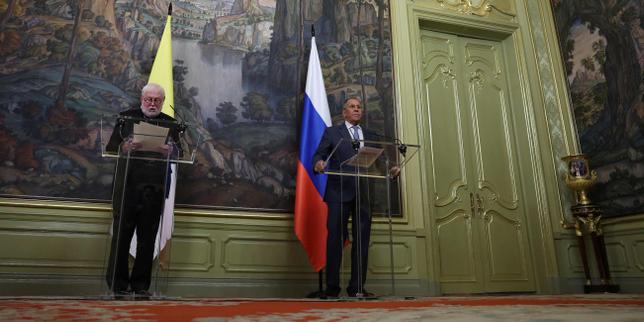
The Vatican's top diplomat didn't mince words in the Russian capital. Archbishop Paul Richard Gallagher walked straight into Moscow, sat down with Russian Foreign Minister Sergei Lavrov, and delivered a blunt message that the war in Ukraine has dragged on far too long.
Most diplomatic missions end in photo-ops and empty communiqués. This one carried a different weight. Gallagher's visit marks the first time a high-ranking Holy See official has stepped foot in Moscow for direct bilateral talks since November 2021—just months before Russian troops rolled across the border.
If you've been following international mediation efforts, you know they usually go nowhere. But Holy See diplomacy operates on a completely different timeline. They don't care about quarterly election cycles or short-term tactical gains. They care about long-term survival, humanitarian corridors, and keeping a backdoor open when everyone else is slamming doors shut.
What Really Happened Behind Closed Doors in Moscow
When Gallagher met Lavrov on August 25, 2026, the public posturing was predictable. Both sides talked about maintaining contact, but the real substance lay in the framing. Gallagher made it clear that every single day the conflict continues, it creates fresh waves of victims and pushes future reconciliation further out of reach.
Think about what that means. The Holy See isn't just offering generic thoughts and prayers. They're actively pushing the narrative that military solutions have hit a hard wall.
"The Holy See's position remains clear: the conflict cannot be resolved by military means," Gallagher emphasized during the discussions.
That is a direct challenge to anyone banking on a purely battlefield-driven outcome. While Western capitals pour billions into military hardware and leaders flock to Kyiv, the Vatican is quietly carving out a space for political and diplomatic groundwork. They are offering their good offices to broker settlements and manage humanitarian crises, positioning themselves as a neutral mediator that neither side can entirely dismiss.
The Real Reason Why This Diplomatic Channel Matters
You might wonder why Moscow would even entertain a visit from a Vatican envoy while missiles are still flying. Russia wants to project that it isn't completely isolated on the global stage. Engaging with the Holy See gives Moscow a diplomatic lifeline to Western-aligned religious and moral networks without having to talk directly to NATO capitals.
At the same time, the Vatican has its own strategic calculus. They've notably declined to jump onto alternative international peace boards floated by major powers, preferring to maintain independent leverage.
Gallagher's itinerary didn't stop at political meetings. He's scheduled to visit local Catholic communities, celebrate Mass at Moscow's Cathedral of the Immaculate Conception, and meet with regional bishops. This dual-track approach—combining high-level statecraft with pastoral oversight—gives the Holy See eyes and ears on the ground that traditional embassies often miss.
What Most Observers Miss About Holy See Strategy
People love to mock religious diplomacy as toothless. They look at the battlefield attrition, the drone strikes, and the frozen front lines, and they ask what a cardinal in red robes can possibly achieve.
They're missing the point.
The Vatican's power isn't measured in battalions. It's measured in endurance. Wars eventually end at a negotiating table, and when both sides are finally exhausted enough to talk, someone has to hold the keys to a neutral venue. By keeping communication channels open with Lavrov—just weeks after Vatican officials held parallel talks in Ukraine—the Holy See ensures they will be at that table when the momentum shifts.
The reality on the ground remains brutal. Reconciliation looks nearly impossible right now. But diplomacy isn't about solving everything today; it's about making sure tomorrow's conversation is still possible.
Stop waiting for a miraculous military breakthrough to end the bloodshed. Pay attention to the quiet actors keeping the backchannels alive, because they are the ones who will write the final exit strategy.