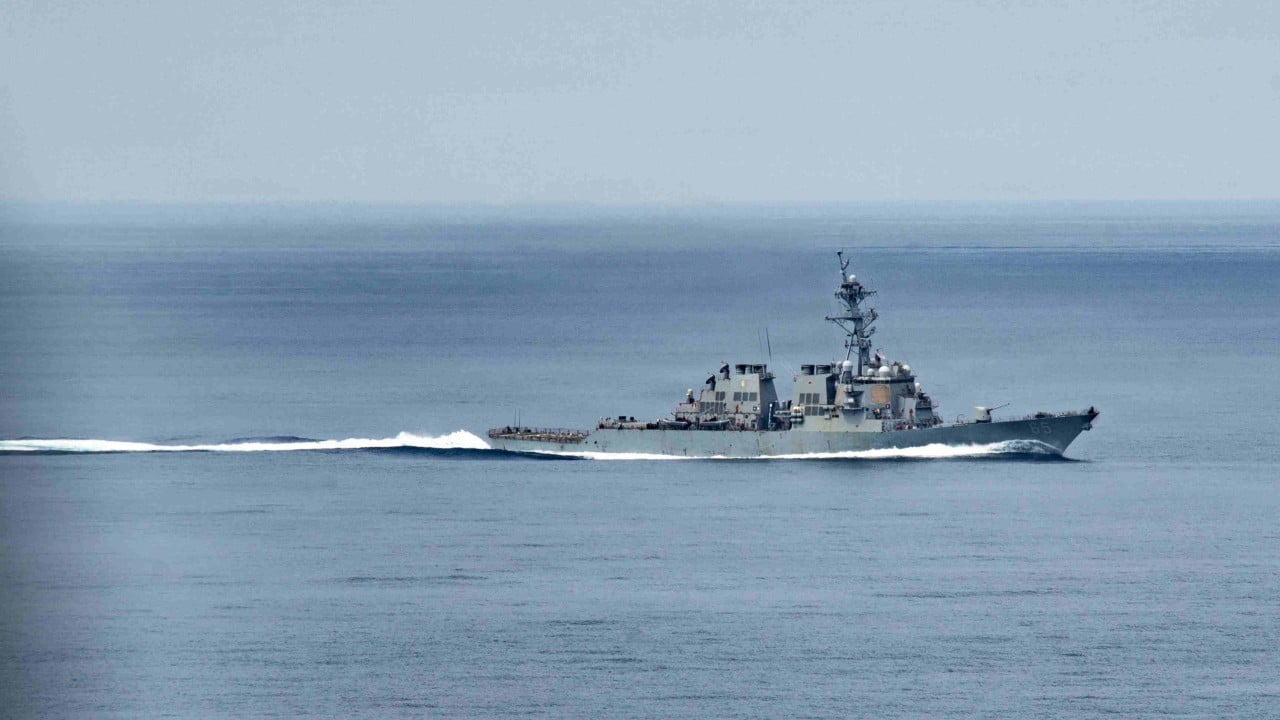
The sight of a ten-thousand-ton Arleigh Burke-class destroyer drifting powerless in the blistering heat of the South China Sea isn't just an engineering failure. It's a flashing warning light for the United States Navy. When the USS Benfold lost electricity on July 24, leaving its crew without air conditioning, potable water, or working toilets for four grueling days, the narrative shifted from routine operations to a harsh reality check.
We like to talk about military "deterrence" as if it’s an abstract concept managed from a boardroom. In reality, deterrence is built on the sweat of sailors working in engine rooms that are thirty years old. The Benfold incident, which the Navy didn't publicly acknowledge for weeks, highlights a growing friction between the ambitious scope of global commitments and the physical state of the fleet tasked with carrying them out. Recently making headlines in related news: Why Israel Faces A Breaking Point Over Ultra-orthodox Military Service.
The myth of infinite capacity
The military establishment often operates under the assumption that the fleet is a magic machine. You push a button, and a warship appears exactly where you need it. But ships have a finite service life. The Arleigh Burke class—the backbone of the surface fleet—is aging. When you run these ships at an unrelenting operational tempo, supporting everything from the ongoing Iran conflict to routine patrols in the Pacific, you aren't just "taxing reserve capacity." You're borrowing time from the future.
Look at the numbers. The Navy is currently juggling a massive range of global requirements, often with fewer than half of its carriers deployed at any given time. Maintenance cycles aren't suggestions; they’re the only thing keeping these ships from becoming static targets. When a ship like the Benfold or the USS Higgins in May suffers an "engineering casualty" in the middle of a mission, it isn't just bad luck. It's the inevitable result of a fleet being ridden into the ground. Further details regarding the matter are detailed by Associated Press.
The human cost of operational tempo
It’s easy to focus on the hardware. But there’s a human side to this story that gets lost in the defense-policy chatter. Imagine being on that destroyer. Temperatures in the South China Sea aren't just warm; they’re brutal. Without AC, the interior of a steel warship becomes a literal oven. The fact that the crew maintained their professionalism is a testament to their training, but that training shouldn't have to compensate for basic mechanical failure.
When we push ships past their recommended maintenance intervals, we’re asking sailors to perform miracles with gear that’s begging for a shipyard. Every day a ship spends at sea beyond its optimal service cycle increases the risk of a "casualty." This isn't theoretical. It’s exactly what happens when you prioritize presence over readiness.
Shifting geopolitical stakes
The South China Sea isn't a quiet patrol zone anymore. It’s a theater of high-stakes maneuvering where every breakdown is amplified. When a ship drifts for four days, it needs to be towed. That requires other ships to deviate from their own missions to provide food, protection, and logistics. Basically, one disabled destroyer becomes a vacuum that sucks resources away from the rest of the strike group.
The Pentagon’s reliance on "distributed operations" and high-intensity exercises is meant to show strength. However, this strategy assumes your equipment will be there when the whistle blows. If your primary platforms are spending their time waiting for tugboats in Subic Bay, the entire deterrent posture loses its teeth.
Beyond the broken generators
Critics will argue that this is just part of naval life. They’ll point to the grit and resilience of the crew. But "grit" is a terrible substitute for a robust maintenance budget and a sustainable deployment schedule. The real question isn't whether the Navy can fix a generator; it’s whether the current global strategy is fundamentally unsustainable for the size of the force we actually have.
We are seeing a trend where maintenance and infrastructure are constantly sidelined for the sake of "strategic visibility." It’s like driving a car for 200,000 miles without an oil change because you want people to see you parked in the driveway. Eventually, the engine locks up.
If the goal is truly to maintain an effective presence in the Indo-Pacific, the focus needs to shift. We need to stop chasing high-profile headlines and start investing in the unglamorous work of shipyard capacity and mechanical sustainment. Otherwise, the next "engineering casualty" might happen at a moment when we can’t afford to spend four days without power.
The Navy needs to be honest about its limits. We have to decide whether we want a force that can project power indefinitely or one that is actually ready for a high-end fight. We can't have both with a fleet that’s held together by duct tape and hope. The Benfold was a lucky incident because it happened during a period of relative calm. Next time, we might not be so fortunate. It's time to prioritize the health of the fleet over the convenience of a map.