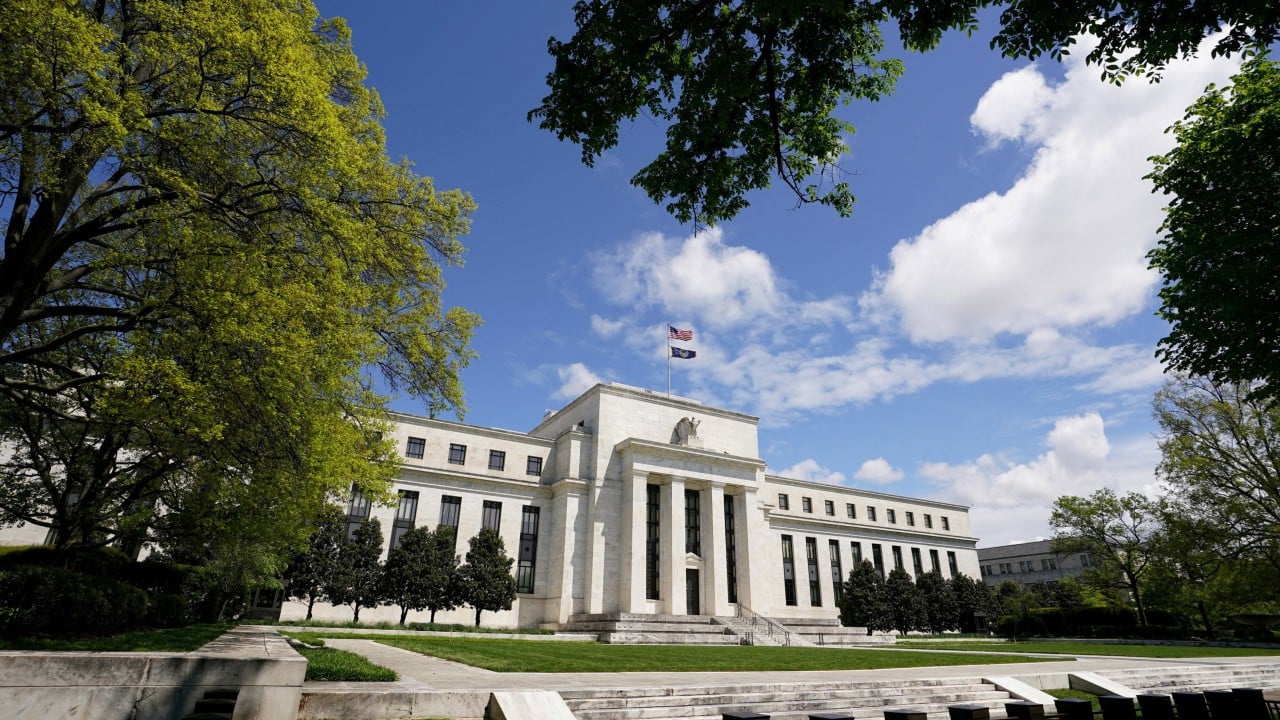
Imagine having early access to the interest rate decisions of the world's most powerful central bank. If you know exactly when and how much the Federal Reserve is going to raise or lower rates before anyone else does, you basically hold a money-printing machine. Now imagine you are a foreign nation holding over $800 billion in U.S. government debt. That early information isn't just a trading advantage. It is a geopolitical weapon.
This isn't a hypothetical scenario from a financial thriller. It is the real-world plot behind the case of John Harold Rogers, a 64-year-old former senior adviser at the Federal Reserve Board of Governors. On July 15, 2026, a federal judge sentenced Rogers to 38 months in prison. His crime? He spent years funneling sensitive Fed data to Chinese intelligence operatives and then lied straight to the faces of federal investigators.
The competitor news articles covering this story focus entirely on the basic court facts: the arrest, the sentence, and the brief quotes. But they miss the entire point of why this case matters. It exposes a massive, systemic vulnerability in how the United States protects its most critical economic secrets.
The Quiet Seduction of an Elite Economist
John Harold Rogers wasn't some low-level clerk. He was a highly respected economist with a PhD who spent decades climbing the ranks of the Fed. From 2010 to 2021, he worked inside the Fed's elite Division of International Finance. He had direct access to nonpublic, restricted information regarding monetary policy, tariff strategies, and the deliberations of the Federal Open Market Committee (FOMC).
His downfall didn't start with midnight dead-drops or encrypted satellite phones. It started the way most intellectual espionage starts today: with a professional relationship that felt entirely normal.
The Recruitment in Plain Sight
In 2017, Rogers traveled to China for an academic conference. There, he met a man named Hummin Lee. To the outside world, Lee was just another academic connection. In reality, he was an operative working for the Chinese intelligence apparatus.
Lee didn't ask Rogers to steal classified military blueprints on day one. Instead, he built a relationship. He offered Rogers professional prestige, academic opportunities, and financial incentives. Rogers eventually took a part-time teaching position at Fudan University, a prestigious state-run Chinese institution, which paid him roughly $450,000 in 2023. Lee even helped Rogers with issues surrounding his new wife.
Over time, the relationship shifted from friendly academic banter to targeted intelligence collection. Rogers later admitted to investigators that he felt he "owed everything" to Hummin Lee. That sense of obligation is a classic psychological tool used by foreign intelligence services. They make you feel successful, they make you feel valued, and then they ask for favors.
The Hotel Room Seminars
Rogers began stripping security and classification markings from restricted Federal Reserve documents. He emailed these files to his personal accounts and printed physical copies to pack in his luggage before trips to China.
Once in China, Rogers met Lee and his associates in various hotel rooms. The meetings were officially billed as academic "classes" or guest lectures. Behind closed doors, however, Rogers spent these sessions walking Chinese operatives through the Fed's internal data, upcoming policy shifts, and restricted briefs. He did this knowing full well that Lee was using this information to draft reports directly for the Chinese government.
Why These Economic Secrets Are Worth Trillions
It is easy to understand why someone would steal military secrets like stealth fighter designs. But why would Chinese intelligence care so much about Federal Reserve briefing books?
To understand the gravity of the leak, you have to look at the scale of China's financial holdings. China holds an astronomical amount of U.S. government debt—fluctuating between $800 billion and $1.5 trillion depending on the year.
When the Federal Reserve changes interest rates, it directly affects the value of U.S. Treasury bonds. If China knows a rate hike is coming days before the rest of the global market does, its sovereign wealth funds and state banks can position themselves to make billions of dollars in profit. Conversely, they can avoid billions in losses. It is sovereign-level insider trading.
Rogers wasn't just leaking gossip. He was handing over proprietary economic data sets, internal debates about U.S. tariffs targeting China, and the highly sensitive briefing books prepared for Fed governors. This gave Beijing a direct, clear window into the minds of American economic policymakers. It allowed them to anticipate U.S. trade moves and neutralize American economic pressure.
The Big Catch of the Legal System
If the damage was so severe, why did John Harold Rogers walk away with just a 38-month prison sentence? To understand this, you have to look at the massive hurdles prosecutors face in economic espionage cases.
The U.S. Department of Justice originally hit Rogers with a heavy charge: conspiracy to commit economic espionage. That charge carries a maximum penalty of 15 years in prison. Yet, during his trial in February, the jury acquitted Rogers on the espionage charge.
Why did he beat the espionage charge?
- The "Trade Secret" Legal Loophole: To secure a conviction for economic espionage, prosecutors must prove beyond a reasonable doubt that the stolen information meets the strict, statutory definition of a "trade secret." While Federal Reserve monetary policy deliberations are highly confidential and incredibly valuable, defense lawyers can successfully argue that policy discussions and economic projections do not fit the narrow legal definition of a proprietary commercial trade secret.
- The Academic Smokescreen: Because Rogers shared the information under the guise of academic research and lectures, his legal team was able to muddy the waters. They painted his actions as standard academic collaboration rather than a coordinated conspiracy to spy.
Ultimately, Rogers was convicted on a fallback charge: lying to federal investigators.
When investigators from the Fed's Office of Inspector General sat Rogers down on February 4, 2020, they asked him directly if he had ever shared restricted Fed information outside the Board. Rogers looked them in the eye and said, "Never."
He lied again under oath during his trial. That lie is what finally locked him up.
The Math of the Sentence
Federal prosecutors pushed hard for a 60-month (five-year) prison term, arguing that Rogers betrayed a massive position of trust. His defense team, on the other hand, argued for no additional jail time, pointing to the roughly 18 months Rogers had already spent in custody.
In the end, U.S. District Judge Dabney Friedrich split the difference, handing down a 38-month sentence. Because Rogers gets credit for the 18 months he has already served, he will likely spend less than two more years behind federal bars.
For a man who pocketed hundreds of thousands of dollars from Chinese institutions while compromising the integrity of the U.S. central bank, a net sentence of just over three years feels incredibly light. It sends a dangerous message to other potential bad actors: the financial rewards of economic collaboration with foreign adversaries far outweigh the legal penalties if you get caught.
The Lessons We Must Learn From the Rogers Case
The Rogers investigation reveals that our current security framework is dangerously outdated. We are still treating national security as if it only applies to military bases and weapons laboratories.
If you run an organization that handles sensitive financial data, intellectual property, or market-moving information, you cannot rely on standard security clearance models. You must adapt. Here is what organizations need to do right now to protect themselves from insider threats.
1. Stop Ignoring the Academic Loophole
Foreign intelligence agencies love using universities and think tanks as front operations. It provides a perfect cover of academic freedom and open collaboration.
If your employees are attending international conferences, guest-lecturing abroad, or taking part-time positions at foreign universities, you must implement strict reporting requirements. Any compensation, travel funding, or housing assistance received from foreign institutions must be fully disclosed and vetted.
2. Implement True Zero-Trust Data Controls
Rogers was able to print out restricted documents and email them to his personal account without triggering immediate, automated alarms. That is a systemic failure of basic data loss prevention (DLP) protocols.
An organization handling sensitive data must block the physical printing of restricted documents unless specifically authorized. It should also completely restrict access to personal webmail on work networks. More importantly, any action involving the removal of security or classification headers must immediately lock the user's account and trigger an internal security review.
3. Conduct Proactive Financial Audits
Rogers was receiving substantial financial benefits and a $450,000 part-time salary from Chinese sources. A simple, routine check on the asset and income disclosures of high-level Fed advisers should have raised massive red flags years before his arrest.
High-level employees with access to market-moving information must be subject to regular, mandatory financial disclosure reviews. Sudden influxes of foreign cash, newly established foreign bank accounts, or unexplained wealth must be flagged and investigated immediately.
The John Harold Rogers case is a wake-up call. The battle for global dominance isn't just being fought with missiles and warships. It is being fought in the quiet corridors of central banks, research institutions, and corporate boardrooms. If we don't start treating economic intelligence with the same level of security as military secrets, we will continue to lose this quiet war, one compromise at a time.