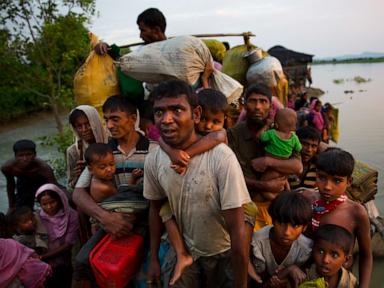
The highest court in the United Nations is about to hand down a decision that could rewrite how the world handles state-sponsored atrocities. Years after a brutal military crackdown forced more than 740,000 Rohingya Muslims to flee Myanmar for Bangladesh, the International Court of Justice (ICJ) in The Hague is delivering its final judgment in the landmark case brought by The Gambia.
If the court finds Myanmar responsible for genocide, it won't just be a symbolic victory for survivors. It marks the first time the ICJ has ever reached such a conclusion against a UN member state. But getting to this point has required cutting through some of the most rigid legal hurdles in international jurisprudence.
Why Proving Genocide Is So Hard
Genocide is often called the crime of crimes, but legally speaking, it's also one of the hardest to prove. Prosecutors can easily stack up evidence of war crimes or crimes against humanity—mass murder, forced displacement, widespread sexual violence—and still lose a genocide charge. Why? Because of a single, elusive legal standard: specific intent (dolus specialis).
You have to prove that the state didn't just commit horrific acts, but did so with the explicit intent to destroy an ethnic, national, or religious group as such. Myanmar's defense has relied heavily on this distinction, arguing that its 2017 military operations were targeted counter-insurgency measures against militants, not a campaign to annihilate the Rohingya.
The court has spent years weighing how to infer that specific intent from patterns of conduct, state rhetoric, and systematic destruction. Human rights groups and intervening nations, including a coalition of European states, have argued that the court must look comprehensively at the entire ecosystem of violence—ranging from the systematic targeting of children and gender-based abuse to systemic restrictions on reproduction.
The Road From Banjul to The Hague
This case didn't start with a superpower throwing its weight around. It was initiated in 2019 by The Gambia, a small West African nation acting on behalf of the 57 members of the Organisation of Islamic Cooperation (OIC).
That legal maneuver was groundbreaking on its own. The Gambia used Article IX of the 1948 Genocide Convention, which allows any signatory state to bring a dispute against another member regarding state responsibilities—even if the filing country has no direct connection to the conflict. It bypassed the traditional gridlock of the UN Security Council, where permanent members holding veto power often paralyze international justice.
Throughout the proceedings, the stakes have extended far beyond a courtroom in the Netherlands. In refugee camps across Cox's Bazar in Bangladesh, hundreds of thousands of Rohingya have waited through years of legal delays. For them, the judgment isn't an academic exercise in international law; it's about basic recognition, safety, and a future where their children can return home with dignity.
What Happens After the Gavel Falls
The ICJ's judgment is final and cannot be appealed. But enforcement remains the perennial weakness of international courts. The ICJ has no police force. If it rules that Myanmar violated the Genocide Convention, compliance relies on diplomatic pressure, economic sanctions, and the willingness of the international community to isolate the military junta currently ruling Myanmar.
Meanwhile, the situation on the ground in Rakhine State remains deeply volatile. Control over the region has shifted amid ongoing civil conflict, with rebel groups like the Arakan Army facing fresh accusations of abusing the remaining Rohingya population. A court ruling in Europe won't immediately stop the fighting, but it draws a hard ethical and legal line.
Keep your eyes on how the court handles the evidentiary weight of UN fact-finding missions and whether the judges set a precedent that makes holding rogue states accountable a bit more realistic in the future.