When the United Nations General Assembly gathered to decide who should lead global human rights oversight through 2030, the diplomatic knives were already unsheathed.
The United States wanted a delay. Russia floated a procedural maneuver to cut the tenure short. Israel publicly slammed the entire process as a moral failure. In similar developments, take a look at: Why Trump Went All In For Darline Graham In South Carolina.
Yet, when the electronic board lit up in the New York chamber on July 24, 2026, the result wasn't even close.
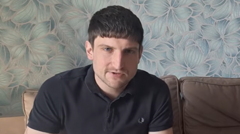
Volker Türk, an Austrian career diplomat and veteran UN lawyer, secured a second four-year term as High Commissioner for Human Rights. The final tally stood at 144 votes in favor, 10 against, and 13 abstentions. The New York Times has analyzed this important topic in extensive detail.
He pulled this off in an era defined by deep geopolitical fractures. In doing so, he broke a long-standing historic pattern. Since the post was created in 1993, no person occupying it has ever served two full four-year terms.
Why did an official who alienated Washington, Moscow, and Jerusalem manage to land a sweeping vote of confidence from the rest of the world? The answer tells you everything about how global diplomacy operates behind closed doors.
The Backroom Battles Behind the Assembly Floor
You don't usually see open brawling over administrative appointments at the UN. Most terms get confirmed by consensus behind closed doors long before any vote is called.
This time was different.
UN Secretary-General António Guterres, who is set to step down in December 2026 at the end of his ten-year tenure, nominated Türk for reappointment earlier this month. That decision set off alarm bells across several major capitals.
Russia acted first. Moscow submitted a formal counter-proposal to extend Türk’s mandate by just over two months, capping it at the end of 2026. Russian Deputy Ambassador Dmitry Chumakov accused Guterres of sowing division, claiming Türk demonstrated clear political bias by advancing Western interests under the guise of human rights. Moscow was still fuming over Türk’s repeated public condemnations of Russia’s invasion of Ukraine.
Washington took a different angle. US Deputy Ambassador Jeff Bartos urged the assembly to delay the decision, arguing that pushing the vote through without public debate proved the assembly was fundamentally dysfunctional. American officials argued that a major appointment shouldn't be quietly added to the agenda at the last minute while the outgoing Secretary-General was preparing to leave office.
Israel offered the sharpest reaction. Its Foreign Ministry published a statement on social media labeling Guterres’ reappointment proposal the Secretary-General’s latest moral failure. Israeli officials insisted the decision ought to be left to Guterres’ successor.
The General Assembly soundly rejected both the American delay tactics and the Russian counter-proposal before voting overwhelmingly to confirm Türk through October 2030.
Criticism From All Sides
If you want to understand why the UN human rights chief job is so brutal, look at who Türk managed to anger over his first four years.
The position demands calling out human rights abuses committed by member states. Those member states also happen to control the UN's budget and political calendar. It’s a job built on inherent structural conflict.
┌─────────────────────────────────────────────────────────┐
│               THE HIGH COMMISSIONER'S TIGHTROPE        │
├───────────────────┬─────────────────────────────────────┤
│ Opposing Power    │ Primary Source of Friction          │
├───────────────────┼─────────────────────────────────────┤
│ Israel            │ Condemnation of Gaza military action│
│ Russia            │ Reports on war crimes in Ukraine    │
│ United States     │ Procedural pushback & Gaza stance  │
│ Human Rights Groups│ Quiet diplomacy on China / Xinjiang │
└───────────────────┴─────────────────────────────────────┘
Consider how different factions viewed his record leading into the vote:
The Israeli Stance
Türk drew fierce condemnation from Israeli officials for his remarks on the conflict in Gaza, where he repeatedly criticized military operations and used terms like mass killing to describe civilian casualties. Israel argued that his statements showed a pattern of systemic anti-Israel bias while downplaying terror threats.
The Russian Stance
Moscow targeted Türk over his office’s extensive documentation of civilian casualties, forced deportations, and infrastructure destruction in Ukraine. Russian diplomats claimed he acted as an instrument of NATO foreign policy rather than an impartial arbiter.
The Activist Critique
It wasn't just world powers complaining. Human rights advocates and former insiders slammed Türk for being far too timid on Beijing.
Ken Roth, former executive director of Human Rights Watch, publicly called Türk’s record on Xinjiang a major stain on his reputation. Critics argued that after his predecessor, Michelle Bachelet, released a landmark report stating China's actions against Uyghur Muslims might constitute crimes against humanity, Türk let the matter drop to preserve working ties with Beijing.
Türk’s office defended his approach, maintaining that he pushed Chinese leadership through private diplomatic channels while speaking out publicly on specific cases involving detained activists.
Why the Global South and Europe Rally Around Türk
So if Washington, Moscow, Jerusalem, and international civil society groups all had serious gripes, how did Türk end up with 144 votes in his favor?
Power dynamics in the General Assembly aren't dictated solely by superpower vetoes. Every nation gets one vote.
For a wide swath of nations across Europe, Latin America, and the African Union, Türk represented stability and independence.
Ambassador Fergal Mythen of Ireland voiced what many mid-sized nations felt, stating on the floor that Türk had fulfilled his duties effectively, objectively, and without selective political bias over his initial four-year tenure.
The broad voting base saw the coordinated pushback from major powers as proof that Türk was actually doing his job. When a human rights chief is simultaneously attacked by Moscow for being pro-Western, by Washington for procedural rushing, and by activists for soft-pedaling China, many member states interpret that crossfire as evidence of neutrality.
If everyone is angry at you, you might just be standing right in the middle.
There was also a practical institutional factor. Transitioning leadership in the middle of multiple regional crises while Secretary-General Guterres finishes his own term was viewed by most diplomats as an unnecessary distraction. Extending Türk provided continuity.
The Historical Curse of the Office
Serving two terms in this role is virtually unheard of.
When the General Assembly created the post of High Commissioner for Human Rights in December 1993, the idea was to give human rights a prominent, independent champion within the UN system. The mandate allowed for a four-year term with the possibility of one renewal.
None of Türk’s predecessors actually completed two full terms.
- José Ayala-Lasso stepped down early in 1997.
- Mary Robinson, former President of Ireland, faced brutal pressure from the United States over her stance on the 2001 Durban World Conference Against Racism and opted not to seek a full second term.
- Sergio Vieira de Mello took office in 2002 but was tragically killed in the 2003 Canal Hotel bombing in Baghdad.
- Louise Arbour declined to seek a second term in 2008 after enduring relentless attacks from autocratic regimes and Western powers alike.
- Navi Pillay served a four-year term and received a brief two-year extension, but didn't complete two full terms.
- Zeid Ra'ad Al Hussein stepped down in 2018 after one term, famously remarking that pursuing a second term would require bowing down in entreaty to political leaders and compromising the integrity of his office.
- Michelle Bachelet left after a single turbulent term in 2022 following intense geopolitical pressure surrounding her report on Xinjiang.
The job has historically burned through leaders like fuel. By securing confirmation for a second full four-year term, Türk did something no predecessor ever accomplished.
What Happens Next for Global Human Rights Oversight
Türk’s mandate now runs until October 2030. The political battlefield he faces over this second term will be even harsher than his first.
Here are the primary pressures that will define his agenda over the next four years:
Navigating the UN Leadership Transition
In December 2026, António Guterres leaves office. A new Secretary-General will take over in January 2027. Türk will have to build a working relationship with a new boss who did not select him and who may face pressure from countries that opposed Türk’s reappointment.
Restoring Funding and Operational Mandates
The UN faces acute budget shortfalls due to delayed member state contributions. The Office of the High Commissioner for Human Rights (OHCHR) receives a tiny fraction of the regular UN budget, relying heavily on voluntary contributions. Navigating these shortfalls while maintaining field monitoring operations in conflict zones will force tough choices.
Addressing the Credibility Gap on Big Powers
Türk must figure out how to handle human rights violations in powerful nations without destroying diplomatic access. The critique that the UN holds small, impoverished nations to strict standards while giving superpowers a pass isn't going away. He will be under heavy pressure from Western advocacy groups to follow up aggressively on China, while simultaneously facing pushback from Washington and Moscow regarding ongoing regional wars.
How to Track UN Human Rights Developments
If you follow international diplomacy or human rights policy, watching how the OHCHR operates under Türk’s second term provides a clear window into global politics.
- Read official country reports directly: Instead of relying on political commentary, review the primary documentation published on the UN OHCHR Official Portal.
- Monitor General Assembly voting patterns: Pay attention to how voting blocs line up on resolutions concerning regional conflicts. The 144-10 vote shows that the coalition of non-aligned and European states still holds massive voting power when united.
- Follow the 2026 Secretary-General selection: The upcoming race for UN Secretary-General late in 2026 will directly influence how much political backing Türk receives during the second half of his tenure.