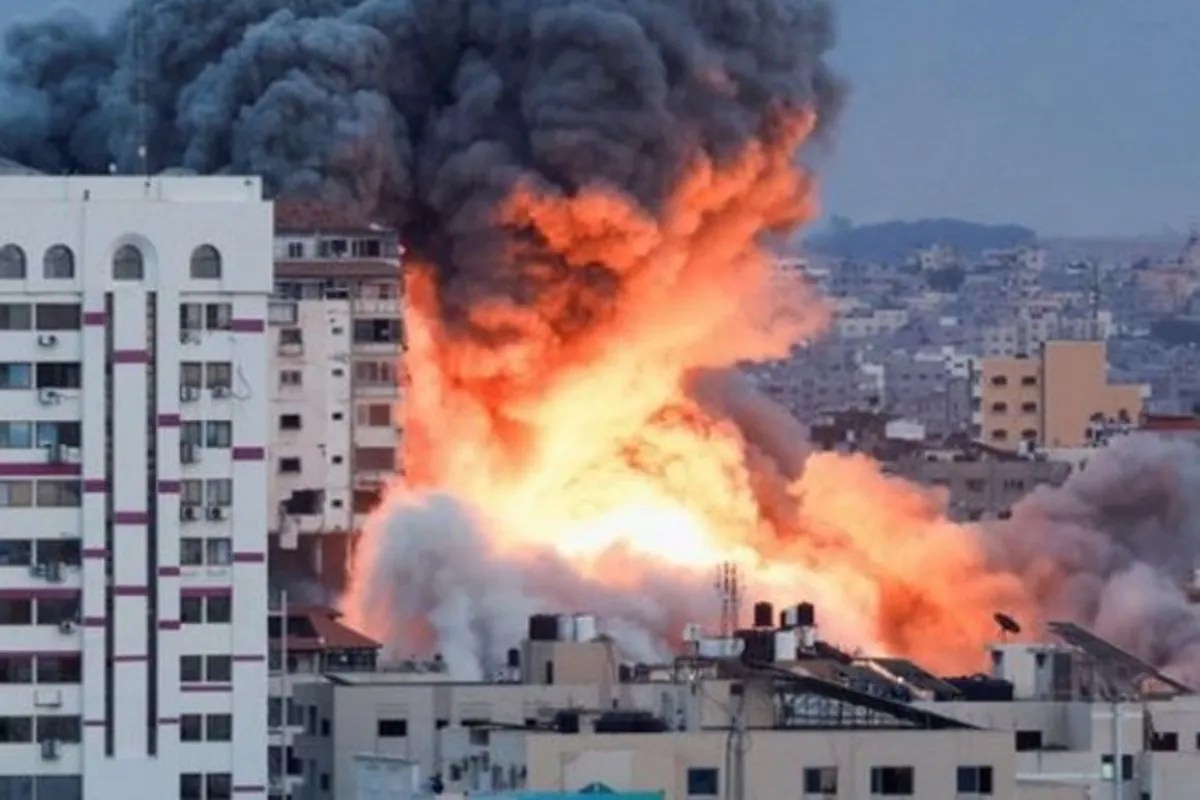
For years, rumors swirled about what happened in the lonely desert stretches of Deir ez-Zor. Back in 2007, an Israeli air strike wiped out a secretive building that foreign intelligence agencies claimed was an undeclared nuclear facility. The regime of Bashar al-Assad denied everything, stonewalled international inspectors, and brushed off accusations. But history moves fast. Following the collapse of Assad's government in December 2024, the political landscape shifted entirely. New leaders opened the door to the International Atomic Energy Agency, and what inspectors found confirms the worst suspicions of non-proliferation experts.
Rafael Grossi, chief of the UN nuclear watchdog, revealed that the covert installation was purpose-built to produce fissile material. If completed, it could have manufactured ingredients directly usable for nuclear weapons. Inspectors didn't just walk in through the front door either. During their recent visit, IAEA teams had to tear down walls and navigate tight, difficult passageways to reach hidden caches. They uncovered roughly 73 tonnes of natural uranium metal in the form of fuel rods with cladding, scattered across boxes in an underground maze. You might also find this connected story useful: Why Trump Embracing Ai Generated Memes Is Completely Changing Political Campaigns.
It's easy to look at this as just another historical artifact of a fallen dictatorship, but the security implications stretch far beyond Damascus. Natural uranium metal isn't something you drop straight into a warhead. It requires an extensive processing chain, typically involving conversion into plutonium or further enrichment. Experts like Logan Mintz from the Nuclear Threat Initiative point out that while the raw material itself is inert in its current state, its existence proves how close the former regime came to bypassing international oversight with foreign assistance—specifically North Korea, which helped build the original reactor infrastructure.
Now, the immediate crisis isn't about rogue reactors ticking away in the desert; it's about securing 73 tonnes of radioactive material. Grossi confirmed that IAEA inspectors have managed to install monitoring cameras and place the inventory under strict agency safeguards. Whether that uranium stays in Syria or gets shipped abroad for secure chemical stabilization is a decision left entirely to the current transitional government. Transporting tens of tonnes of nuclear material safely requires extreme logistical security to prevent theft or sabotage by militant factions still lingering in the region. As reported in detailed articles by NBC News, the implications are significant.
The takeaway here is simple. Clandestine nuclear ambitions rarely stay hidden forever, even if it takes a regime collapse to drag them into the sunlight. International oversight relies heavily on cooperation, but when authoritarian states slam the door, inspectors are left blind for decades. Now that the IAEA has eyes on the ground and cameras on the site, the immediate threat is contained. Yet, the discovery serves as a stark reminder of how close the Middle East came to a much more dangerous threshold.
Take a close look at how regional non-proliferation frameworks handle orphaned nuclear materials in post-conflict zones. If you're tracking global security trends, keep an eye on what happens to those 73 tonnes of uranium over the coming months.