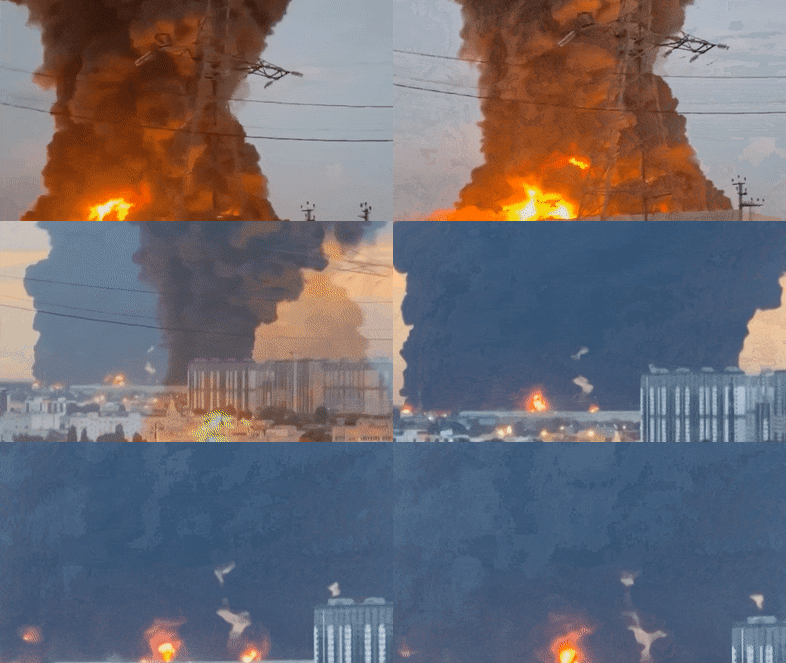
When long-range Ukrainian drones slammed into massive fulfillment hubs across western and southern Russia in July 2026, many Western observers wondered why military strategists were spending precision munitions on cardboard boxes and consumer electronics.
The target wasn't just any commercial business. It was Wildberries, the undisputed giant of Russian e-commerce.
Often described as Russia's Amazon, Wildberries handles roughly 45% of all online shopping in the country. Together with its main competitor Ozon, the two platforms account for more than three-quarters of Russia's digital marketplace trade. Pushing long-range drones hundreds of miles past Russian air defenses to torch megastructures in Elektrostal, Kotovsk, Krasnodar, and Nevinnomyssk isn't a random terror tactic. It's a calculated strike against the nervous system of Russia's civilian and military supply chain.
The immediate results were impossible to hide. Fires burned so intensely in the Moscow region that thick plumes of black smoke were visible from orbit, while operators lost as much as 10 to 15 percent of their total nationwide fulfillment capacity overnight. Dozens of workers were injured or killed, millions of orders vanished into ash, and total economic losses soared past 100 billion rubles.
If you want to understand where this war is heading, you have to look beyond traditional frontline artillery. You need to look at what was actually inside those burning warehouses.
The Reality of Dual Use Supplies
Publicly, Moscow framed these attacks as pure terrorism aimed at peaceful civilian infrastructure. That narrative deliberately ignores how the Russian military equips its troops on the ground.
Since 2022, the official Kremlin procurement system has struggled with severe delays and bureaucratic bottlenecks. To fill the gaps, Russian volunteer groups, military bloggers, and individual unit commanders rely heavily on open e-commerce platforms. They use Wildberries to order commercial off-the-shelf items that keep frontline units functional.
We aren't talking about basic consumer knick-knacks. The items moving through these distribution centers include:
- Navigation equipment and flight controllers: Commercial drone operators use platform listings to source replacement parts, soldering kit spares, and antennas.
- Thermal optics and night vision gear: Tactical accessories manufactured in Asia flow through marketplace vendors directly to buyers near the border.
- Communications hardware: Dual-use radios, power banks, portable solar generators, and ruggedized smartphones.
- Uniforms and tactical boots: Camouflage clothing, plate carriers, and medical trauma kits bought in bulk by civilian crowdfunding drives.
Ukrainian President Volodymyr Zelenskyy was explicit about this connection, stating that the targeted distribution points were directly involved in supplying hardware, navigation components, and drone technology to front-line forces. Denying those goods to field commanders creates instant shortages that formal defense industries can't fix on short notice.
Tit for Tat in Logistics Warfare
There is another direct reason for this targeting choice: retaliation.
For years, Russian missile and drone strikes have repeatedly hit Nova Poshta, Ukraine's primary private postal and courier service. Nova Poshta acts as the central logistical spine for Ukraine's wartime economy, delivering humanitarian aid, civilian goods, and crucial supplies to communities near the frontlines. Moscow treat Nova Poshta facilities as legitimate targets, destroying sorting hubs in Kharkiv, Odesa, and Dnipro.
By turning its own deep-strike drone forces against Wildberries and Ozon hubs, Kyiv established a clear doctrine. If Russia intends to crush Ukrainian civilian logistics, Russia's own commercial networks will pay the exact same price.
This strategy strips away the illusion of everyday normalcy in major Russian urban centers. When smoke from burning fulfillment hubs drifts over eastern Moscow suburbs like Elektrostal, suburban residents can no longer pretend the war is happening somewhere else.
How Russian Small Businesses Are Squeezed
While the strategic impact hurts military procurement, the human and financial toll hits ordinary Russian vendors hardest.
Unlike traditional retailers that buy inventory outright, Wildberries functions as a marketplace for hundreds of thousands of independent merchants. These small entrepreneurs ship their entire inventory to centralized hubs, paying storage fees while waiting for customer orders.
When a drone strike destroys a 180,000-square-meter fulfillment center, it wipes out the entire working capital of thousands of small vendors in seconds.
To make matters worse for these merchants, Wildberries quietly updated its seller agreements just weeks prior to the strikes. The company removed clauses that guaranteed financial liability for merchandise lost to drone attacks, missile strikes, or war-related civil unrest.
The fallout for vendors was immediate and devastating:
- Zero Guaranteed Reimbursements: Founder Tatyana Kim publicly acknowledged the tragedy but reminded sellers that the platform had no legal obligation to compensate them for destroyed stock.
- Personal Asset Liquidation: Merchants reported selling personal vehicles, homes, and taking high-interest emergency bank loans just to pay suppliers for inventory that burned before it was delivered.
- Bankruptcy Wave: Small merchants operating on thin margins face complete financial ruin, with preliminary estimates suggesting merchant losses alone exceed 170 billion rubles ($2.1 billion).
Major Russian lenders like Sberbank offered loan restructuring options to affected business owners, but restructuring a loan doesn't replace burned inventory. For many small businesses, there is no coming back from a total inventory loss.
Long Term Economic Consequences for Moscow
Taking out several megastructures creates ripples throughout the broader Russian economy that go well beyond a single week's headlines.
Rebuilding massive logistics hubs under severe international sanctions is a nightmare. After a fire destroyed a single Wildberries hub near St. Petersburg in early 2024, the company needed over 18 months to rebuild and re-equip the facility. Doing that repeatedly across multiple locations during active wartime conditions is virtually impossible.
This bottleneck forces surviving retailers to decentralize their storage networks. Spreading inventory across hundreds of smaller regional sites increases operating costs, adds transport legs, and slows down delivery times.
In economic terms, those added friction costs mean one thing: inflation. Higher shipping fees and lost merchandise costs get passed directly to Russian consumers, driving up the price of basic goods across the entire nation.
What to Watch Next
This campaign marks a permanent shift in how deep-strike drone warfare targets commercial economic structures. To track how this situation unfolds, keep your eye on these key indicators over the coming months:
- E-Commerce Policy Changes: Watch whether the Russian government steps in with direct state bailouts for online marketplaces or forces insurers to cover war damage for small merchants.
- Supply Chain Decentralization: Track whether major retailers abandon megastructures near Moscow in favor of smaller, hidden regional hubs deeper east.
- Frontline Procurement Shifts: Monitor Russian volunteer channels on Telegram to see if volunteer networks shift away from domestic marketplaces toward direct border smuggling or state-controlled defense channels.
- Insurance and Liability Litigation: Pay attention to mass lawsuits filed by Russian vendor associations against marketplace operators over forced liability waivers.
Ukraine's strike campaign proves that modern economic hubs are just as vulnerable as oil refineries or ammunition dumps. When commercial platforms double as military logistics pipelines, they become high-value targets that can cripple domestic stability from the inside out.