A single jet-powered drone tore through a home in northern Ukraine, ending two lives in a fraction of a second. A 29-year-old mother and her 9-year-old son died right where they should have been safest.
That Friday morning strike in the Sumy region wasn't an isolated accident. It fit cleanly into a brutal pattern that has turned everyday residential neighborhoods into front-line kill zones. Ukrainian civilian casualties are surging, and the numbers coming out of international monitors paint an ugly picture of how this war is evolving.
The Deadliest Month in Years
If you think the violence in Ukraine has settled into a predictable stalemate, the data proves you wrong.
The United Nations human rights monitoring mission in Kyiv recently released figures showing that July was the deadliest month for Ukrainian non-combatants since the earliest weeks of Moscow's full-scale invasion over four years ago. The scale of destruction is climbing rapidly:
- At least 437 civilians were killed in a single month.
- Another 2,610 people sustained injuries.
- Total casualties jumped 70% compared to July of the previous year.
Danielle Bell, who heads the UN monitoring mission, noted that this upward trajectory has accelerated sharply. When air raid sirens wail across Ukrainian cities now, they aren't just background noise. They represent a deliberate escalation in aerial bombardment targeting towns far from active trench lines.
Inside the Sumy Region Tragedy
The strike that killed the young mother and her son also shredded the surviving family. Four other people were rushed to the hospital with severe burns, including the boy's father and grandmother.
Local officials, led by regional military administration chief Oleh Hryhorov, have documented the aftermath of these precision and semi-guided munitions hitting civilian housing. These aren't military barracks. They are suburban homes, apartment complexes, and local neighborhoods.
Meanwhile, the southern and eastern parts of the country face a dual threat. In the Donetsk region, Russian forces rely heavily on massive glide bombs. President Volodymyr Zelenskyy reported that roughly 220 of these heavy ordnance payloads—some weighing up to 3,000 pounds—are dropped daily on settlements near the front.
When a single glide bomb hits a 10-story apartment block, it doesn't just damage a room. It collapses entire vertical sections from the top floor down to the basement, burying families in concrete rubble.
The Cross-Border Escalation and Spillover
This surge in domestic devastation is matched by an expanding mirror-campaign of long-range strikes. Ukraine continues its push to degrade the logistics and oil revenues feeding the Russian war machine.
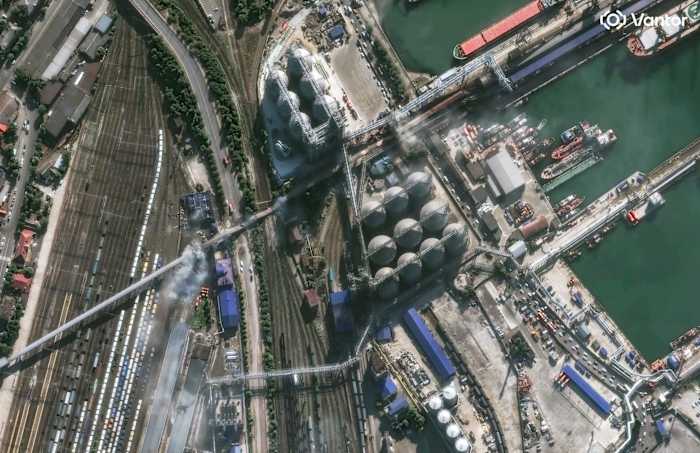
Drones have repeatedly hit deep inside Russian territory, targeting major fuel export terminals like Ust-Luga on the Baltic coast and industrial sites supporting military manufacturing. Moscow's air defenses claim to intercept hundreds of these incoming drones overnight, but the tit-for-tat dynamic keeps expanding the geographical footprint of the war.
The friction has even spilled past direct combat zones. Electronic warfare jamming along the borders has sent stray drones crashing into neighboring NATO countries like Latvia and Romania. When airspaces in eastern Europe require emergency fighter jets to scramble and intercept wandering hardware, it becomes clear how fragile regional security remains.
What Comes Next for the Civilian Population
The reality on the ground is grim. As ground forces grind through ruined towns using brute-force flattening tactics, the human cost falls squarely on families staying put in regional hubs.
International agencies continue to log the violations, but documentation does little to stop the nightly hum of jet-powered drones. For the families left in northern and eastern Ukraine, survival means staying packed near a basement shelter and watching the sky.