Shipping heavy weapons across international borders gets harder as wars drag on. Supply lines stretch. Shipping corridors face threats. Political opposition back home builds up.
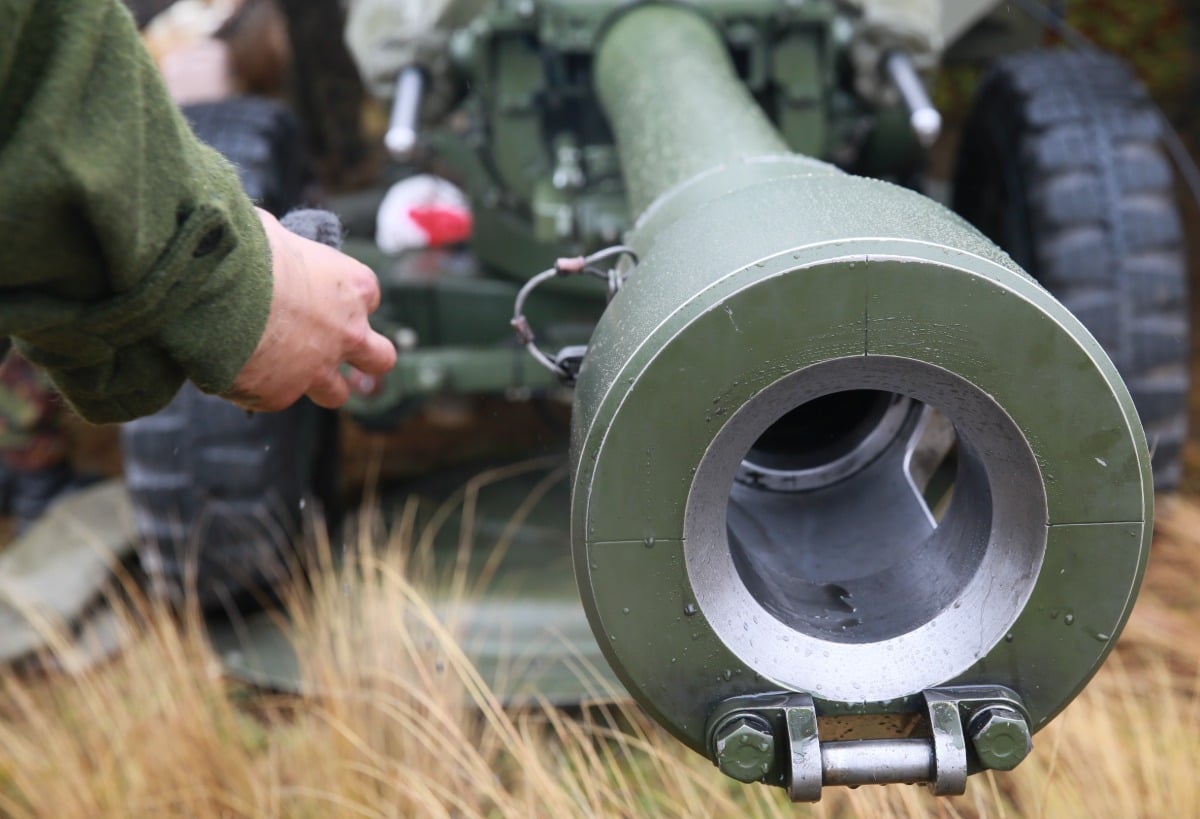
That is why BAE Systems just made a moves-it signed a strategic licensing deal letting Ukraine build its own version of the 105mm L119 Light Gun on home soil.
The deal, announced at the Farnborough International Airshow, hands Ukrainian defense manufacturers full access to BAE’s technical blueprints, engineering documentation, and direct technical guidance. Ukrainian factories won't just repair damaged artillery pieces sent from abroad anymore. They're setting out to manufacture a prototype, run full field tests, and scale production of a customized L119 variant built specifically for Ukrainian battle requirements.
It marks a shift in how Western nations support Ukraine’s war effort.
Moving from Direct Shipments to Local Manufacturing
For two years, Western defense strategy centered on shipping surplus equipment from existing stockpiles. That approach worked as a short-term patch, but it was never going to work long-term. Stockpiles drain quickly when thousands of high-explosive artillery shells are fired every single day along an active front line.
Transferring technical blueprints and intellectual property directly to Kyiv shifts the burden from Western logistics hubs directly to Ukrainian industry.
When combat repairs happen in local workshops rather than being trucked back into Poland or Germany, turned-around equipment gets back to frontline crews in days rather than months. If a recoil mechanism breaks or a breech block cracks, local technicians with original factory technical data can manufacture replacement parts on site.
This model changes the sustainment calculus for the Armed Forces of Ukraine.
Why the L119 Light Gun Fits Ukrainian Tactics
Big 155mm howitzers like the M777 or CAESAR capture headline news, but light artillery keeps frontline infantry units alive. The L119 105mm towed field gun brings a distinct set of operational traits that fit current battlefield conditions:
- Extreme Mobility: Weighing roughly 1.9 tons, the L119 can be towed by light military trucks, humvees, or even airlifted by medium-lift transport helicopters.
- Fast Deployment: A trained gun crew can drop the spades into position, lay the gun, fire off a barrage, and pack up in minutes before enemy counter-battery radar locks onto their position.
- Versatile Ammunition Options: Unlike its British Army cousin (the L118, which fires specialized UK ammunition), the L119 uses standard US M1 NATO ammunition types. That makes sourcing projectiles and propellant charges far easier across international supply chains.
Artillery crews in eastern Ukraine have relied on the L119 since Western allies delivered the first batches in mid-2022. Crews like the weapon because it hits hard out to 11 miles (17 kilometers) with rocket-assisted projectiles while maintaining a small visual and radar footprint.
Sheffield Barrel Forgings and the Production Chain
Building a modern artillery piece isn't just about bending metal or welding carriage legs. The barrel requires specialized metallurgy, precise rifling, and extreme heat-treatment processes to withstand thousands of high-pressure detonations.
Ukraine won't have to build every component from absolute scratch on day one.
The licensing deal connects directly with recent infrastructure investments in the United Kingdom. BAE Systems recently reopened its dedicated artillery facility in Sheffield, teaming up with Sheffield Forgemasters under a 61 million pound UK government deal to produce 105mm and 155mm gun barrels.
Those raw forged steel barrels are already shipping to Ukraine, where local factories handle final machining, finishing, and integration with local carriage assemblies.
This hybrid production pipeline blends British heavy industrial forging with Ukrainian light manufacturing and assembly capacity. It bridges the technical gap while Ukraine builds up its domestic heavy foundry capabilities over time.
Solving the Long-Term Ammunition and Maintenance Problem
Localizing gun assembly is only half the battle. An artillery piece without shells is just a heavy metal tube sitting in a trench.
While 105mm rounds don't carry the raw explosive destruction of 155mm heavy artillery shells, they offer critical tactical advantages:
- They require significantly fewer raw materials and explosives to manufacture.
- The barrels degrade at a much slower rate compared to high-velocity 155mm systems.
- Logistics teams can haul three times as many 105mm rounds in a standard cargo truck compared to heavy 155mm shells.
By producing a native Ukrainian variant of the L119, Kyiv secures a reliable, high-volume fire support system that relies less on foreign aid votes and unpredictable supply chains.
What to Watch Next
Keep an eye on these milestones over the coming months:
- The rollout and initial firing tests of the first locally assembled Ukrainian L119 prototype.
- Technical details revealing how the Ukrainian custom variant differs from the standard British production model.
- Further announcements regarding local ammunition manufacturing deals, particularly for 105mm propellants and fuzes.
If you follow military logistics and defense technology, monitor how quickly Ukraine expands this localized manufacturing framework to other Western combat systems.