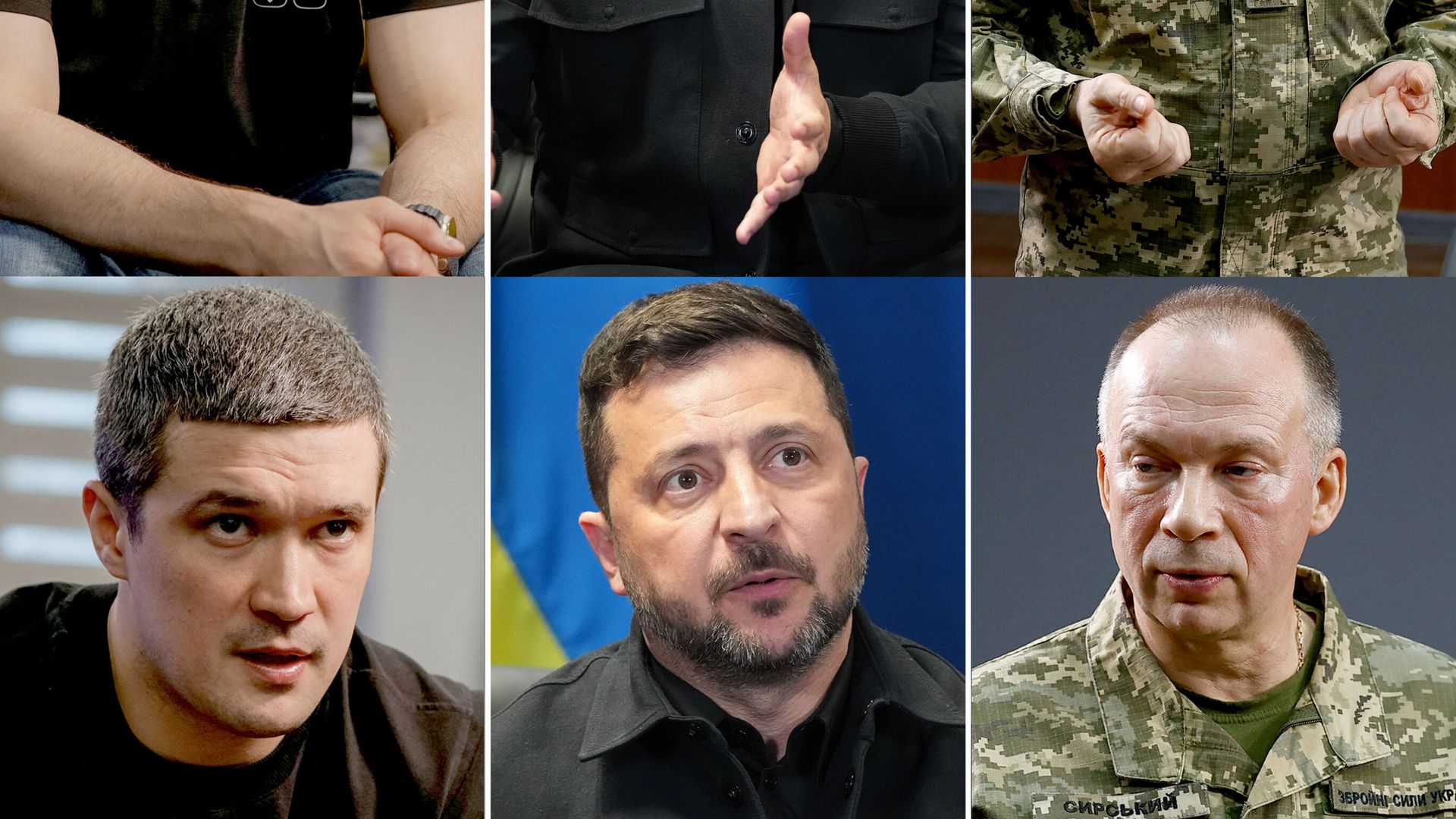
Wars aren't just won with artillery shells and drone strikes. They are won through political stability and unified leadership. Right now, Kyiv is fracturing from the inside. President Volodymyr Zelenskyy's recent decision to oust Defense Minister Mykhailo Fedorov reveals a deep, bitter rift that threatens to undo months of hard-fought military gains on the frontline. By backing Commander-in-Chief Oleksandr Syrskyi over his tech-forward defense chief, Zelenskyy didn't just reshuffle his cabinet; he chose a side in a structural feud that chips away at national defense. Let's be entirely clear about the outcome. Russia is the only winner from Ukraine's internal war.
When you are fighting an existential battle against an enemy with vast manpower reserves, public political bloodletting is a luxury you can't afford. The dismissal of Fedorov has sparked an immediate public backlash and protests in Kyiv, exposing deep vulnerabilities at a time when the military needs absolute focus. Observers and citizens alike are questioning why the architect of Ukraine's tech-driven asymmetric warfare was discarded. This isn't a routine bureaucratic rotation. It's a clash between two fundamentally different philosophies of modern warfare.
The Cost of Ukraine's Internal War on the Frontlines
The friction between the Ministry of Defense and the General Staff had been building for months. On one side stood Fedorov, a 35-year-old tech entrepreneur who took the defense job in January 2026 after running the Ministry of Digital Transformation. He viewed the war through a lens of rapid technological iteration. He prioritized decentralized drone production, autonomous battlefield software, and agile operations over traditional mass mobilization. His approach delivered massive successes, including crippling Russian logistics and turning drones into Ukraine's most lethal asset.
On the other side sits General Oleksandr Syrskyi, a commander shaped by traditional military doctrine. Fedorov openly accused Syrskyi of resisting modernization, blocking reforms, and creating internal division. The defense chief wanted to bypass heavy military bureaucracy to put tools directly into the hands of frontline operators. Syrskyi wanted control through the established hierarchy. When Zelenskyy chose to remove Fedorov, he effectively signaled that institutional loyalty and traditional command structures matter more than digital innovation.
Moscow is watching this play out with intense satisfaction. Every hour Ukrainian leaders spend fighting each other is an hour they aren't planning counteroffensives or fixing mobilization issues. It sends a dangerous signal to Western allies who are already hesitant about long-term funding. If Kyiv can't maintain a united front, foreign lawmakers will find it much easier to argue that their aid is being wasted on an unstable government.
Why the Tech Versus Tradition Conflict Is a Strategic Failure
Fedorov's strategy was built on out-innovating Russia. In a war where around 80% of all casualties are caused by drones, speed is everything. A drone system that works today might be completely neutralized by Russian electronic warfare in eight weeks. Fedorov understood this reality. He built a system that allowed tech teams to update software and hardware configurations every few months, keeping Ukrainian forces one step ahead of the Kremlin's jamming efforts.
Syrskyi's approach relies heavily on traditional structures. While mass and structure are necessary to hold a frontline, trying to fight a massive industrial power like Russia on purely conventional terms is a losing proposition. Ukraine cannot match Russia person-for-person or shell-for-shell over a multi-year timeline. It must remain smarter, faster, and more technologically lethal. Removing the civilian leader who built that digital pipeline creates an immediate vacuum.
Rumors that Internal Affairs Minister Ihor Klymenko might take over the defense portfolio have added fuel to the fire. Klymenko is a capable administrator, but he does not possess Fedorov's deep ties to Silicon Valley or his understanding of software-driven warfare. Replacing a tech visionary with a career policeman during a high-tech war is an extraordinary gamble. It risks stalling drone production programs and slowing down the integration of automated combat systems just as winter approaches.
Political Rivalry Is Overriding Military Necessity
You have to look at the political undercurrents to understand why Zelenskyy made this move. Fedorov wasn't just successful; he was becoming highly popular. In a country living under martial law where elections are suspended, tracking political popularity becomes an obsession for insiders. Fedorov's high profile among frontline troops and the tech elite turned him into a potential political rival to the president.
History shows that wartime leaders often become deeply paranoid about rising stars within their own ranks. Sacking a popular minister because of internal friction might solve a short-term headache for the presidential administration, but it inflicts long-term damage on national stability. It tells other ambitious, competent officials that getting too popular or pushing too hard against entrenched interests will get you fired.
What This Means for Western Support
Western allies don't like political chaos. The timing of this cabinet shakeup is incredibly awkward, coming right as Ukraine tries to secure new defense agreements and maintain bipartisan support in Washington. Former US officials have already called the removal of Fedorov a strategic mistake, pointing out that he was the person most responsible for recent asymmetric battlefield victories.
When international partners look at Kyiv, they want to see an efficient machine capable of absorbing billions of dollars in advanced weaponry. They don't want to see a government distracted by internal feuds and public protests. If the transition to new leadership disrupts defense procurement or slows down the deployment of new capabilities, the frontline will feel the impact within weeks.
Real Next Steps for Ukraine to Counter the Damage
Kyiv needs to act immediately to contain the fallout from this self-inflicted wound. If the government fails to stabilize its internal leadership, Russia will exploit the distraction to push through stabilized defensive lines.
- Insulate Tech Programs From Military Bureaucracy: The administration must ensure that the drone procurement pipelines and software development teams built by Fedorov remain independent. If they are absorbed into traditional, slow-moving military structures, innovation will die.
- Establish Clear Boundaries of Authority: Zelenskyy must explicitly define where the Ministry of Defense's policy authority ends and the General Staff's operational command begins. Overlapping responsibilities caused this crisis; clear boundaries are the only way to prevent the next one.
- Prioritize Transparency With Allies: The incoming defense leadership must immediately engage with international partners to prove that procurement channels remain clean, transparent, and efficient. Any drop in partner confidence will directly translate to fewer weapons on the battlefield.
The internal conflict in Kyiv is an unnecessary distraction from the real enemy across the trenches. If Ukraine's leaders don't stop fighting each other, they won't have a country left to govern.