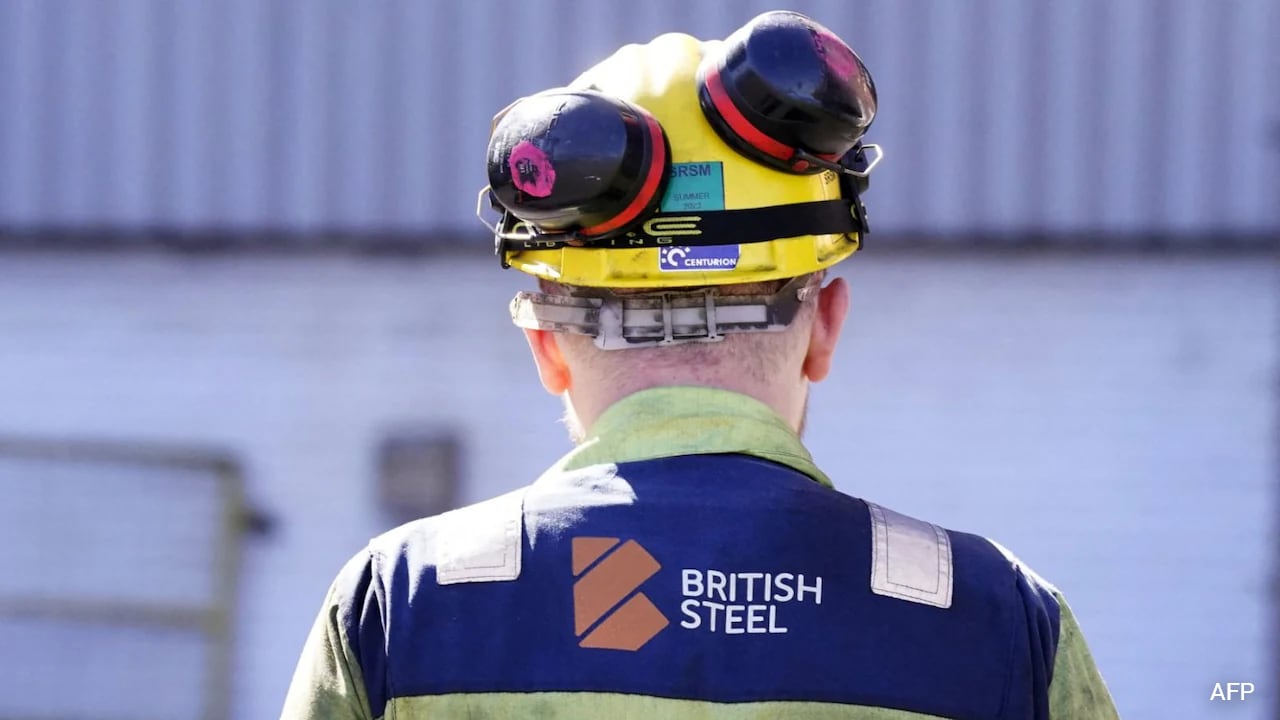
The UK government just made a massive gamble. By formally nationalising British Steel and stripping ownership from China's Jingye Group, Westminster has cross-examined decades of free-market orthodoxy. It's a jaw-dropping escalation in industrial policy that tells you exactly where global trade is headed.
Don't let the corporate press fool you. This isn't just about rescuing a struggling factory or saving 2,700 jobs in Scunthorpe, though those things matter deeply to the families involved. It's a calculated, defensive crouch by a nation realizing that without domestic steelmaking capacity, you don't really have economic sovereignty. When international supply chains fracture or geopolitical tensions spike, relying entirely on foreign powers for your primary infrastructure materials is a fast track to vulnerability.
The Steel Industry (Nationalisation) Act 2026 recently received royal assent, ending a messy fifteen-month standoff. The state took operational control back in April 2025 after Jingye threatened to snuff out the plant's blast furnaces within days. Now, the economic ownership has officially shifted too. It's the first time British Steel has been under public ownership since the Thatcher administration privatized it in 1988.
The Scunthorpe Standoff and How We Got Here
To understand why this happened, you have to look at what went down behind closed doors. Jingye Group bought British Steel in 2020 amid plenty of political fanfare. They promised investments, modernization, and stability. They claim they pumped more than £1.2 billion into the operations to keep things afloat. But the harsh reality of global steel glut, high energy costs, and overcapacity caught up with them.
By early 2025, the Chinese conglomerate decided it was done losing money. They prepared to pull the plug on the two iconic blast furnaces in Lincolnshire. If those furnaces went cold, they would be ruined permanently. Reopening a cold blast furnace is an engineering nightmare that usually isn't worth the cost. It would have completely killed off the UK's ability to manufacture virgin steel from raw iron ore.
The government panicked. Parliament was recalled for an emergency session to seize operational control. For over a year, civil servants ran the day-to-day business while Jingye technically remained the financial owner, hoping for a massive taxpayer-funded bailout to keep going. When negotiations collapsed, the state chose the nuclear option: full expropriation.
Beijing is furious. China's Ministry of Commerce didn't mince words, expressing strong dissatisfaction and accusing the UK of a forced takeover under the guise of national security. Jingye is already invoking international bilateral investment treaties to drag the UK before arbitrators, demanding upwards of £1 billion in compensation.
Why Virgin Steel is a National Security Issue
People ask why the government doesn't just let market forces dictate the outcome. If it's cheaper to buy steel from abroad, why shouldn't we?
That's a naive view. British Steel is the sole domestic producer of long products like rail tracks, structural girders, and heavy sections. Think about your trains, your bridges, and your defense manufacturing. If the UK loses Scunthorpe, it becomes entirely dependent on foreign imports for basic state functions.
Imagine needing to repair a major rail line or build military infrastructure during an international blockade or tariff war. You can't just wait six months for a shipping container from Asia. Having zero domestic primary steel production makes a country incredibly weak on the global stage. Keir Starmer called the asset a cornerstone of industrial strength. He's right. It's a vital national capability.
The Massive Bill Facing Taxpayers
Let's look at the numbers. This move is going to cost an absolute fortune.
First, there's the looming legal battle with Jingye. An independent evaluation will attempt to figure out what the Chinese firm is owed, if anything. Since Jingye was ready to abandon the plant to fail, the UK argues the asset's true commercial value was practically zero. Jingye counters that the plant holds immense intrinsic worth.
Second, running an outdated, loss-making steelworks burns cash daily.
Third, and most importantly, the existing blast furnaces are old and dirty. The state's stated goal is to transition the business toward green steel. That means tearing down the traditional coal-fired furnaces and installing electric arc furnaces.
The transition won't be cheap. Swapping to electric arc technology is estimated to cost well over £1 billion in capital expenditure alone. Electric arc furnaces melt down scrap steel rather than creating virgin steel from iron ore. This creates a secondary dilemma: if you switch entirely to recycling scrap, you still lose that raw "virgin" steelmaking capability. It's a complex puzzle with no cheap or easy answers.
Realities of the New Protectionism
This nationalisation isn't an isolated incident. It's part of a broader, messy global trend. Western economies are rapidly retreating from the unbridled globalization of the 1990s and 2000s. We see it in the US with massive green subsidies and sweeping tariffs. We see it in Europe with anti-dumping duties on cheap Chinese imports.
The UK recently slashed its tariff-free steel import quotas to protect local markets from being flooded with heavily subsidized foreign metal. When governments realize that basic industries can't survive on purely commercial terms against state-backed foreign competitors, they have two choices. They can watch the industry die, or they can intervene directly. The UK chose to fight.
It sets an interesting precedent. If a foreign owner threatens to close an essential asset, the state might just take it away from you. This will undoubtedly make foreign corporations think twice before investing heavily in UK infrastructure. It adds an element of sovereign risk that Britain hasn't seen in generations.
What Happens Next for British Industry
The government doesn't actually want to run a steel company forever. The plan is to stabilize the operation, clean up the balance sheet, start the decarbonization process, and eventually hand it back to a new private buyer under strict conditions.
If you operate in manufacturing, construction, or corporate investment, you need to adapt to this new environment immediately. The rules of the game have changed.
- Review your supply chains: Look at where your primary structural materials originate. Prioritize suppliers with domestic backing or highly stable geopolitical positions, as import quotas and tariffs are going to keep fluctuating aggressively.
- Audit your sovereign risk: If your business relies on cross-border mergers, acquisitions, or foreign state-backed capital, factor in the reality that national security arguments are now winning out over free-market principles.
- Prepare for green steel mandates: The state's ownership means procurement for major UK infrastructure projects will likely mandate low-carbon, domestically produced steel in the near future. Get ahead of those requirements now.
- Watch the international courts: Keep a close eye on the bilateral investment treaty dispute between Jingye and Westminster. The outcome will define the financial penalties governments face when they use national security laws to seize private corporate assets.