Giant storms aren't what they used to be. They are bigger, wetter, and completely indifferent to human borders. Right now, Typhoon Bavi is proving exactly that as it tears through East Asia, stretching its massive moisture bands across an area roughly the size of France.
If you think a typhoon is just about where the center makes landfall, you're missing the real danger.
The storm has already slammed Japan's southern islands, forced massive evacuations in Taiwan, and triggered a full-scale emergency migration of over 600,000 people in eastern China. The sheer physical scale of this system means that even a "miss" feels like a direct hit for millions of people living along the coast.
Japan Southern Islands Take the First Blow
Okinawa and the surrounding Sakishima island chain got the first taste of Bavi's fury. This wasn't a quick tropical downpour. It was a prolonged, punishing assault of wind and water.
Local authorities issued urgent warnings for storm surges and landslides as the storm brought sustained winds reaching near 200 km/h. On islands like Ishigaki and Miyako, the reality on the ground quickly turned messy. Power grids flickered and failed, leaving over 18,000 households completely in the dark while gale-force winds rattled windows and ripped up trees.
The travel chaos alone was staggering. Japan Airlines and All Nippon Airways had to scratch hundreds of domestic and international flights, leaving thousands of travelers stranded. When you're dealing with an island chain, a grounded flight means you're stuck. There is no driving away from the problem.
The Illusions of a Near Miss in Taiwan
Taiwanese officials didn't take any chances, and for good reason. Even though the storm track projected the eye to pass just north of the island rather than cutting straight across it, the massive wind field meant northern and eastern regions were always going to take a beating.
The government pulled the plug on daily life quickly. They suspended trading on the Taiwan Stock Exchange, shut down schools, and closed government offices. Airlines like Eva Air and China Airlines wiped their weekend schedules clean.
But the biggest headache wasn't the wind. It was the rain. Forecasters warned that up to a meter of water could dump down on the northern mountains around Taipei. Think about that amount of water moving down a mountain slope. It triggers landslides, turns small creeks into raging rivers, and completely overwhelms drainage systems.
What People Get Wrong About Typhoon Safety
A lot of the danger during these storms comes from ordinary human habits. By Saturday morning, Taiwan's Central Emergency Operation Center reported dozens of injuries. The culprit? Mostly people trying to ride motorcycles on slick, wind-whipped roads.
Scooters are the lifeblood of Taiwanese commuting. But riding a lightweight two-wheeler into a 100 km/h gust is a recipe for disaster.
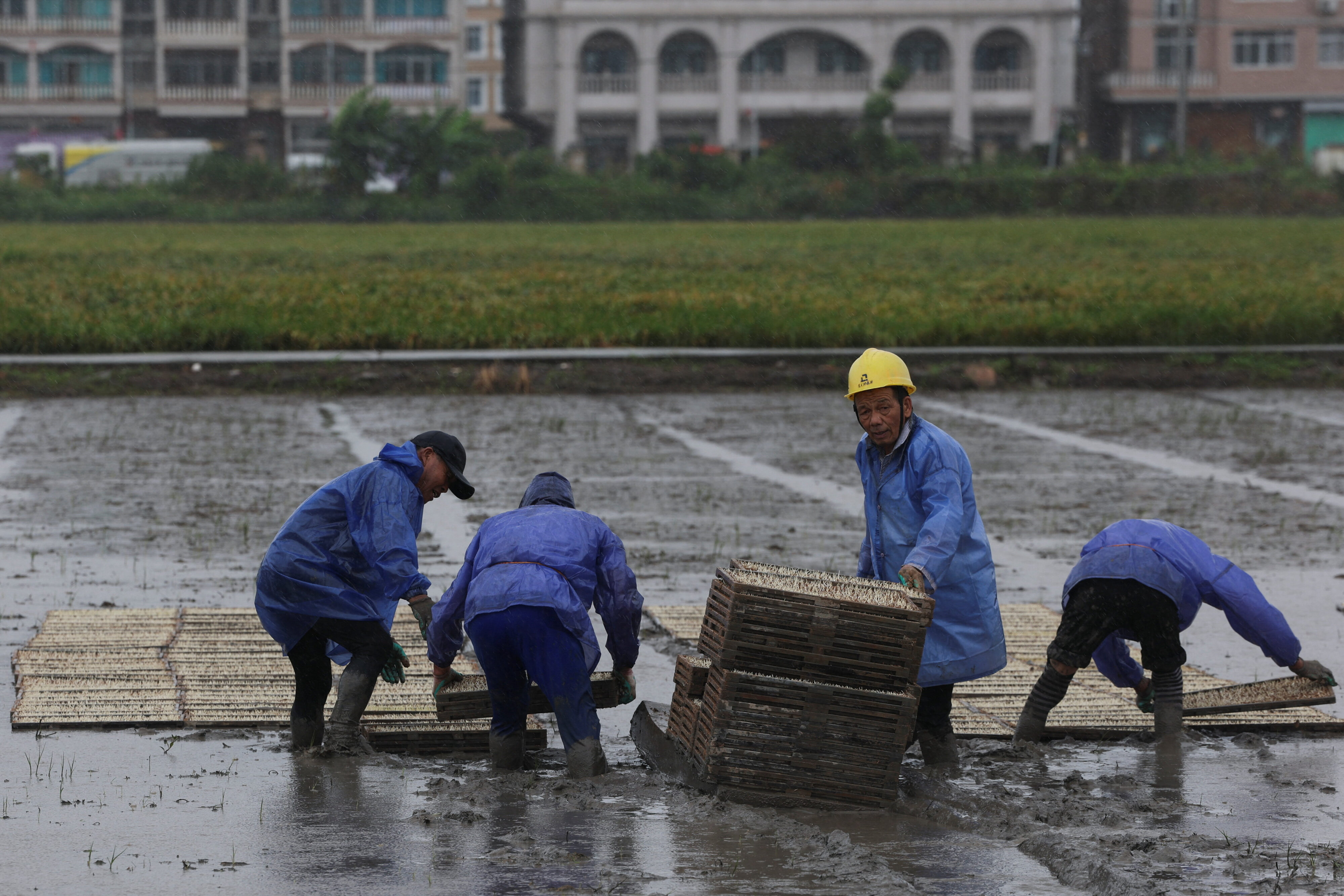
Emergency workers evacuated more than 14,000 residents from high-risk mountainous zones, specifically targeting areas like Hualien and Taichung that are notorious for mudslides. In ports like Suao, hundreds of fishing vessels packed tight into the harbor, tied down securely to keep from battering each other to pieces. Farmers spent the final hours before the storm rushing into fields to harvest rice, desperate to save months of work from being wiped out in a single afternoon.
Eastern China Prepares for a Massive Landfall
Now, the focus shifts squarely to China's eastern coastline. The National Meteorological Center issued an orange typhoon alert, backed by the year's first red alert for rainstorms. They aren't exaggerating the threat.
The target zone centers around Zhejiang and Fujian provinces, with the massive city of Wenzhou sitting right in the crosshairs. Wenzhou is home to about 10 million people. Evacuating a population that size requires military precision.
By Saturday, state media confirmed that over 500,000 people had been moved out of harm's way in Zhejiang province alone, with another 100,000 relocated in neighboring Fujian. Thousands of emergency responders are currently on standby, armed with rescue boats and drones to reach neighborhoods that will inevitably end up underwater.
The Real Danger of Slow Storms
Bavi has slowed down slightly as it moves over cooler waters, but don't let that fool you. A slower storm is actually worse for coastal flooding. It means the system hangs around longer, dumping hundreds of millimeters of rain over the same saturated ground hour after hour.
Provinces like Zhejiang could see up to 600 millimeters of rainfall. Farther inland, even Beijing and Hebei are bracing for severe downpours as the moisture plume gets dragged northward. The ground is already soaked from a brutal week of weather, meaning the risk of dam failures and overflowing reservoirs is incredibly high.
Surviving a Mega Storm
If you live in a coastal region or find yourself traveling through East Asia during typhoon season, you can't rely on luck. Relying on old weather patterns is a dangerous mistake because ocean temperatures are fueling weirder, more unpredictable storms.
Pack your bags early if you live in a low-lying area. Waiting for the official evacuation order often means getting stuck in gridlock traffic while the water rises.
Secure everything outside your home. Loose flowerpots, patio furniture, and bicycles turn into dangerous projectiles once winds cross the 100 km/h mark.
Stockpile water for days, not hours. The biggest mistake people make is buying heaps of food but forgetting that water treatment plants often go offline during major power outages or floods. Aim for at least three to four liters of clean water per person, per day.
Stay off the roads entirely once the outer bands arrive. It doesn't matter if you drive a massive SUV or a tiny scooter; flash floods can stall an engine in seconds, and moving water can sweep a vehicle away before you even realize how deep it is. Monitor the live updates from local meteorological bureaus and stay put until the all-clear is officially given.