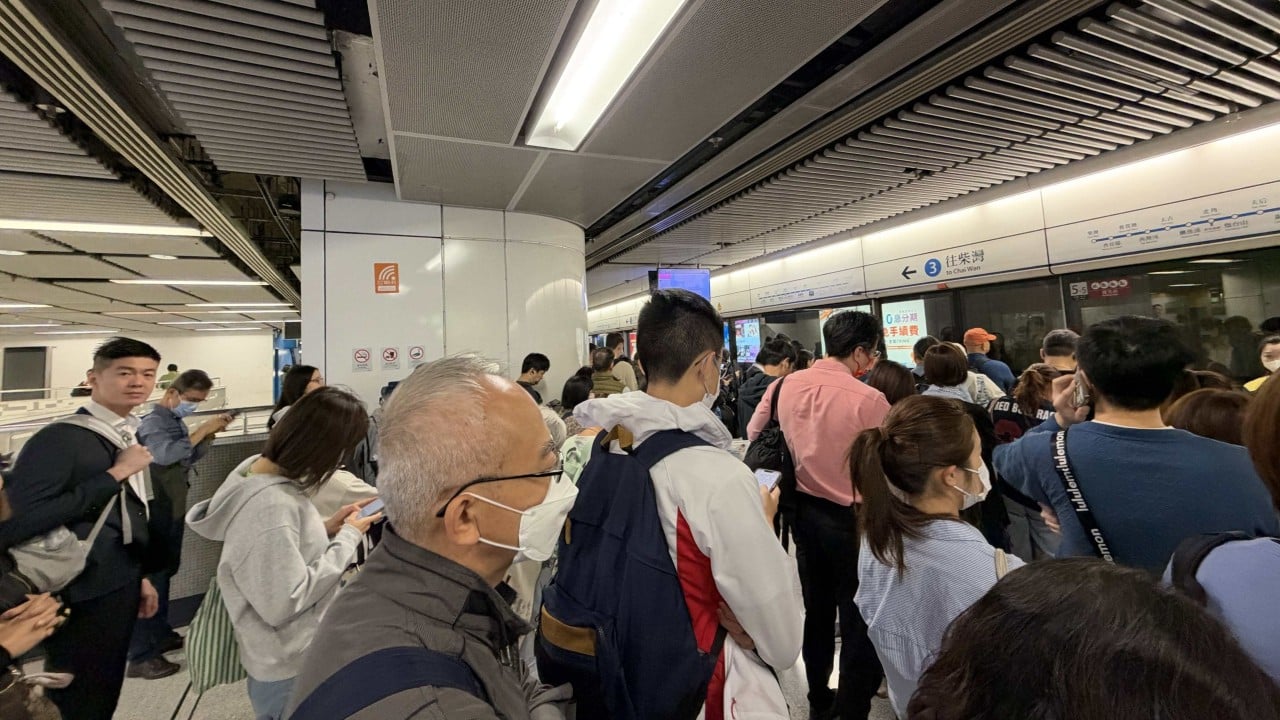
Five to eight extra minutes doesn't sound like much on paper. When you're standing shoulder-to-shoulder on a packed platform in North Point at 8:50 a.m., though, eight minutes feels like an eternity.
Back-to-back signalling equipment faults near HKU Station on Wednesday, November 18, and Thursday, November 19, 2026, slowed trains along the MTR Island line right in the teeth of the morning rush hour. Both days saw the exact same headline delay estimate—an extra five to eight minutes on end-to-end journeys between Kennedy Town and Chai Wan—yet the experience felt very different depending on where you stood and when you moved.
I've watched enough Hong Kong rush-hour bottlenecks to know that a "minor" signalling hiccup is rarely minor once peak crowding enters the equation. Honestly, when a rail line runs at near-saturation frequency, a single slowed train doesn't just add five minutes. It ripples backward like a domino line.
What Happened Near HKU Station Over Two Mornings
Let's look at the actual timeline rather than relying on vague platform rumors.
On Wednesday, November 18, 2026, the MTR reported a signal equipment fault near HKU Station at 8:46 a.m. Trains passing through the affected stretch had to slow down, stretching end-to-end travel times by roughly five to eight minutes. By 10:10 a.m., services toward Kennedy Town had returned to normal frequencies while Chai Wan-bound trains saw shorter delays of three to five minutes, with full gradual recovery announced around 10:36 a.m.—nearly two hours after the initial alert.
Then came Thursday, November 19. The MTR flagged another signal equipment fault near HKU Station during the morning peak, with reports surfacing around 8:17 a.m. to 8:30 a.m. This time, repairs wrapped up faster—around 8:42 a.m., after roughly 25 to 40 minutes of disrupted running—before services began easing back toward normal.
Look closely at that contrast. Thursday's fault was fixed far quicker than Wednesday's nearly two-hour slog. Still, getting hit twice in 48 hours at the same station location—right when people are heading to offices, campuses, and interchanges—frays nerves fast.
Why Back-to-Back Faults Hit Different Than a One-Off Glitch
People often ask why a five-to-eight-minute delay causes such intense crowding when the nominal delay sounds modest. Because rail capacity isn't linear.
When trains move slower through a single section near HKU Station, spacing between following trains tightens or stretches unpredictably. Platforms at busy nodes like North Point or Causeway Bay absorb commuters arriving on their normal schedule while fewer trains clear the bottleneck per hour. One commuter on Wednesday described platforms and carriages feeling overcrowded and trains waiting roughly ten minutes before departing, even as footage from Admiralty Station showed smoother flow during the same window.
That mismatch—gridlock at one stop, manageable movement at another—is classic urban metro behavior. A slow zone acts like a single-lane pinch on a four-lane highway.
There's also a bigger technical context worth keeping in mind. According to MTR Corporation press releases on urban line signalling renewal, replacing signalling systems on active railway lines is complex and multi-year, with preliminary non-traffic-hour testing for the Island line having begun at the end of 2025 while broader urban signalling renewal runs toward 2029. While the MTR hasn't blamed these specific November 2026 HKU equipment faults on upgrade testing, repeating faults at the same spot naturally prompt commuters to ask whether aging components, localized hardware wear, or calibration issues are at play. We shouldn't guess beyond what the operator confirms, and honestly, the MTR owes riders clear follow-through whenever the same location trips twice in two days.
Misconceptions That Trip Commuters Up During Delays
A few assumptions tend to cost riders extra time whenever the MTR Island line hits a signalling fault:
- "If the delay is five to eight minutes, my trip will only take eight minutes longer." Not necessarily. That estimate reflects nominal running adjustments across the corridor, not extra wait time if you miss a train or hold back because a carriage is packed.
- "Every station along the line is equally jammed." False. A bottleneck near HKU affects western and central movements differently from eastern stretches at any given minute, and non-peak tapers can clear one direction before the other.
- "Waiting ten minutes on the platform guarantees the next train is empty." Usually the opposite during morning peak. Longer headways mean more people accumulate on the platform at once.
Smart Moves When Morning Signalling Trips
You can't fix a trackside signal fault from the turnstile, but you can cut your own friction.
First, check live alerts before you walk out the door—not after you're already tapping your Octopus card. Official channels like MTR Mobile and public broadcasts from RTHK News post real-time speed restrictions and recovery times faster than word of mouth on social media.
Second, decide early whether a parallel surface bus or tram makes sense for your specific leg. If you're only going two or three stops along Hong Kong Island and platforms are spilling over, walking a short distance to a bus stop or tram line can beat waiting through multiple full trains.
Third, pad your buffer by 15 to 20 minutes on mornings right after a fault, especially if you have an inflexible meeting, exam, or cross-harbour connection. Back-to-back faults don't prove a permanent breakdown, yet they do tell you to stay sharp for the rest of the week.