Imagine driving down a public highway and suddenly encountering a military checkpoint demanding a massive cash payment just to keep going. Now imagine that highway is the world's most critical oil transit chokepoint, and the checkpoint is run by the United States Navy.
That is the chaotic scenario unfolding in the Middle East.
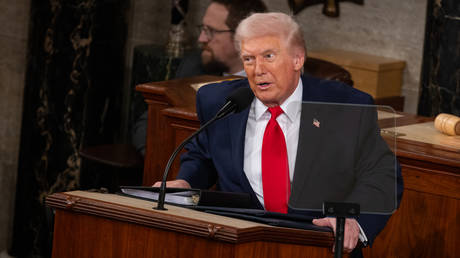
U.S. President Donald Trump has shocked global markets by declaring that the United States is officially "THE GUARDIAN OF THE HORMUZ STRAIT" and will demand a 20 percent protection fee on all commercial cargo passing through the waterway. The announcement, made on Truth Social, has sent shockwaves through the shipping world, sparked intense diplomatic anger from close allies, and prompted a swift, blunt rejection from the United Nations.
The International Maritime Organization, which is the UN agency responsible for regulating global shipping, did not mince words. They quickly issued a statement clarifying that there is absolutely no legal basis for any country to levy tolls in international straits.
It is a high-stakes standoff. Oil prices are already spiking, shipping companies are in a panic, and global trade rules are being tested like never before.
Trump's Wild Gamble in the Strait of Hormuz
The announcement did not happen in a vacuum. Tension in the Persian Gulf has been building for weeks. Just recently, Iranian forces attacked a commercial container ship transiting the southern route near Oman, leaving the vessel on fire. The U.S. military responded with retaliatory strikes, and the region has devolved into an active conflict zone.
With Iran threatening to shut down the strait entirely, Trump took to social media to announce his solution.
"The Hormuz Strait is OPEN, and will remain OPEN, with or without Iran," Trump wrote. He then announced the reinstatement of the "IRANIAN BLOCKADE" to target Iranian shipping, before adding his big demand. "The USA will be, from this point forward, known as 'THE GUARDIAN OF THE HORMUZ STRAIT', but as such, and as a matter of FAIRNESS, will be reimbursed, at the rate of 20% on all cargo shipped, for any and all costs necessary to do the job of providing safety and security."
In an interview with Fox News, Trump doubled down on this logic. He claimed the U.S. has guarded the strait for fifty years for free, and it is time for the world to pay its fair share.
But there is a major problem. You cannot just make up your own rules for international waterways.
Why the UN Is Drawing a Hard Line
The International Maritime Organization has a long history of protecting the freedom of navigation. When the U.S. administration floated the idea of a transit fee, the IMO immediately pushed back.
A spokesperson for the agency made the UN position incredibly clear. The organization stands firmly against any fees for passage through straits used for international navigation. They pointed out that there is zero legal basis to support a mandatory toll just for sailing through.
Under the United Nations Convention on the Law of the Sea, international straits enjoy a legal status known as transit passage. This right allows all ships, whether they are commercial freighters or foreign warships, the freedom of navigation solely for the purpose of continuous and expeditious transit.
Even though the U.S. has famously never ratified UNCLOS, American administrations have historically recognized and defended transit passage as customary international law. By trying to collect a 20 percent tariff on ships passing through, the White House is essentially tearing up the very rules it has spent decades enforcing.
Foreign governments are understandably furious. In the United Kingdom, political leaders have called the move state-backed highway robbery and economic extortion. British officials are urging Prime Minister Keir Starmer to coordinate with international allies to reject the toll, protect free navigation, and prevent a volatile situation from spiraling completely out of control.
The Ultimate Hypocrisy of the 20 Percent Toll
What makes this situation truly bizarre is how quickly the U.S. administration flipped its position.
Only last month, U.S. Secretary of State Marco Rubio was touring the Middle East and passionately arguing against maritime tolls. Iran had been attempting to charge certain vessels up to $2 million to pass through the strait, using the waterway as leverage in its ongoing geopolitical disputes.
At the time, Rubio was crystal clear. He stated that no country on Earth supports paying money to go through international straits, and that international law forbids it.
Yet, here we are. The U.S. is now attempting to do the exact same thing they condemned Iran for doing.
Naturally, Iran has taken the opportunity to mock the U.S. on the world stage. Iranian Foreign Minister Abbas Araghchi took to social media to sarcastically agree with Trump. He wrote that whoever secures safe passage through the strait should indeed be compensated. He then cheekily added that Iran has always been the true guardian of the strait and will remain so, though he joked that Trump's proposed 20 percent fee was "of course too much."
This diplomatic theater highlights a dangerous reality. If the U.S. can ignore international law and charge a toll, what stops Iran, China, or Russia from doing the exact same thing in other vital waterways?
It is a terrifying precedent. The entire system of global trade relies on the assumption that international waters are free for everyone. Once you start putting price tags on ocean transits, the whole system starts to collapse.
Shippers Are Already Voting with Their Feet
While politicians trade barbs, the people who actually run the ships are not waiting around to see how this plays out. They are getting out of the area as fast as they can.
Recent maritime tracking data shows a massive drop-off in traffic through the Strait of Hormuz. In late June, over 218 cargo-carrying vessels over 10,000 deadweight tonnage transited the strait in a single week. By mid-July, that number had plummeted to just 89 vessels.
Shipowners are terrified. They face a double threat. On one side, they risk being targeted by Iranian missiles or drone strikes. On the other side, they face the prospect of a massive, legally questionable U.S. tax on their cargo.
Many vessels have tried to hug the southern route through Oman's territorial waters to stay under the protective umbrella of U.S. military assets. But even that strategy is failing. Confidence in U.S. protection is eroding fast.
Furthermore, the economic fallout is already hitting consumers. Oil prices jumped over 5 percent immediately after the announcements, with Brent and WTI crude soaring as traders price in the risk of prolonged disruptions. Because the Strait of Hormuz handles roughly a fifth of the world's petroleum liquids, any slowdown in traffic directly translates to higher energy prices worldwide.
If shipping companies are forced to reroute around the southern tip of Africa to avoid the Persian Gulf, transit times will increase by weeks. Fuel costs will skyrocket. Insurance premiums are already reaching astronomical levels.
What Happens Next for Global Trade
We are entering uncharted waters. The G7 summit in France recently concluded with world leaders, including Trump, signing a joint statement reaffirming that unrestricted, toll-free transit is the absolute bedrock of global trade. The current policy is a complete, sudden U-turn that has caught even America’s closest allies off guard.
For commercial ship operators and global logistics firms, the immediate future requires defensive planning. Here is what you need to watch closely as this crisis develops.
- Watch the Insurance Markets: War risk premiums for the Persian Gulf are going to climb higher. If underwriters refuse to cover ships transiting the strait without paying the U.S. fee, companies will have no choice but to pay up or bypass the region entirely.
- Monitor Oman's Diplomatic Moves: Since many ships are using Omani waters to stay safe, Oman's reaction to both U.S. demands and Iranian threats will be crucial. Oman has historically acted as a neutral mediator, and they will likely try to defuse this.
- Expect Legal Challenges: Large maritime coalitions and shipping registries like Panama, Liberia, and the Marshall Islands are already consulting maritime lawyers. They will likely file formal protests through the IMO to challenge the legality of any U.S. collection mechanism.
- Prepare for Supply Chain Delays: If you rely on goods or components traveling through the Middle East, start building extra lead time into your inventory calculations. The drop in vessel transits means port congestion and container shortages could reappear in the coming weeks.
The shipping industry does not like uncertainty. Right now, they are getting it from both sides of the Gulf. Whether Trump actually attempts to enforce this fee or is simply using it as a wild negotiating tactic remains to be seen, but the damage to international maritime norms is already done.