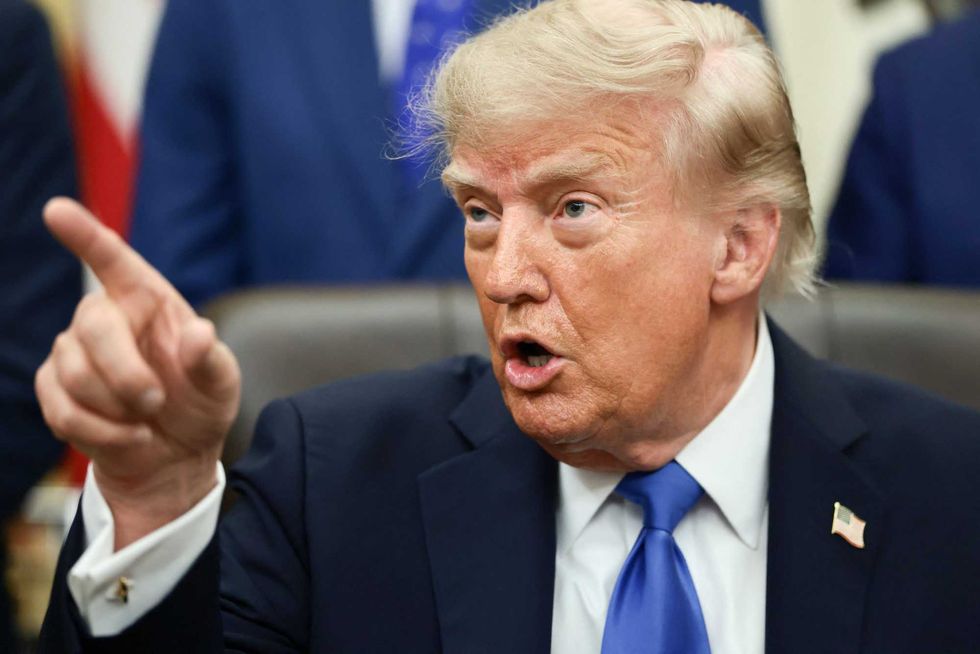
Presidents love a high-stakes international backdrop to project absolute dominance. Landing in Shenzhen for the Asia-Pacific Economic Cooperation summit was supposed to give Donald Trump precisely that visual. He wanted to look like the ultimate dealmaker squaring off against Beijing, talking trade, chip policy, and global power dynamics face-to-face with President Xi Jinping.
Instead, a messy string of high-profile digital outages back home completely hijacked the news cycle. When critical infrastructure components, major financial institutions like JPMorgan Chase, aviation networks under the FAA, and Microsoft services stutter or stall simultaneously, people stop looking at international photo ops and start asking basic questions about domestic reliability.
Trump tried to brush off the chaos from Manila before flying out, calling it just part of being a "big and powerful" nation. But that kind of casual dismissal doesn't fix anxious citizens or quiet critics who realize how fragile our automated systems actually are.
The Real Vulnerability Hiding Behind the Summit
Let's be honest about what these digital hiccups expose. Modern critical infrastructure depends on complex automated software that requires constant patching and updates to stay secure. Secretary of State Marco Rubio stepped in to do damage control, reassuring the public that there was zero evidence tying the failures to foreign hackers or state-sponsored cyberattacks. According to the administration, the disruptions simply happened because systems were being actively patched to close security vulnerabilities.
Yet that explanation highlights an uncomfortable truth. Fixing the back doors often breaks the front door. As artificial intelligence gets deeper into the backbone of corporate and government networks, the code becomes too complex for straightforward maintenance. When an upgrade to secure a network cascades into a broad service failure, it proves that our digital framework is moving faster than our ability to control it safely.
The Chip War Reality Check
While domestic servers were glitching, the geopolitical stakes surrounding advanced semiconductors reached a boiling point. Washington keeps trying to box out Beijing by restricting access to high-end processors, yet China keeps exporting a trillion dollars more than it imports for the second year straight. Tariffs haven't built an impenetrable wall around American technological supremacy.
Trump himself admitted that disagreements within his own administration complicate things, noting that the U.S. maintains a complex relationship with Beijing and "you don't want to insult them". That mild pragmatism sounds very different from the hardline rhetoric voters usually hear on the campaign trail. When it comes down to brass tacks, global manufacturing realities and supply chains dictate terms far more effectively than executive orders.
What This Means Moving Forward
You can't separate domestic infrastructure stability from foreign policy ambition. If the federal government wants to dictate terms on artificial intelligence and microchips globally, the underlying networks at home need to be bulletproof. A string of embarrassing technical failures while the commander-in-chief is halfway across the world sends the wrong message to allies and rivals alike.
Fixing this isn't about PR spins or quick press conferences from cabinet secretaries. It requires a hard look at how software updates are rolled out across critical sectors before the next patch turns a routine Tuesday into a nationwide gridlock.