International court judges aren't naive about politics, yet the tension surrounding the International Court of Justice right now feels noticeably different.
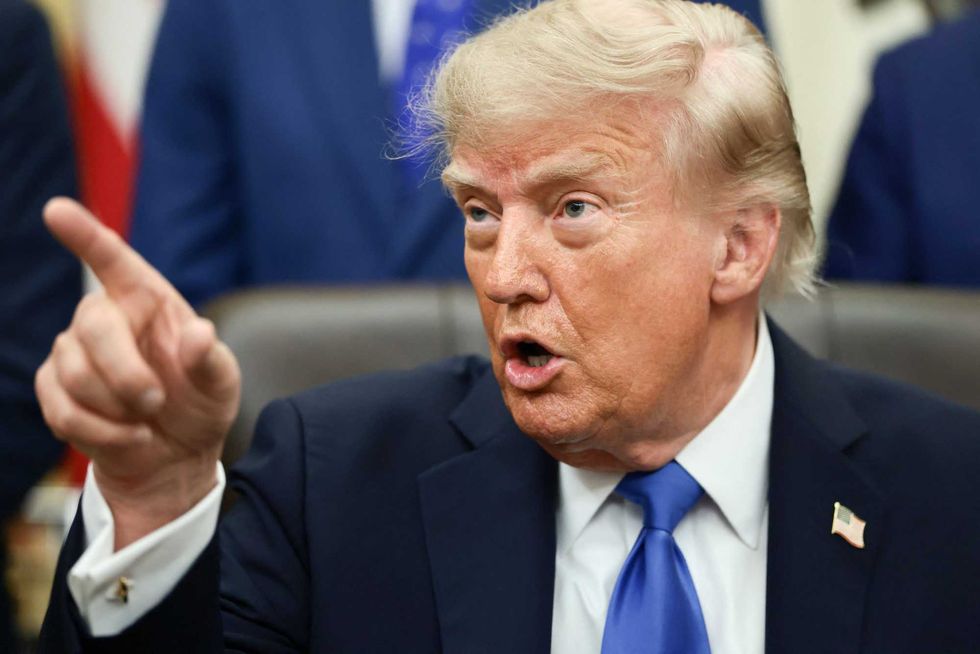
When a high-stakes ICJ ruling approaches, the legal reasoning usually dominates the conversation inside The Hague. Not this time. Behind closed doors, diplomats, legal scholars, and court observers are focused just as much on what happens in Washington the moment the gavel drops. Specifically, they're watching how Donald Trump and his allies will react—and whether the United States will reach for sanctions, visa bans, or diplomatic retaliation against international jurists.
If you've followed how the Trump administration previously treated international tribunals, that anxiety makes complete sense. This isn't speculative paranoia. There is a documented playbook here, and judges at the Peace Palace know they could end up squarely in the crosshairs.
What Is Actually Driving the Fear of Trump Backlash
Let's strip away the cable news noise and look at the concrete mechanics behind this standoff.
The International Court of Justice—often called the World Court—is the principal judicial organ of the United Nations. Unlike the International Criminal Court, which prosecutes individuals for war crimes and crimes against humanity, the ICJ settles legal disputes between sovereign states and issues advisory opinions on questions of international law.
Because ICJ cases frequently touch raw geopolitical nerves—territorial disputes, military operations, treaty violations, and obligations under conventions like the Genocide Convention—its rulings carry massive diplomatic weight. When those rulings clash with U.S. foreign policy priorities or the interests of close American allies, political friction follows almost automatically.
Here's why the current moment has judges on edge:
- Escalating rhetoric against global institutions: Trump has long framed international bodies as infringements on American sovereignty, questioning everything from NATO funding formulas to World Trade Organization dispute panels.
- Precedent from the first Trump term: In 2020, the Trump administration authorized economic sanctions and travel restrictions against International Criminal Court officials, including then-Prosecutor Fatou Bensouda, over investigations into U.S. personnel in Afghanistan.
- Congressional pressure: Lawmakers on Capitol Hill have repeatedly floated legislation to penalize international courts and their judges whenever rulings target U.S. actions or key allies like Israel.
Even though the ICC and the ICJ are separate institutions with different mandates, political backlash rarely respects neat legal boundaries. To critics in Washington, an unfavorable ruling from The Hague looks like judicial overreach regardless of which courtroom issued it.
How the ICJ Works and Why Its Rulings Matter
Most people confuse the ICJ with the ICC. Honestly, even some commentators on television mix them up on a regular basis.
Understanding the difference explains why an upcoming ICJ decision creates such an intense diplomatic headache. The ICJ operates under the United Nations Charter, and its 15 judges are elected to nine-year terms by the UN General Assembly and the Security Council. Every UN member state is automatically a party to the court's statute.
When the ICJ issues a binding judgment in a contentious case between states, those countries are legally obligated to comply. If a state refuses, the other party can take the matter to the UN Security Council. Of course, that's where geopolitics slams into legal theory—because any of the five permanent members, including the United States, can wield a veto.
Advisory opinions work differently. They aren't strictly binding in the same way a bilateral judgment is, yet they carry enormous moral and legal authority. Governments, international organizations, and domestic courts cite them for decades. They shape diplomatic consensus, influence arms export decisions, and fuel domestic political movements around the world.
That's the real trigger. A ruling doesn't need an international police force to hurt a country's standing. It just needs to hand critics a clear, authoritative legal stamp that says a government violated international law.
The Playbook From the First Trump Administration
To understand why judges are bracing for impact, you have to look back at what happened during Trump's first presidency.
In June 2020, Trump signed Executive Order 13928, declaring a national emergency over the ICC's investigation into alleged war crimes in Afghanistan. That order allowed the U.S. government to freeze assets held under U.S. jurisdiction and block entry into the United States for targeted court officials and even their immediate family members.
Think about what asset freezes actually mean in practice. The global financial system runs heavily through U.S. dollar clearinghouses and American banking infrastructure. When Washington puts someone on a Treasury sanctions list, banks around the world—including European banks—often cut ties with that individual just to avoid running afoul of U.S. regulators. Credit cards stop working. Mortgages get frozen. Routine travel turns into a nightmare.
The Biden administration revoked those specific ICC sanctions in April 2021, arguing that while Washington still opposed the court's jurisdiction over U.S. personnel, sanctions were the wrong tool.
Still, the precedent was set. Once a president uses financial sanctions against international jurists, every judge sitting in The Hague understands that personal retaliation is no longer off-limits.
Why ICJ Judges Face a Unique Squeeze
ICJ judges aren't anonymous bureaucrats. Their names, nationalities, and individual votes are public record.
In every major ruling, observers scrutinize how each judge voted—especially judges hailing from Western democracies, the United States, or countries directly involved in the dispute. While the ICJ Statute explicitly requires judges to act independently rather than as representatives of their home governments, political critics rarely give them that benefit of the doubt.
If a judge votes in favor of a ruling that infuriates Washington, that judge risks becoming a named target in political speeches, media campaigns, or proposed sanctions bills. Conversely, if judges appear to soften a ruling out of fear of U.S. retaliation, the court's credibility collapses across the Global South.
It's a classic no-win trap. Either the court stands firm and absorbs the political blowback, or it blinks and confirms the accusation that international law only applies to weak nations.
What Most People Get Wrong About International Court Backlash
When headlines warn about a clash between Trump and international judges, the public conversation usually splits into two predictable camps. Both miss crucial realities.
Misconception 1: International courts have zero real power without U.S. support.
That's flatly wrong. Even if Washington ignores a ruling or vetoes enforcement at the Security Council, ICJ decisions ripple through other legal systems. European governments use ICJ findings to review defense contracts and export licenses. Private companies assess legal liability and reputational risk based on what The Hague decides. Ignoring the court doesn't make the legal fallout disappear; it just isolates the defiant country diplomatically.
Misconception 2: Judges operate in an ivory tower completely immune to politics.
Judges are human beings who read the news. They know how institutional funding works, how diplomatic pressure gets applied behind the scenes in New York and Geneva, and what personal sanctions can do to a career. Pretending that political pressure has zero effect on institutional caution is naive. At the same time, career jurists who spent forty years building reputations in international law aren't going to throw away basic legal standards just to avoid a harsh press conference.
Misconception 3: Backlash against international courts is purely a Trump phenomenon.
Trump is louder and far more willing to use unilateral sanctions than his predecessors, no question. Yet skepticism toward international tribunals has bipartisan roots in Washington. The United States withdrew from the ICJ's compulsory jurisdiction in 1986 after the court ruled against Washington in the Nicaragua v. United States case. Neither Democratic nor Republican administrations have ever ratified the Rome Statute establishing the ICC. What makes the Trump approach distinct isn't the skepticism itself—it's the willingness to punish individual officials personally.
The Ripple Effects Beyond a Single Case
Even if the immediate storm passes without formal sanctions, the chill from this confrontation spreads fast.
First, look at judicial recruitment and independence. Serving on the ICJ is supposed to represent the pinnacle of a legal career. If top jurists start viewing the bench as a fast track to financial blacklisting or travel bans, smaller nations and independent legal experts will think twice before stepping into sensitive cases.
Second, watch how U.S. allies navigate the split. European democracies—including the Netherlands, which hosts the ICJ—are legally and politically committed to defending the rules-based international order. When Washington attacks an institution sitting in The Hague, Dutch and European officials get caught between their commitment to international law and their reliance on the transatlantic security alliance. During the 2020 ICC sanctions, European Union officials publicly pushed back against Washington's measures, calling sanctions against court staff unacceptable. A fresh clash over the ICJ would reopen that exact rift.
Third, consider the narrative gift to rival powers. Whenever the United States attacks international courts or threatens judges, governments in Beijing and Moscow point straight at Washington and say, "Look—they only care about international law when it serves their interests." That argument lands surprisingly well across Africa, Asia, and Latin America, undermining American diplomatic leverage on issues ranging from maritime disputes in the South China Sea to territorial aggression in Eastern Europe.
How to Follow This Story Without Getting Misled
Major ICJ rulings generate massive waves of spin within minutes of release. If you want to read the actual substance rather than partisan talking points, pay attention to three specific details when the decision drops:
- Check the vote breakdown, not just the headline. A 13–2 ruling carries vastly different weight than an 8–7 split, especially if judges from traditional U.S. allies join the majority.
- Distinguish between provisional measures, merits, and advisory opinions. Early-stage provisional measures only require a "plausible" risk of rights being harmed—they aren't a final verdict on the underlying dispute. Commentators routinely conflate temporary orders with final judgments.
- Read the separate and dissenting opinions. ICJ judges frequently write individual declarations explaining the exact limits of what they agreed to. Often, those separate opinions reveal where the real legal consensus stops.
You can read official press releases, case summaries, and full judicial opinions directly on the International Court of Justice website, usually within hours of a public sitting. Skipping the secondhand outrage and reading the court's actual summary paragraph takes five minutes and tells you far more than an hour of punditry.