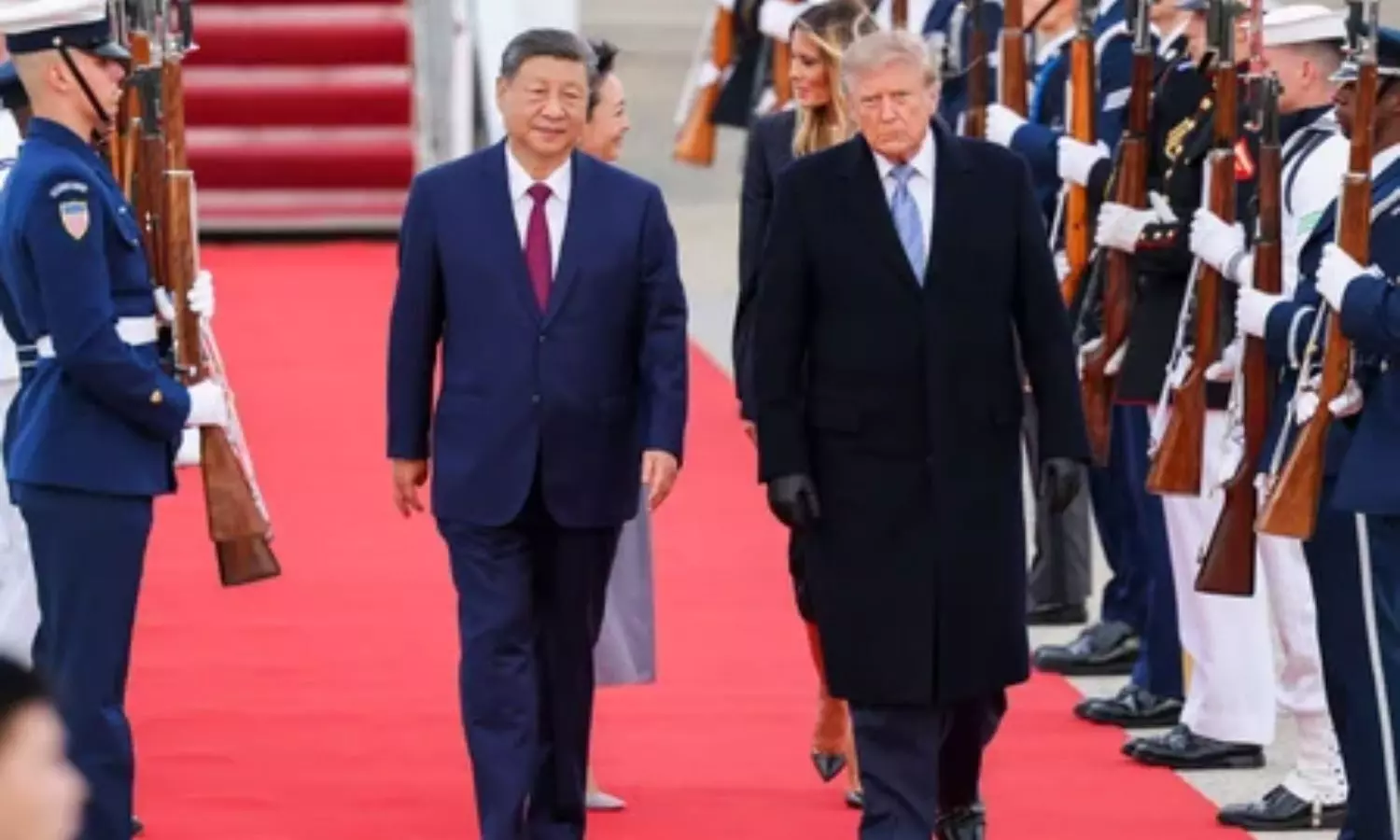
Donald Trump and Chinese President Xi Jinping just wrapped up a high-stakes, two-hour meeting at the White House, and the optics were wild. You saw fighter jets flying overhead, military honors, a lavish three-course dinner, and a guest list packed with Silicon Valley heavyweights like Elon Musk, Jensen Huang, and Tim Cook. Trump even gifted Xi a bronze bald eagle statue, telling reporters that the two nations have "never gotten along better."
If you look past the pomp, the core of US China relations is shifting right back to pragmatic deal-making. Trump wants trade leverage and domestic economic wins. Xi wants stability, breathing room for China's national rejuvenation, and a hard line drawn over Taiwan. They aren't suddenly best friends. They're two superpower leaders calculating that cooperation beats open economic warfare right now.
The Silicon Valley Presence Tells the Real Story
Look at who sat in that White House dining room. You had Jeff Bezos, Sundar Pichai, Satya Nadella, Mark Zuckerberg, and Sam Altman sharing space with top government officials. That wasn't just about diplomacy. That was about technology, supply chains, and artificial intelligence.
Artificial intelligence became a major flashpoint during the Oval Office discussions. Xi didn't mince words on the topic. He argued that Washington and Beijing should pool their strengths in AI rather than block each other at every turn. He stressed the need for human control, risk management, and preventing the misuse of advanced algorithms.
Silicon Valley's elite were right there listening because their bottom lines depend entirely on how these two governments handle export controls, chip manufacturing, and tech decoupling. Trump knows American tech companies need access to global supply chains and vast consumer markets. Xi knows Chinese tech firms need breathing room from crippling sanctions.
Drawing Lines on Taiwan and Trade
Beneath the toasts and historic references to Richard Nixon and Mao Zedong, tough realities remained front and center. Outside the White House gates, protesters chanted slogans about Tibet, Hong Kong, and East Turkestan. Inside, the diplomatic friction stayed behind closed doors.
Xi made it clear where Beijing's ultimate boundary lies. He explicitly drew a red line over Taiwan, urging Washington to handle the issue with extreme caution. Trump, meanwhile, focuses heavily on economic parity, trade balance, and securing wins that he can present to domestic voters.
When two global heavyweights talk about charting a future course over common interests, it usually means they've agreed to manage their disagreements instead of escalating them into a crisis. Trade, climate conversations, and AI guardrails offer enough common ground to keep communication channels open.
What Comes Next for Global Markets
You shouldn't mistake a lavish state dinner for a permanent alliance. Geopolitics doesn't work that way. The Trump administration operates on transactional pressure, and Beijing responds with strategic patience.
Keep a close eye on upcoming bilateral working groups, especially regarding semiconductor policies and trade implementation. Watch whether the tech CEOs who attended the White House dinner start seeing actual relief in export licensing or if restrictions tighten further.
If you're tracking international markets or supply chain logistics, treat this summit as a temporary stabilization period. The fundamental rivalry hasn't vanished. Both leaders just decided to lower the temperature for a moment to see what they can build together.