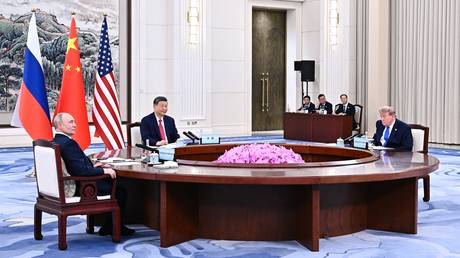
"Greater balance to a very lopsided relationship." That was President Donald Trump's opening pitch in Shenzhen on November 19, 2026, sitting down with Chinese President Xi Jinping on the sidelines of the APEC summit. Trump pointed to the board of trade the two leaders agreed to set up during their mid-May meeting in Beijing, claiming tariffs have been split up and cut in a fair way.
If you only glance at a quick news ticker on Forex Factory, it sounds like a clean breakthrough. A new bilateral body, a warmer tone at Kylin Villa, and a promise that things are finally leveling out.
Honestly, it's way messier than a headline makes it look. A new council isn't the same thing as a balanced trade ledger, and markets have learned the hard way not to confuse diplomatic warmth with binding results.
What the Board of Trade Actually Does
Created after the Trump-Xi summit in Beijing in May 2026—and known in Chinese official readouts as the Trade Council—this mechanism exists to carry out bilateral economic discussions and work through friction points between Washington and Beijing. Officials held their first session on November 13, 2026, covering tariffs, agricultural trade, and a proposed reciprocal arrangement centered on roughly $30 billion worth of goods on each side, or about $60 billion total, while steering clear of national security red lines.
In theory, having a formal channel beats firing off retaliatory duties by surprise. In practice, committees don't erase structural imbalances overnight. Even as Trump praised the board of trade for bringing greater balance, the broader trade truce between the two economies has had to be extended—running through January 10, 2027—while steep tariffs remain in force across major categories.
Watch how traders react to this setup. Short-term FX and commodity desks look at USD/CNY, Brent/USD, and WTI/USD whenever leaders trade friendly words in Shenzhen. Still, traders who treat every upbeat summit remark as a permanent shift in trade flows usually get chopped up by the next policy twist.
Why Balance Is Still a Tough Sell in the Numbers
Look past the rhetoric and the arithmetic tells a more complicated story. According to U.S. Census Bureau data covering January through September 2026, U.S. two-way goods trade with China came to $298.5 billion, down 8.0% from a year earlier. U.S. imports from China dropped 11.5% to $215.0 billion, leaving the U.S. buying $2.57 of Chinese goods for every dollar it sold to China over that nine-month stretch.
That's a real drop in bilateral goods volume compared to the prior year, and yes, imports slipped faster than total trade. Yet a 2.57-to-1 ratio in goods is still a steep gap. Meanwhile, China's overall global export machine hasn't slowed down—Chinese customs figures for October 2026 showed exports jumping 35.2% year-over-year to $412.33 billion, pushing China's year-to-date trade surplus to roughly $1.04 trillion.
Then there's the credibility question around purchase pledges. Skeptical traders in the Forex Factory thread immediately brought up past agricultural promises, noting how earlier commitments on U.S. farm goods fell short of targets in practice. That skepticism isn't just armchair cynicism. When deals rely heavily on goodwill and planned buying schedules rather than automatic market mechanics, execution risk is always sitting right there in the room.
Tariffs, Chips, and Rare Earths Still Hang Over the Room
Calling the relationship balanced doesn't mean the heavy artillery is put away. Even after truces and tariff suspensions—including China extending its suspension of an extra 24% tariff on U.S. imports by two months in early November 2026—average tariff rates between the two countries stay elevated. Congressional Research Service estimates from mid-2026 put average U.S. tariffs on Chinese goods around 36.5% and Chinese tariffs on U.S. goods around 31%, alongside Section 232 steel and aluminum duties and Section 301 actions.
Beyond tariffs sit two flashpoints that go straight to industrial power:
- Advanced AI chips: Washington's restrictions on cutting-edge semiconductors remain a core sticking point, even as business leaders and policymakers debate where commercial trade ends and security begins.
- Critical minerals and rare earths: Beijing's export controls on rare earths and critical inputs give China serious leverage over global supply chains, from electric vehicles to defense hardware.
Add geopolitics into the mix—with discussions in Shenzhen touching on energy flows through the Strait of Hormuz, the war in Ukraine, and nuclear arms control—and trade becomes one thread in a much tighter knot. When a single summit has to juggle farm market access, semiconductor curbs, rare earths, and broader geopolitical crises at the same time, quick wins are hard to lock in.
What Smart Traders and Businesses Should Do Next
Don't trade the headline alone. If you're managing currency exposure, commodity risk, or supply chain budgets, treat the board of trade as an early-warning signal rather than a finished deal.
- Track the January 10, 2027 truce window: Watch whether officials turn the $30-billion-each-way reciprocal list and farm working group into firm implementation details before the extended truce expires.
- Separate talk from customs data: Pair summit quotes with hard releases on U.S. Census trade balances, Chinese export/import prints, and USD/CNY price action around key technical levels.
- Stress-test your supply chain for snapbacks: Keep contingency suppliers and hedged positions ready in case talks stall over chips, rare earths, or tariff enforcement.
A friendly handshake in Shenzhen can calm nerves for a session or two. Real balance takes verifiable execution, and until the numbers catch up to the speeches, caution pays.