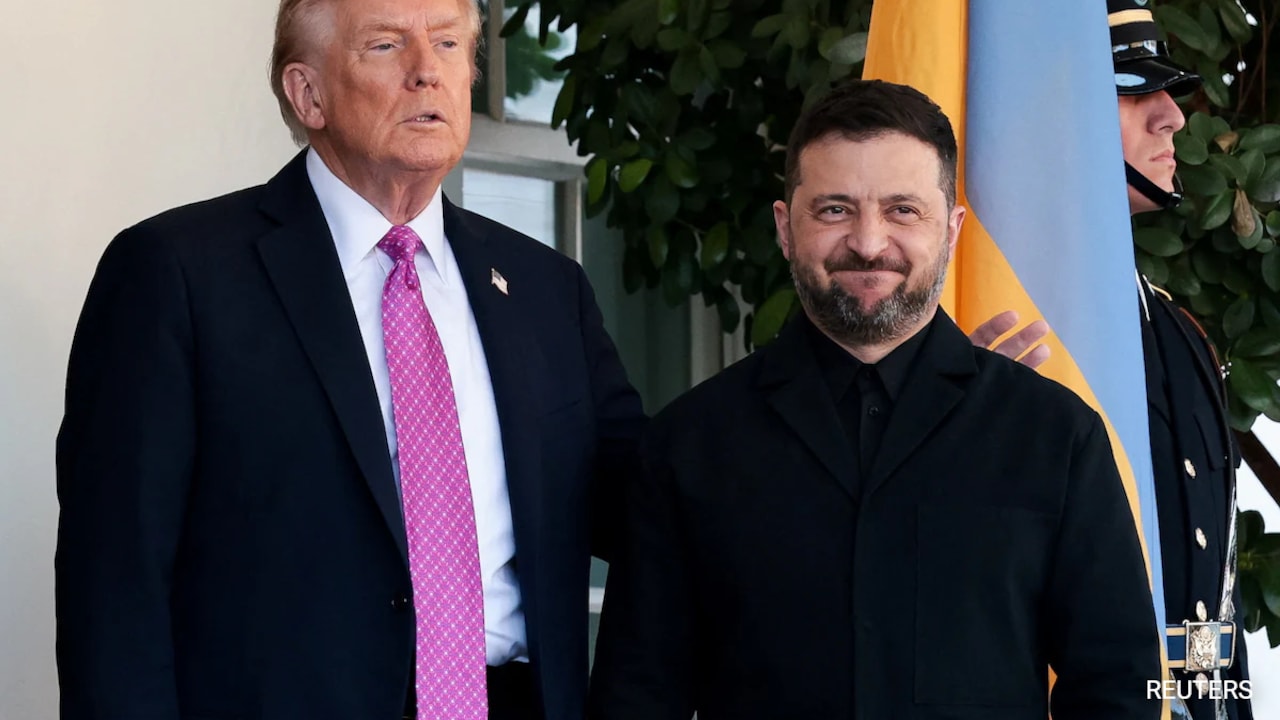
Donald Trump is heading to Turkey with a massive diplomatic sledgehammer. The White House confirmed a high-stakes itinerary for the upcoming NATO summit in Ankara, revealing that Trump to meet Zelesnsky, Syrian President at NATO summit in Turkey. This isn't just another standard diplomatic photo-op. It's a hyper-dense, high-pressure sequence of face-to-face showdowns designed to completely reshape two of the most volatile conflicts on earth. Trump lands in Ankara on Tuesday, and by Wednesday night, the entire geopolitical calculus of Europe and the Middle East could look radically different.
The schedule is tight. Trump will first sit down with the summit host, Turkish President Recep Tayyip Erdogan, on Tuesday evening. That meeting sets the stage. On Wednesday, the real fireworks begin when Trump holds separate, back-to-back bilateral sessions with Ukrainian President Volodymyr Zelenskyy and the new Syrian President, Ahmad al-Sharaa. The White House isn't hiding its motives. Officials openly admit Trump feels an intense sense of urgency. The administration looks at global conflicts not as endless ideological struggles, but as deals waiting to be closed, and Trump wants them closed now. Meanwhile, you can find other stories here: Why Masked Nationalists On The Dc Metro Are The Price Of Free Speech.
The Frozen Trenches and the Drive for a Ukraine Deal
Kyiv is anxious. The war between Ukraine and Russia has dragged into a brutal, grinding stalemate. A senior U.S. official briefing reporters on the trip didn't mince words, noting that the battlefield has clearly frozen over the last couple of months. Neither side is gaining real ground. Hundreds of thousands of lives have been spent, billions of dollars have vanished into the mud, and the frontlines remain stubbornly static. Trump sees this stagnation as the perfect opening to force both sides to the negotiating table.
Zelenskyy is coming to Ankara with a very specific mission. He needs to grab Trump's full attention and refocus the American administration on Ukraine's security needs. Kyiv knows that Trump's patience with endless military aid packages is thin. Zelenskyy's goal is to convince Trump that a premature or poorly structured peace deal will only invite future Russian aggression. He wants to frame a strong Ukraine as an asset to Trump’s vision of global stability, rather than a financial drain on the American taxpayer. To understand the complete picture, we recommend the recent report by USA.gov.
Trump’s approach is entirely transactional. He thinks he can end the war in twenty-four hours by applying maximum leverage to both Kyiv and Moscow. To Zelenskyy, the message will be clear: America expects a realistic path to a resolution, and the blank-check era is over. To Vladimir Putin, watching closely from Moscow, the threat is opposite: settle now, or Washington might open the floodgates of advanced American weaponry to Ukraine. It's a high-wire act that terrifies traditional European diplomats, but Trump thrives in this exact kind of chaotic environment.
Understanding the Ground Reality of the Stalemate
To understand why Trump feels this urgency, you have to look at the daily reality on the ground in eastern Ukraine. The war has become an industrial-scale artillery duel. Drones dominate the skies, making large-scale armored breakthroughs nearly impossible. When either side attempts an offensive, they get spotted instantly and torn apart by precision artillery or exploding FPV drones.
This tactical reality means that continuing the current strategy simply means more of the same. More casualties, more destroyed infrastructure, and more economic strain on the West. Trump’s team understands this. They recognize that waiting for a total military victory for either side is a fantasy. By forcing a meeting on the sidelines of a NATO summit, Trump is signalling to the entire alliance that the old playbook is officially dead.
The New Syrian Order and the Hezbollah Factor
The inclusion of Syrian President Ahmad al-Sharaa in Trump’s Ankara schedule is the biggest wildcard of the entire summit. Syria is undergoing a massive, fragile transformation after the dramatic collapse of the old regime. Washington is watching Damascus with intense scrutiny, trying to figure out where the new leadership stands. Trump has already publicly mused about what role Syria can play in the broader Middle East, particularly when it comes to checking the power of Iranian-backed proxies like Hezbollah.
Meeting Sharaa in Turkey is a brilliant logistical shortcut. Turkey has long been deeply involved in Syrian affairs, backing various opposition factions and securing its southern border. By holding the meeting under Erdogan's nose in Ankara, Trump can align American and Turkish interests regarding the future of Damascus. Trump wants to know if Sharaa is willing to break away from Tehran’s historical orbit in exchange for American sanctions relief and international legitimacy.
If Trump can convince Syria to block Iranian weapons corridors to Lebanon, it would fundamentally cripple Hezbollah. It would also secure Israel's northern border without requiring direct U.S. military intervention. It's a massive "if," though. Sharaa is navigating a treacherous domestic minefield, trying to rebuild a shattered country while keeping various internal factions from turning on each other. Trump loves dealing with strongmen and revolutionary leaders because he believes they can make absolute decisions without getting bogged down by bureaucratic red tape.
The Strategic Value of Sharaa for American Interests
Think about the geography of the Middle East for a moment. Syria is the vital land bridge connecting Iran to Iraq, Lebanon, and the Mediterranean Sea. For decades, the logic in Washington was to isolate Damascus completely. Trump is flipping that logic on its head. He wants to see if Syria can be flipped into a barrier against Iranian expansion.
If Sharaa agrees to cooperate, the benefits for the region are immense. It could lead to the gradual withdrawal of foreign militias from Syrian soil. It could open up new economic trade routes through the Levant. Most importantly for Trump, it would allow him to claim a massive foreign policy victory without risking American boots on the ground. He wants to show that his brand of transactional diplomacy can solve problems that decades of conventional foreign policy only made worse.
Squeezing NATO for Cash Once Again
While the meetings with Zelenskyy and Sharaa will dominate the news cycles, Trump isn't letting the core NATO allies off the hook. The White House confirmed that Trump will use the working sessions on Wednesday to aggressively urge NATO allies to increase their defense spending. This has been a central theme of Trump’s foreign policy platform for years, and he isn't backing down now.
Many European nations have increased their defense budgets since the escalation of the Ukraine war, but Trump believes it's still not enough. He sees America as bearing an unfair share of the burden for European security. His message to the alliance in Ankara will be blunt: if you want American protection, you have to pay your fair share of the bill. He won't accept accounting tricks or vague promises of future spending. He wants concrete budgetary commitments now.
This financial pressure creates a fascinating dynamic at the summit. European leaders are terrified that Trump might reduce America's commitment to NATO's Article 5 collective defense clause. Trump knows this fear is his ultimate leverage. By keeping the allies guessing about America's long-term loyalty, he forces them to open their wallets and take their own defense seriously. It's an aggressive, uncomfortable strategy, but it has undeniably shifted the conversation around European defense spending over the last several years.
The Turkish Host as the Ultimate Power Broker
You can't overlook the role of Turkish President Recep Tayyip Erdogan in this entire equation. Hosting this summit in Ankara is a massive diplomatic win for Turkey. Erdogan has spent years positioning his country as the ultimate bridge between the East and the West. Turkey is a NATO member, yet it maintains complex, functional relationships with Russia, Ukraine, and the new authorities in Syria.
Trump’s first meeting on Tuesday evening with Erdogan will establish the ground rules for the rest of the week. The two leaders have a long, complicated history of mutual respect mixed with sharp disagreements. They will need to find common ground on Syria's reconstruction, maritime security in the Black Sea, and the terms of any potential peace deal in Ukraine. Erdogan wants to ensure that any regional realignment protects Turkey's security interests, particularly regarding Kurdish groups along its borders.
If Trump and Erdogan can sync their strategies, they can effectively dictate terms to the rest of the region. A unified U.S.-Turkey stance on Syria puts immense pressure on Sharaa to cooperate. A joint approach to the Black Sea can squeeze Russia's economic and military supply lines, forcing Putin to take Trump’s peace overtures seriously. Ankara is the perfect setting for this kind of old-school, great-power diplomacy.
What This Means for Global Stability
This summit is a total rejection of the traditional, institutional approach to international relations. For decades, foreign policy was driven by committees, communiqués, and slow, predictable diplomatic processes. Trump doesn't care about any of that. He believes in personal relationships and raw leverage.
By bringing Zelenskyy, Sharaa, and Erdogan into the same diplomatic space, Trump is attempting to solve multiple interconnected crises simultaneously. He sees the conflict in Ukraine and the instability in the Middle East not as isolated events, but as pieces on a broader global chessboard. If he can stabilize Syria and freeze the war in Ukraine, he frees up American strategic focus and resources to deal with other mounting global challenges.
The risks are incredibly high. If the meetings go poorly, it could embolden Russia to push harder on the frozen Ukrainian frontlines. It could cause the fragile situation in Syria to collapse back into chaos. European allies could leave Ankara feeling alienated and abandoned, fracturing the unity of the NATO alliance. But Trump has never been afraid of high-stakes gambling. He believes the current global status quo is completely unsustainable, and he's willing to break things to fix them.
Your Next Steps to Follow This Story
The events in Ankara will unfold rapidly over the next forty-eight hours. To truly understand what's happening beneath the surface, you need to look past the carefully staged photos and focus on the specific outcomes.
First, watch the language used in the official press conferences on Wednesday evening. Pay close attention to how Zelenskyy describes his conversation with Trump. If the Ukrainian president sounds deeply defensive or starts emphasizing sovereignty over territory, it means Trump is pushing hard for immediate territorial concessions to secure a ceasefire.
Second, monitor the statements coming out of Damascus following the Sharaa meeting. Look for any mentions of border security, regional counter-terrorism cooperation, or sanctions relief. Any slight shift in tone will indicate whether Syria is willing to play ball with Washington’s regional strategy.
Finally, keep an eye on the defense budget announcements from European capitals over the next few weeks. The true success of Trump’s NATO spending push won't be decided in the summit room, but in the legislative bodies of Europe as they debate their national budgets for the coming year.
Trump set for high-stakes NATO meeting in Türkiye
This video provides critical context on Trump's arrival in Turkey and the massive security and political implications surrounding this specific NATO leaders' summit.