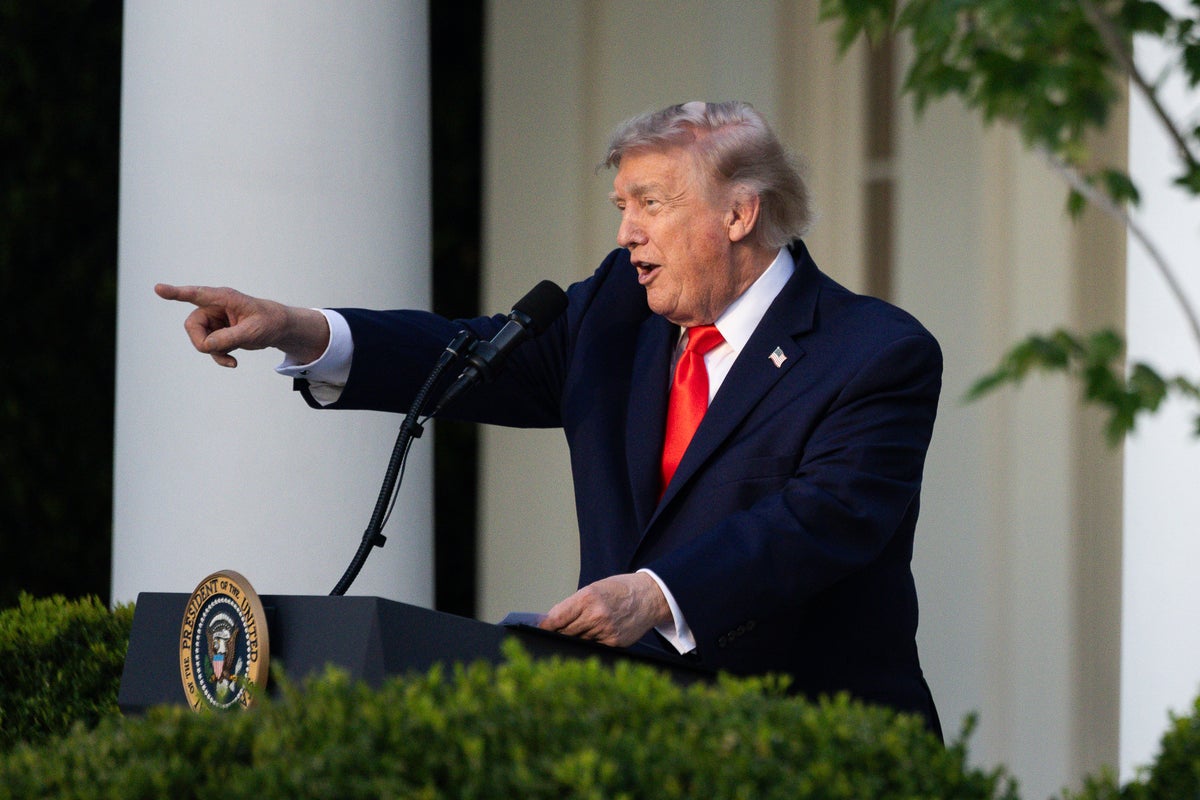
Donald Trump wants American farmers to believe their financial salvation lies in Tehran. Standing in the White House Rose Garden on Thursday, surrounded by representatives of the agricultural sector, the president laid out a striking vision. He announced that the United States is ready to open a massive new export market for corn, wheat, and soybeans. The customer? The Islamic Republic of Iran, a nation Trump casually described as a lovely country and a beautiful place.
It is a classic, high-stakes pitch from a president who loves nothing more than framing complex international conflicts as simple business deals. Trump explained that Iran is suffering from deep food shortages following a brutal conflict in the Gulf region. To fix this, he plans to take billions of dollars in frozen Iranian assets, put them in a U.S.-controlled escrow account, and force Tehran to spend that cash exclusively on American farm goods. If you enjoyed this post, you might want to look at: this related article.
The strategy sounds incredibly straightforward when spoken from a sunlit podium. But out in the real world, the plan is already running into a wall of geopolitical resistance and harsh economic facts. Within hours of the Rose Garden address, Iranian leadership rejected the entire proposal. They made it clear that they have zero intention of letting Washington dictate how they spend their own money. For American growers who have spent the last 18 months riding a financial roller coaster, this latest promises-for-crops trade pitch looks less like a concrete market breakthrough and more like a desperate political band-aid.
http://googleusercontent.com/lmdx_content/PRwAcaMbSuOMZsWmgevLsRKGqgqbQyLKilKoBNfTdPAVKWuLfQRnlkQsqSxOidAHmoVjMzGFMfPXzTXzmsCObRYRLxKkYhplBJpxeRqZnoeZtYSsjySbrIsFfUeKJETUkToPKndUewLrMNNLLfVmjQypOWRZUZsRdjrBqLWWJHbhfqGBkoiYAdUuuw174 For another angle on this story, see the recent update from The Washington Post.
The Twelve Billion Dollar Disconnect
The entire architecture of Trump's proposed agricultural trade deal rests on 12 billion dollars. These are Iranian state assets that were frozen under intense U.S. sanctions. Following recent diplomatic breakthroughs in Switzerland and a memorandum of understanding signed at Versailles, the administration agreed to release these funds.
But there is a massive catch. Trump insists that the money will not go directly back to Tehran. Instead, the U.S. Treasury will hold the funds in an escrow account. The money will only be released to pay for humanitarian goods, specifically food and medicine sourced directly from American farms. Vice President JD Vance championed the arrangement, stating it would feed the Iranian people while simultaneously making American farmers richer.
The view from Tehran looks completely different. Iranian officials see the plan as an insult to their national sovereignty. They argue that once their money is unfrozen, they should have absolute freedom to buy whatever commodities their nation needs, from whomever they choose. They are adamant that they will buy food based on price and market quality, not under terms dictated by Washington.
The backlash from Iranian leadership was swift and biting. Foreign Ministry spokesperson Esmail Baghaei pointed out the bizarre irony of the situation, noting that a war originally designed to destabilize Iranian civilization has suddenly turned into a marketing campaign to enrich voters in the American heartland. Mohammad Bagher Ghalibaf, the speaker of the Iranian parliament, went even further on social media. He openly mocked the idea of a forced agricultural partnership, declaring that the only crop Iran is currently harvesting is decades of homegrown mistrust.
The Reality Behind the Farm Crisis
To understand why Trump is pushing this unlikely trade route so aggressively, you have to look at the severe economic pain spreading across rural America. Since Trump returned to the White House in early 2025, his administration has pursued an aggressive policy of reciprocal tariffs. He slapped heavy taxes on foreign imports, betting that global markets would bow to American economic leverage.
That bet has backfired heavily on domestic agriculture. Traditional trading partners like China instantly retaliated with their own duties on U.S. agricultural products. Demand plummeted. Crop prices cratered. The agricultural trade deficit expanded rapidly, forcing the administration to step in with a massive 12 billion dollar emergency bailout for farmers in December 2025.
The pain did not stop with tariffs. The eruption of military conflict in the Middle East earlier this year led to the temporary closure of the crucial Strait of Hormuz. For months, shipments of vital agricultural inputs like fertilizer were completely blocked. Energy costs soared. Farmers faced devastating domestic shortages of the basic chemical components needed to keep their operations running.
Trump attempted to smooth over these cracks by inviting agricultural workers to Washington in March, loudly proclaiming that proud American producers do not want government handouts. But pride does not pay the mortgage on a multi-million dollar combine harvester. The reality is that the American rural economy is bleeding cash, and the administration is running out of options.
Labor Chaos on the Ground
Beyond international trade barriers, domestic policy decisions have thrown American farms into deep operational chaos. Last year, the administration launched sweeping immigration enforcement operations and deportation raids across rural communities. Trump doubled down on a strict no amnesty policy for agricultural workers lacking legal residency status.
It was a popular political talking point that ignored a glaring macroeconomic truth. According to federal data, roughly 42 percent of the entire American agricultural workforce lacked legal status between 2020 and 2022. Pulling those workers out of the fields caused immediate, devastating labor shortages. Crops literally rotted in the ground because there were not enough hands to harvest them. Food supply anxieties grew so severe that the administration was forced to perform a quiet, embarrassing about-turn just nine months later.
The White House recently introduced emergency rules designed to make it much easier for agricultural operations to hire migrant laborers. While this temporary policy shift relieved some immediate pressure in the fields, it deeply angered the hardline anti-immigrant voting base that helped put Trump back in office. The administration is now caught in a political vice, trying to appease corporate agricultural lobbies while managing a furious grassroots base.
A Legacy of Broken Trade Promises
American grain growers have good reason to be deeply skeptical of grand presidential trade announcements. They have seen this movie before. During Trump's first term, the highly publicized Phase One trade deal with China promised a massive surge in agricultural purchases. Billions of dollars in Chinese orders were supposed to flood American rural communities.
The reality never matched the rhetoric. China repeatedly missed its purchase targets due to logistical hurdles, shifting political priorities, and basic market realities. Farmers were left holding surplus inventory while relying on billions in federal subsidies to survive.
The proposed Iranian arrangement looks even shakier. Historically, agricultural trade between Washington and Tehran has been incredibly thin. The last major blip occurred back in 2018, when Iran purchased roughly 318 million dollars in U.S. soybeans because global trade friction had temporarily disrupted normal supply lines. Expecting a nation that is historically hostile to American policy to smoothly absorb billions of dollars in wheat and corn under coercive financial terms is a massive stretch of the imagination.
The Approaching Congressional Battle
The true test of this policy will not happen in the Rose Garden or on social media. It will happen on Capitol Hill. The White House is currently asking Congress for an astronomical 87.6 billion dollars in supplemental funding.
This massive financial package is intended to cover the spiraling costs of the recent military operations in the Gulf while providing yet another round of emergency financial cushions for American farmers. Opposition lawmakers are already sharpening their knives. They are questioning why taxpayers should fund billions more in rural relief to offset the predictable damage caused by the administration's own tariff strategies and immigration policies.
Linking the release of frozen Iranian money to domestic agricultural sales is a calculated political maneuver to make this massive spending bill more palatable to fiscal conservatives. If Trump can claim that foreign adversaries are effectively paying to bail out American growers, he can ease the political sting of asking for more taxpayer billions. But with Tehran flatly refusing to play along with the script, that narrative is falling apart before the legislative debate even begins.
What Happens Next for Producers
American grain producers cannot afford to build their financial forecasts around empty political theater. If you are managing an agricultural operation, relying on a forced 12 billion dollar export market to Iran is an incredibly dangerous gamble. The geopolitical friction surrounding the Versailles agreement means that these funds could remain locked up in legal and diplomatic limbo for months, if not years.
The smart move right now is to ignore the political noise coming out of Washington and focus on tangible risk management. Growers need to diversify their export exposure away from highly politicized markets. Focus heavily on expanding relationships with emerging buyers in Southeast Asia, North Africa, and Latin America, where trade flows are driven by genuine demand rather than geopolitical leverage.
At the same time, maximize your participation in existing domestic crop insurance programs and local conservation incentives to build a reliable financial baseline. The era of stable, predictable global trade agreements is gone. Survival in the current economic environment requires preparing for prolonged market volatility, volatile input costs, and shifting regulatory mandates. Do not let grand promises of foreign windfalls distract you from securing your operational baseline at home.