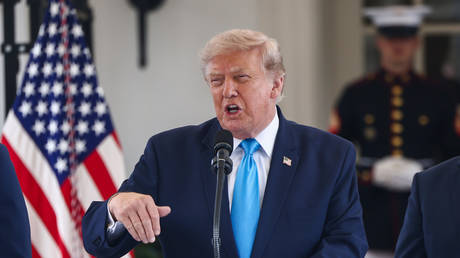
The ink on last month's truce was barely dry before both sides shredded it. Donald Trump is now signaling that Washington is ready to unleash a heavy wave of fresh military strikes against Iran. If you thought the fragile memorandum of understanding signed weeks ago solved the crisis in West Asia, you misread the room. The reality on the ground is starkly different.
The core issue driving this renewed escalation comes down to a blocked choke point and broken promises. Tehran wants sanctions relief and breathing room. Washington wants guaranteed security for commercial shipping through the Strait of Hormuz. When those two demands collide, diplomacy stalls and missiles fly.
Why the Recent Truce Fell Apart So Fast
Trust between Washington and Tehran is non-existent. Last month, negotiators hammered out a preliminary framework meant to cool down the theater. It didn't last.
White House officials point the finger squarely at Iran, accusing the Islamic Revolutionary Guard Corps of violating the terms almost immediately. Commercial vessels have taken hits, and American service members have lost their lives in the crossfire. From the perspective of the Trump administration, standing by is not an option. When Trump tells reporters that Washington simply wants to "win" and warns of hitting targets hard until Tehran comes back to the table in a meaningful way, he isn't bluffing.
On the other side, Iranian leadership under Supreme Leader Mojtaba Khamenei views U.S. actions as proof that American diplomatic signatures hold zero value. Tehran argues that Washington pushed the envelope first, rendering the truce invalid. This cycle of mutual accusation makes peace nearly impossible to sustain.
The Spillover Effect Across the Region
You can't confine a conflict of this magnitude to just two countries. The wider region is absorbing the shockwaves daily.
Kuwait recently found itself in the crosshairs when defense forces intercepted incoming drones inside national airspace. Vital military facilities suffered material damage from falling shrapnel. Meanwhile, Iran's paramilitary forces claim they successfully targeted oil tankers attempting to navigate the Strait of Hormuz, forcing other commercial traffic to turn around and abandon their routes.
Energy markets hate this uncertainty. Every time a drone flies toward a Gulf nation or a tanker gets hit near the Persian Gulf, global shipping insurance rates spike. Consumers everywhere end up paying the price at the pump.
What Happens Next
Trump expects the military campaign to drag on until economic and physical pressure forces Tehran's hand. The strategy relies on wearing down Iranian infrastructure to the point where compromise becomes the only survival mechanism.
Yet, historical precedent shows that heavy bombing runs rarely force ideological regimes to capitulate overnight. Instead, they harden resolve on the ground and trigger asymmetric retaliations across neighboring states. Keep a close eye on shipping insurance rates, emergency diplomatic cables out of Gulf capitals, and statements from CENTCOM. The window for a diplomatic off-ramp is closing fast.

:max_bytes(150000):strip_icc()/Untitled_Panorama13-bd44b39ffc06438f8d5490caeab65fcb.jpg)