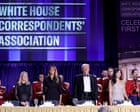
Donald Trump is taking the stage at a rescheduled White House Correspondents' Association dinner three months after a shooter forced an abrupt, chaotic shutdown of the original April event.
The decision to restage the annual press gala inside the Waldorf Astoria in Washington comes with massive security upgrades and a drastically reduced guest list. Organizers frame the evening as a bold refusal to let political violence derail American institutions.
Press freedom groups view it quite differently.
If you came here wondering whether this dinner marks a truce between the administration and the press, the short answer is no. It doesn't.
Behind the formal attire, tuxedos, and polished silverware lies a deep, unresolved friction between press access and executive authority.
What Happened During the April Event
To understand why this second attempt carries so much political weight, look back at what happened on April 25, 2026.
The original gala was held at the Washington Hilton, the traditional venue for the annual gathering. Hundreds of journalists, cabinet members, and high-profile guests filled the ballroom.
Chaos broke out one floor above the main hall.
An armed individual, later identified as California resident Cole Tomas Allen, attempted to force his way past security into the building. Secret Service agents intercepted Allen, resulting in a brief firefight that left an agent injured.
Agents quickly rushed Trump and top officials out of the ballroom, and organizers cancelled the remainder of the evening. Prosecutors subsequently charged Allen with attempted assassination of the president and assault on a federal officer using a deadly weapon.
The initial shutdown sent shockwaves through Washington. It highlighted the unprecedented physical threats facing public officials and media figures alike in an increasingly polarized climate.
A Shift in Venue and Scale
Rescheduling an event of this magnitude proved complicated.
WHCA President Weijia Jiang noted in communications to members that deciding to restage the event required careful deliberation. The association ultimately selected the Waldorf Astoria on Pennsylvania Avenue—a property formerly operated as the Trump International Hotel—rather than returning to the Washington Hilton.
The change in location reflects practical security realities.
- Smaller venue size: The new space accommodates a significantly reduced crowd, turning what was once a massive gala into a tighter gathering.
- Strict access points: Security personnel can monitor guest entry far more easily than in sprawling hotel ballrooms.
- Enhanced screening: Guests face multiple layers of credentialing before stepping anywhere near the dining floor.
Organizers hope the scaled-down structure reduces risk while maintaining the tradition of bringing press and government officials into the same room.
Press Groups Demand Accountability Over Bad Faith Attacks
While organizers promote the evening as a testament to resilience, press freedom organizations are voicing fierce opposition.
A coalition including the Committee to Protect Journalists and the National Association of Black Journalists sent an open letter signed by more than 500 reporters and editors. They criticized the WHCA for hosting the president while his administration actively pursues aggressive actions against news outlets.
The letter cites specific grievances that go beyond standard political arguments:
- Subpoenas issued targeting the phone records of reporters and their family members following coverage of security vulnerabilities on government aircraft.
- Ongoing public threats to challenge or revoke the broadcast licenses of major networks over unfavorable coverage.
- Persistent rhetoric labeling legitimate investigative work as hostile or fraudulent.
Critics call it hypocritical to celebrate constitutional protections alongside a leader who routinely attacks the reporters trying to exercise those rights. They want the WHCA leadership to call out these practices directly from the podium rather than trading jokes.
The pushback underscores a growing divide within the press corps itself. Some reporters argue that maintaining access and tradition is essential, while others believe participating in formal galas normalizes hostiles behavior toward media workers.
Trump Takes to Truth Social
Trump himself hasn't shied away from poking at the tension.
Writing on Truth Social ahead of the event, he confirmed his participation and teased his upcoming remarks. He noted that he hadn't yet finalized whether he would deliver his original speech from April or adjust his tone.
"I don't know whether or not I will give the same rather nasty statements, at least as it concerns certain people, but we will soon find out," Trump wrote, adding that the event would be a "HOT ticket."
That characterization fits his long-running playbook. Trump frequently uses press events to rally his base by challenging the media directly. Rather than treating the dinner as an olive branch, he treats it as an arena.
High Profile Absences on the Guest List
Not everyone will be in attendance for this rescheduled gathering.
First Lady Melania Trump, Vice President JD Vance, and Secretary of State Marco Rubio are skipping the dinner. White House spokespeople attributed these absences to prior schedule commitments, though key cabinet officials are still expected to fill seats alongside attending reporters.
The missing figures highlight how different this event looks compared to traditional galas. In typical years, the head table features a full lineup of administration leadership, top news anchors, and celebrity guests. This time, the mood is distinctly more restrained and politically cautious.
Why The Illusion of Normalcy Is Broken
For decades, the White House Correspondents' Dinner functioned as a harmless roast. Politicians took jokes on the chin, comedians made light of policy blunders, and reporters paused their daily deadline pressure for one night.
That dynamic doesn't exist anymore.
When law enforcement options, legal subpoenas, and physical threats overlap at the same event, pretending this is standard Washington entertainment feels out of touch. The venue change to a smaller hall doesn't fix the underlying friction.
Journalists aren't looking for polite banter; they're looking for operational protection against legal intimidation and physical harm. Administration officials aren't looking for friendly relations; they're looking to control the narrative.
Practical Takeaways for Following Press Coverage Today
If you're following news coverage surrounding this dinner and future White House press interactions, keep these practical points in mind:
- Watch the podium speeches closely: Pay attention to whether press leadership explicitly addresses press freedom concerns or sticks purely to neutral remarks.
- Distinguish access from accountability: Attending a formal dinner with elected officials doesn't mean reporters are compromising their coverage; real accountability happens in daily reporting, source protection, and courtroom filings.
- Track official policy over theater: Speeches and roasts generate headlines, but court subpoenas, public statements on licensing, and press pool access limits are what actually shape the future of independent journalism.
The rescheduled dinner will yield plenty of soundbites and viral clips. But until the core disputes between executive power and media freedom are resolved, these galas remain a stage where two opposing forces sit at the same table without ever meeting in the middle.