When back-to-back 7.2 and 7.5 magnitude earthquakes ripped through northern Venezuela on Wednesday evening, the physical destruction was immediate. But the real disaster unfolding right now is structural, economic, and deeply political.
With the official death toll climbing sharply to 589 and nearly 3,000 injured, acting president Delcy Rodriguez announced a total militarization of La Guaira, the hardest-hit coastal state north of Caracas. It’s a desperate move to control a situation that is rapidly spiraling out of hand.
If you're tracking the international response, you've probably seen headlines about the global rush to send aid. What those headlines leave out is how incredibly difficult it is to get that aid to the people who actually need it. Decades of economic strain and crumbling infrastructure mean this rescue operation is hitting a massive wall.
The Epicenter of the Chaos
The International Organization for Migration estimates that up to 6.76 million Venezuelans are directly affected by these quakes, with roughly two million in Caracas alone. The numbers don't capture the surreal terror on the ground. People are living in public parks and parking lots, completely terrified of going back inside buildings that look like cracked eggshells.
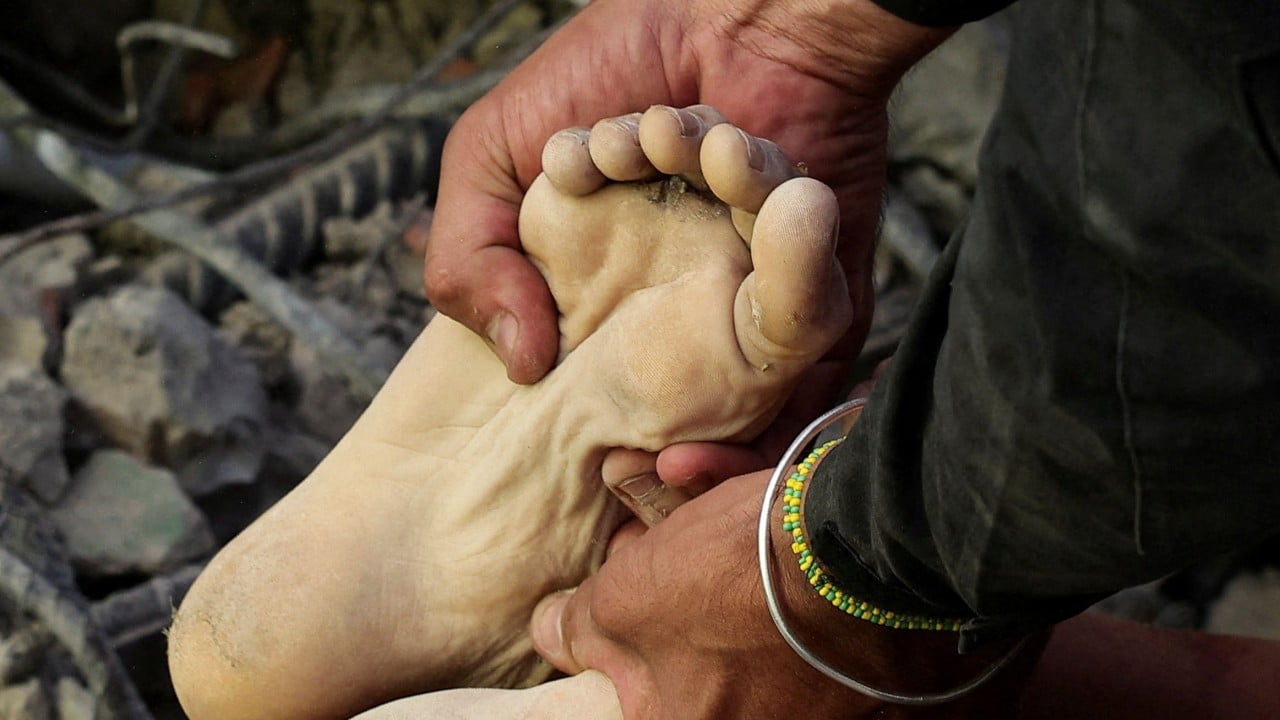
In La Guaira, more than 100 buildings—including high-rise apartment complexes—have completely collapsed into mountains of concrete rubble. Outside the capital, formalized search-and-rescue teams have been sparse. Instead, everyday citizens are digging through the debris with their bare hands, following the faint sounds of voices trapped underneath the slabs.
Navigating the Geopolitical Aid Gridlock
The international response seems massive on paper. Teams from Mexico, Colombia, France, and Germany are deploying with search dogs, heavy equipment, and field hospitals. But a massive challenge lies in the complex web of sanctions and broken logistics.
In a surprising turn, the US Treasury Department stepped in to temporarily lift specific economic sanctions until October 23. This critical window allows the Venezuelan government to execute financial transactions purely for earthquake relief that would otherwise be blocked. Along with this policy shift, Washington mobilized 150 million dollars in aid, chunking out 50 million dollars to trusted entities like the World Food Programme and the International Medical Corps.
The visual reality on the streets shows how lopsided the distribution is. The Simon Bolivar International Airport in Maiquetía—the main gateway for foreign supplies—sustained severe structural damage during the shaking. Getting heavy cargo planes safely onto the tarmac is a high-wire balancing act.
Why This Recovery Will Take Years
This isn't a normal natural disaster recovery. The earthquakes hit a nation that was already dealing with an incredibly fragile electrical grid and a highly stressed medical system. Local hospitals lack the basic trauma supplies required to handle thousands of severe crush injuries simultaneously.
The immediate focus remains strictly on life-saving extraction. However, the secondary crisis of long-term displacement is looming right behind it. When hundreds of thousands of people refuse or simply cannot return to their homes, the risk of disease outbreaks in crowded, makeshift outdoor camps rises exponentially.
Critical Next Steps for Aid Organizations
For international groups and ground teams trying to manage the incoming wave of relief, long-term success requires bypassing the usual logistical bottlenecks.
- Establish Localized Distribution Hubs: Avoid routing all physical supplies through the damaged primary hubs in Caracas and Maiquetía. Utilize regional ports and smaller airstrips to stage food and water closer to La Guaira.
- Prioritize Structural Engineering Assessments: Send structural engineers alongside search crews to formally tag buildings as safe or unsafe, giving panicked families a clear answer on whether they can return home.
- Coordinate Directly with Ground NGOs: Utilize established non-profit groups like World Central Kitchen—which is already serving meals on the ground—to ensure that funding translates directly to food and medical access without getting caught in bureaucratic delays.