When an attack drone crashes, the threat doesn't end.
The U.S. Department of Defense confirmed that 30-year-old Sgt. Michael Emmanuel Swinton of Fayetteville, North Carolina, died at Erbil Air Base in northern Iraq. He wasn't struck in mid-flight by an incoming missile. Instead, he died during a controlled detonation intended to neutralize unexploded ordnance from a downed Iranian one-way attack drone.
This single tragedy underscores a dangerous reality in modern combat zones. Neutralizing downed autonomous weapons can be just as hazardous as intercepting them in flight.
The Fatal Incident at Erbil Air Base
Erbil Air Base sits in the Kurdistan Region of northern Iraq. It serves as a major hub for U.S. and coalition forces supporting regional stability operations. On Saturday, military personnel located a downed Iranian one-way attack drone that had failed to detonate on impact.
Disposing of unexploded drone ordnance requires meticulous protocols. Explosive ordnance disposal personnel and air defense specialists must secure the area, assess the integrity of the fuse, and set up a controlled explosion to destroy the hazard safely. During that procedure, something went catastrophically wrong.
Sgt. Swinton was killed in action during the controlled blast. A second service member suffered minor injuries and received treatment on site. Central Command launched a formal investigation into the blast to determine whether fuse instability, secondary explosive materials, or unexpected fragmentation caused the fatal outcome.
The Pentagon posthumously promoted Swinton to staff sergeant. He was awarded the Bronze Star, the Purple Heart, and the Combat Action Badge in honor of his service.
Who Was Sgt Michael Emmanuel Swinton
Swinton was a father, husband, and dedicated air defense operator. He enlisted in the U.S. Army in 2017 as a 14T Air Defense Early Warning System Operator.
He was assigned to D Battery, 2nd Battalion, 55th Air Defense Artillery Regiment, 108th Air Defense Artillery Brigade out of Fort Bragg, North Carolina. His unit operated under the Army Space and Missile Defense Command.
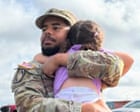
Swinton lived in Spring Lake, North Carolina, right outside Fort Bragg. He leaves behind his wife, Mia Gonzalez-Swinton, a 6-year-old son, and a 4-year-old daughter.
His wife shared her grief online shortly after receiving the news. She noted that they had planned so much for his return home. His mother, Christel Swinton Andujar, remembered him as a person who gave his whole heart to everything he attempted, balancing seriousness with a warm sense of humor.
Military leaders praised his professionalism. Brig. Gen. John L. Dawber noted that Swinton took immense pride in his work and cared deeply for those around him. Lt. Gen. John L. Rafferty stated that Swinton died while safeguarding his fellow soldiers.
The Unseen Danger of Downed Iranian Drones
Why is disposing of a downed drone so hazardous?
One-way attack drones used by Iranian forces and allied militias carry volatile warheads equipped with contact fuses or delayed detonation systems. When these drones crash or get shot down without exploding, they become unpredictable landmines.
The warheads often contain high-explosive compounds designed to maximize blast radius and shrapnel dispersion. Environmental exposure, crash impacts, or damaged wiring can make the remaining fuse mechanisms highly sensitive.
Even during a controlled detonation—where troops place explosive charges next to the weapon to destroy it from a safe distance—unpredictable blast geometry or secondary detonations can throw deadly shrapnel far beyond expected danger zones.
Handling unexploded ordnance demands immense concentration. Air defense teams like Swinton's are trained to track and destroy incoming aerial threats. Yet on the ground, dealing with damaged, unexploded drones poses risks that rival active firefights.
Broader Context of Escalating Casualties
Swinton's death brings the total U.S. military death toll in the current conflict with Iran to 17 service personnel.
Just days before Swinton was identified, the Defense Department named two other soldiers killed in Jordan during direct Iranian missile and drone attacks:
- 1st Lt. Tyler James Feehan, 25, of Ewa Beach, Hawaii.
- Pvt. Isabella Gonzales, 19, of Carrollton, Texas.
Both served in air and missile defense units stationed at Muwaffaq Salti Air Base in Jordan. A third service member remains missing in action following the same raid, with search teams analyzing unidentified remains recovered at the site.
More than 100 U.S. service members have sustained injuries across bases in Iraq, Jordan, and surrounding regions. Pentagon officials confirmed that most suffered traumatic brain injuries or concussions from nearby impacts, with around 96% returning to duty after medical evaluation.
Tensions across the Middle East remain high. Strikes on infrastructure, logistics hubs, and air bases continue daily. The state department has cautioned Americans overseas to stay vigilant against potential retaliatory strikes.
What Military Observers Should Watch Next
Understanding how incidents like this shape defense operations helps clarify what lies ahead. Watch these practical operational areas:
- EOD Safety Protocol Reviews: Central Command will likely adjust minimum standoff distances and protective barrier standards during controlled drone demolitions.
- Robotic Disposal Integration: Expect increased reliance on unmanned ground vehicles (UGVs) to place counter-explosives on downed drones, keeping human operators further away.
- Support for Air Defense Regiments: Units at Fort Bragg and other stateside bases will face sustained deployment demands as missile and drone defense remains top priority.
- Tracking Unexploded Ordnance: Forces across Iraq and Syria will face growing requirements to map, clear, and render safe crash sites across vast desert regions.
Swinton's sacrifice reflects the constant, quietly lethal work required behind the scenes to keep military installations safe.