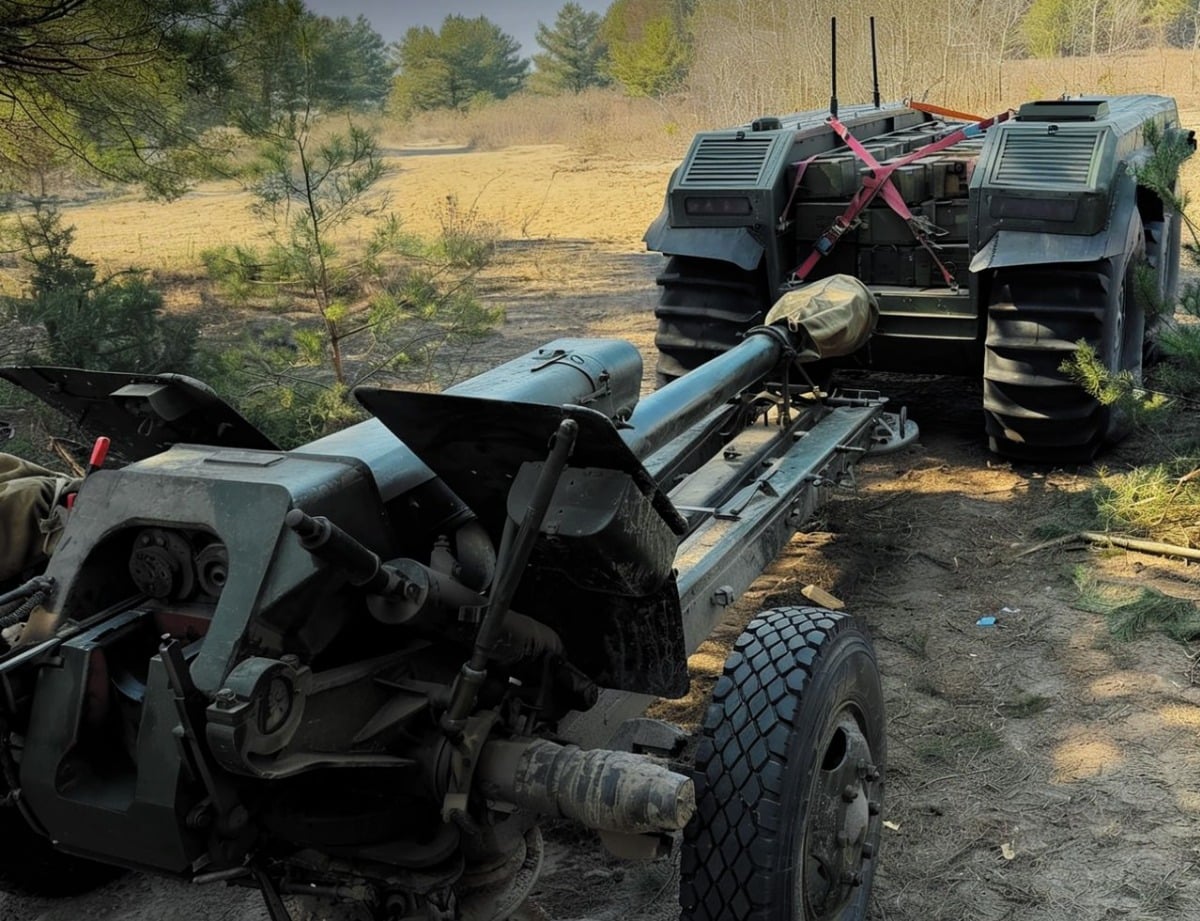
Towing a 3.2-tonne artillery piece across mud and cratered terrain with an unmanned robot sounds like the ultimate battlefield upgrade. When test footage showed the UNEX UGV dragging a heavy howitzer while carrying a massive payload on its back, defense observers took notice. Pulling three tons of dead weight without putting human drivers in direct sight of enemy FPV drones solves a deadly predicament on the front lines.
Putting heavy robot haulers into active combat zones brings a wave of unglamorous mechanical problems that press releases usually leave out. Meanwhile, you can explore related developments here: Why Gavin Newsom Changed His Mind On The Ai Kill Switch.
Moving Artillery Without Sacrificing Crew Lives
Modern battlefields are choked with cheap target-seeking drones. A traditional military truck or tracked tractor towing a towed artillery piece like a 122mm D-30 or a light field gun becomes an instant high-value target the moment it starts moving. If an enemy drone spots a manned tractor during repositioning, you don't just lose the truck—you lose the crew and the gun.
That threat drives the push toward platforms like the UNEX UGV, manufactured with heavy electric powertrains designed by firms like ABRIS DG and UGVR Machinery. The logic is plain. You strap the tow hook of a 3.2-tonne howitzer to a low-profile remote drone, dial in a satellite or radio relay connection, and drag the gun to its new firing position while the crew remains safely dug into a bunker miles away. To explore the bigger picture, check out the excellent report by Mashable.
It works on paper. It even works on flat test grounds.
What Happens When Engineering Hits Battlefield Reality
Pulling a 3,200 kg artillery piece isn't just about raw torque—it's about leverage, ground clearance, and thermal management. The UNEX UGV packs impressive baseline stats. It carries up to 1,700 kg directly on its deck, clears obstacles up to one meter high, and features a 600 mm ground clearance with amphibious capabilities.
When you attach a full-sized towed howitzer behind a tracked or wheeled robot, physics gets messy fast.
The Trail Snag Problem
Most light and medium howitzers rest on long trail legs folded back for transport. When pulled by a standard military truck, those trails ride high off the ground. When hooked to a much lower robotic chassis, the tow angle drops sharply. On a smooth test track, the gun rolls easily. On actual terrain full of shell craters, deep ruts, and tree stumps, those low-hanging trails dig into the soil like a giant plow, instantly immobilizing both the robot and its multi-ton payload.
Battery Drain Under Continuous Heavy Strain
Electric UGVs rely on lithium battery packs to keep their acoustic and thermal signatures low. Under normal transport operations—hauling food, small arms ammunition, or single wounded soldiers—a system like UNEX offers up to six hours of operating endurance.
Drag three tons of steel through deep sticky mud, and that battery drain accelerates drastically. Heavy electric motors draw maximum amperage when fighting rolling resistance. Adding heavier battery packs to fix the range issue adds static weight, reducing the available onboard payload capacity and making the machine harder to recover if it gets stuck.
Practical Roles for Heavy Ground Drones Right Now
Does this mean automated tow vehicles are useless? Not at all. It just means expectations need to match reality.
Instead of treating a UNEX UGV as a direct replacement for an artillery prime mover across deep off-road mud, military commanders are finding far better immediate returns in localized logistics:
- Last-mile ammunition resupply: Moving heavy 152mm or 155mm shells along known, high-risk supply routes without risking a driver's life.
- Casualty evacuation: Extracting wounded personnel from exposed positions where crewed ambulances can't survive.
- Relay and engineering work: Carrying signal repeaters or explosive demining packages right up to the zero line.
What Military Buyers Should Look For Next
If you're evaluating heavy unmanned platforms for logistics or artillery transport, don't buy into promo clips recorded on manicured test fields. Look at custom hitch heights and variable tow mounts that prevent artillery trails from dragging. Test real-world battery endurance under maximum pull weight in thick mud. Most importantly, insist on field-swappable power modules so your transport teams aren't stranded waiting hours for a recharge during critical fire missions.