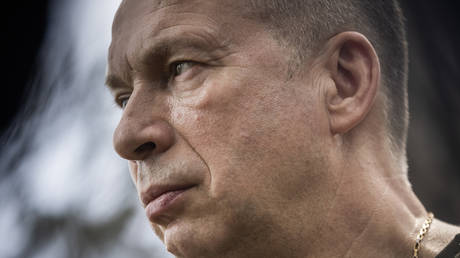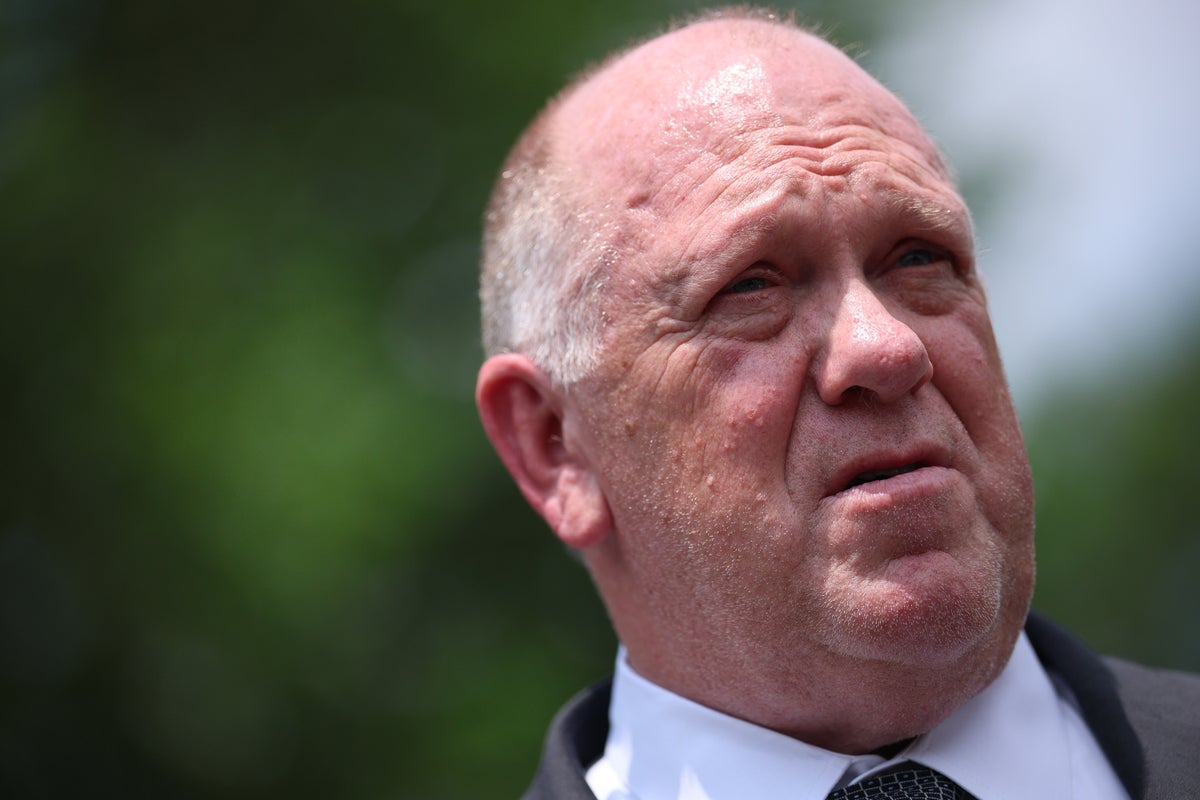
Border czar Tom Homan sat on a podcast mic and laid out a grim prediction of federal enforcement turning into fatal violence. Then, without missing a beat, host Katie Miller asked him if he would rather do a TikTok dance or eat contaminated lettuce.
It was one of the most surreal moments in recent political media. One second, a top immigration official was arguing that public backlash against Immigration and Customs Enforcement (ICE) is driving dead bodies in American streets. The next second, the interview swung wildly into lighthearted parlor games.
If you want to understand how modern political media handles life-and-death policy, that single audio clip tells you everything. Serious warnings about violence and constitutional accountability get flattened into background noise for viral content.
What Happened on Katie Miller Podcast
Tom Homan has been on a massive press sweep lately. Tensions are high across the country following two separate fatal shootings involving ICE officers within a single week. Rather than backing down on aggressive rhetoric, Homan went on former Trump administration official Katie Miller's podcast to double down.
He claimed Democratic criticisms of immigration enforcement directly endanger federal agents and the public. His logic goes like this: calling ICE harsh or comparing their methods to authoritarian police forces makes the public question their authority. When people question authority, traffic stops go wrong. Tense moments turn lethal.
"When they keep hearing this hateful rhetoric that ICE are the Nazis or secret police, there's going to be that small percentage of crazy people who just need an excuse to do something to harm an ICE agent," Homan told Miller. He added that he warned early on that if critics did not tone down their language, "there will be bloodshed." He finished the thought grimly: "Unfortunately, I'm right."
Homan paused, letting the heavy statement sit in the air.
That was Miller's cue to ask about policy, body cameras, or tragic civilian deaths. Instead, she hit the brakes and flipped the script entirely.
Miller launched straight into a game of "would you rather." She asked Homan about the latest hour of the night Donald Trump had ever called his personal phone. She followed up by asking if he would prefer dancing on TikTok alongside Border Patrol agents or eating unwashed lettuce during an active parasitic outbreak.
Homan let out a brief grunt. He sounded caught off guard, momentarily stymied by the sheer speed of the pivot. But like a seasoned political operative, he rolled with it.
The clip went viral almost instantly. Critics pointed out the jarring tonal clash, while supporters treated it as light fun. Yet behind the viral headline lies a far more serious story about fatal shootings, missing body cameras, and how political messaging shifts blame away from federal agencies.
The Fatal Shootings Behind the Rhetoric
To understand why Homan was talking about bloodshed in the first place, you have to look at what actually happened on the ground days earlier.
In Biddeford, Maine, an ICE agent shot and killed 26-year-old Joan Sebastian Guerrero during a vehicle stop. Guerrero was a father with valid work authorization. He was not the intended target of any high-level federal raid. A eyewitness told reporters that right before shots rang out, Guerrero tried to calm the situation, telling officers, "I tried to stop."
Days later in Houston, Texas, another fatal incident occurred. An ICE officer shot and killed 52-year-old Lorenzo Salgado Araujo during another traffic interaction. Salgado Araujo's brother later stated that neither of them realized the unmarked cars trailing them belonged to federal law enforcement agents. They thought they were being followed by strangers.
When asked about the Houston shooting on CBS News, Homan admitted he had not seen any video proof showing that agents turned on emergency lights before approaching the car.
These were not armed standoffs with cartel leaders. These were rapid, chaotic traffic stops involving unmarked vehicles and confused motorists. Yet the official explanation from top brass framed these deaths not as operational missteps, but as the natural result of anti-ICE commentary online and in Congress.
It is a clever PR shield. If public criticism causes chaos, then critics—not federal policy or trigger-happy operations—are responsible for the loss of life.
Where Are the promised Body Cameras
Here is the detail most commentators overlook when discussing Homan's podcast appearance: the complete absence of body-camera footage.
Congress allocated millions of dollars specifically to equip federal immigration agents with body-worn cameras. Administration officials promised rapid rollout. Yet when agents shot Guerrero in Maine and Salgado Araujo in Texas, not a single officer involved had a camera turned on.
Why? The administration blamed congressional funding delays and government shutdowns for slowing down equipment delivery. Officials now promise every ICE field office will have functional body cameras within two months, promising mandatory camera use during traffic stops.
Words come easy after people die. Transparency requires actual footage.
Without video evidence, public trust crumbles. Witnesses say one thing, federal spokespeople say another, and the truth gets buried beneath political talking points. When federal agencies operate in the dark, public skepticism is not "hateful rhetoric"—it is a natural human reaction to a lack of accountability.
The Rise of Soft Focus Political Podcasts
Katie Miller's swift pivot from bloodshed to TikTok highlights a massive shift in how political figures communicate with the public.
Traditional news broadcasts put officials in the hot seat. Reporters press for details, demand answers on failed protocol, and challenge official narratives. Conservative and liberal friendly podcasts do the exact opposite. They create friendly safe spaces where officials can deliver heavy political attacks without facing tough follow-up questions.
Look at the structure of that interview again:
- Step 1: Allow the guest to make an extreme emotional assertion blaming political opponents for violence.
- Step 2: Skip basic journalistic follow-up questions about body cameras, vehicle protocols, or victim identities.
- Step 3: Immediately lighten the mood with personal trivia to make the official appear relatable and easygoing.
It works brilliantly as propaganda. The serious point gets logged in the viewer's brain as fact. The fluff question softens the official's image, making them seem like a fun guest just hanging out on a friendly sofa.
The public loses out on actual truth.
Why Blaming Rhetoric Obscures Operational Failure
Political rhetoric can certainly inflame tensions. No reasonable person denies that. But using rhetoric as a universal excuse for operational failure sets a dangerous precedent.
Law enforcement officers carry weapons and exercise state authority. Their training is supposed to prepare them for chaotic environments, uncooperative drivers, and high-stress encounters. If an officer shoots an unarmed driver in an unmarked traffic stop because the driver was confused, that points to protocol failure.
Blaming politicians or online commenters for that outcome deflects responsibility away from command structures. It tells agents that their choices are dictated by public opinion rather than federal standards of force.
When Tom Homan says "there will be bloodshed," he presents violence as an inevitable force of nature caused by his critics. In reality, policy decisions, camera mandates, and clear vehicle identification rules directly dictate whether traffic stops end peacefully or fatally.
What Needs to Change Right Now
If federal immigration policy is going to rebuild any shred of public confidence, the media strategy and operational standards need an immediate overhaul.
- Mandate Body Cameras Immediately: Promises about two-month rollouts mean nothing when traffic stops are happening today. Agents without body cameras should not execute high-risk traffic stops in unmarked vehicles.
- Clear Marking on Vehicles: If officers operate in unmarked cars, drivers will naturally fear carjackings or impersonators. Clear lighting and sirens are fundamental safety measures for everyone involved.
- Demand Serious Interviewing: Friendly podcasts are fine for entertainment, but official policy on federal violence deserves rigorous questioning. Audiences should push back when interviewers trade public safety inquiries for banalities.
The next time a public official warns of imminent bloodshed on a podcast mic, don't focus on the party games that follow. Look at the facts on the street, demand the body camera footage, and ask who is actually being held accountable.