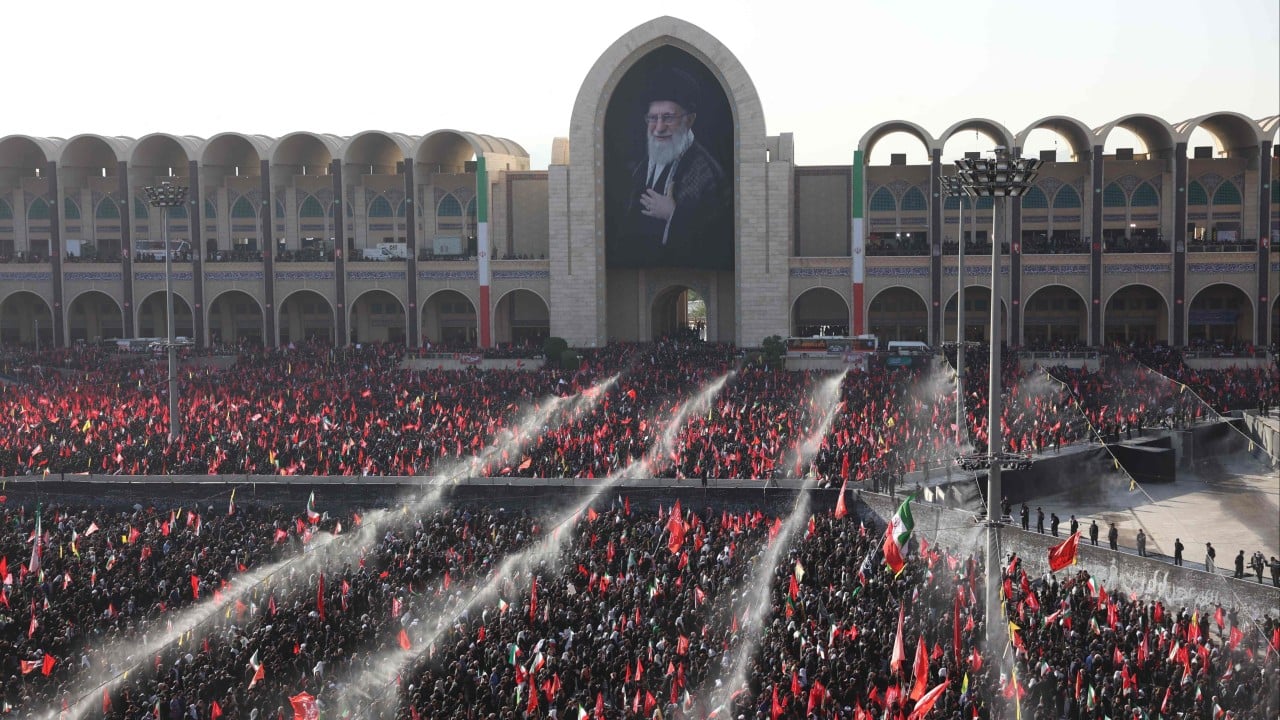
Hundreds of thousands of black-clad mourners packed the streets of Tehran on July 5, 2026, for the second day of Ayatollah Ali Khamenei’s massive, delayed funeral ceremonies. The air was thick with the scent of rosewater, sweat, and collective grief. Then a single voice boomed over the loudspeakers.
Mohammad Rasouli, a prominent state-sanctioned poet, took the stage at the Grand Mosalla mosque. He didn't just recite verses of mourning. He pivoted straight to geopolitics, asking the crowd a blunt question about U.S. President Donald Trump: “Why is the most bastard man in the world still alive?”
The crowd erupted into roaring cheers, followed by a second wave of applause when Rasouli proclaimed that the world is no longer a safe or good place for Trump.
On the surface, it looks like standard-issue Islamic Republic theater. But it isn't. If you look past the standard chants of “Death to America,” this moment reveals a massive, dangerous rift inside Iran's leadership. Tehran is currently trying to execute a high-stakes diplomatic tightrope walk. They're negotiating a permanent peace deal with Washington in Doha to end the devastating five-month war that has crippled global energy supplies and smashed Iran’s economy. Yet, at the exact same time, the regime is validating calls for the assassination of the American president.
Understanding this contradiction is the key to knowing where the Middle East goes from here. The Western world often misreads Iranian state rhetoric as mindless fanaticism. In reality, it’s a carefully calculated survival mechanism.
The Reality Behind the Five Month Funeral Delay
To understand why a poet is threatening Trump in July for an assassination that happened in February, you have to understand the sheer chaos of the 2026 West Asia War.
Ayatollah Ali Khamenei was killed at age 86 on February 28, 2026, during a devastating U.S.-led airstrike in the opening hours of the conflict. Under Islamic tradition, burials are supposed to happen almost immediately, usually within 24 hours. The regime broke that sacred rule. They had no choice. The war was raging too fiercely, bombs were falling on Tehran, and holding a mass gathering would have been a catastrophic security risk.
The body was preserved while Iran fought a brutal, asymmetric three-month war that cost them $270 billion in economic damage and pushed millions of their citizens into deep poverty. Only now, under a highly fragile, temporary ceasefire negotiated to allow the funeral proceedings to take place, has the regime been able to bring its people into the streets.
This isn't just a funeral. It’s an orchestrated political victory lap designed to show resilience. The regime is transporting the casket across three Iranian cities and two Shia holy sites in Iraq. They want to project absolute power to their domestic base and international enemies, signaling that despite losing their long-time supreme leader, the theocracy is stable and unbroken.
Why the Regime Uses Poets to Set Foreign Policy Tone
Western observers often focus on statements from the Iranian President, Masoud Pezeshkian, or the Foreign Ministry. That's a mistake. In the political hierarchy of the Islamic Republic, cultural figures like Mohammad Rasouli carry immense weight when communicating the core ideological positions of the state.
When Rasouli spoke over the loudspeakers, top officials were standing right there listening. The 97-year-old Shiite cleric Ayatollah Jafar Sobhani led the prayers. Khamenei’s powerful sons—Masoud, Meysam, and Mostafa—were in attendance. So were President Pezeshkian, Parliament Speaker Mohammad Bagher Qalibaf, and Revolutionary Guard head Gen. Ahmad Vahidi. Most importantly, Esmail Qaani, the chief of the elite Quds Force, was present.
None of them pulled Rasouli off the stage. None of them distanced themselves from his words.
By letting a poet make the direct call for Trump's death, the regime achieves two goals at once:
- Base Satisfaction: They satisfy the hardline elements of the Islamic Revolutionary Guard Corps (IRGC) who demand blood for the deaths of both Khamenei and Gen. Qassem Soleimani back in 2020.
- Plausible Deniability: They maintain just enough distance to keep the formal peace negotiations in Doha from collapsing instantly. If a diplomat said it, the talks would be over. Since a performer said it, it's dismissed as emotional prose at a funeral.
Trump's Public Disconnection and the Axios Flub
While Tehran was chanting for his death, Donald Trump was in Washington celebrating the 250th anniversary of the United States, bragging about the "tremendous success" of the American military.
But behind closed doors, Trump’s reaction to the funeral images showed a deep misunderstanding of how the Iranian public operates. In a phone interview with Axios, Trump admitted he was completely shocked to see hundreds of thousands of Iranians weeping openly for Khamenei. "I thought people hated him," Trump reportedly said.
He then doubled down on his signature bravado, claiming he could "eliminate everyone" attending the massive funeral, but noted he wouldn't do it because "there will be no one left to negotiate" if he wiped them out.
This comment highlights the volatile nature of the current ceasefire. Trump confirmed that both sides agreed to a total pause in hostilities specifically for the funeral. "Neither side will shoot the other during the funeral proceedings," he stated. Yet, his shock at the public display of grief shows that Washington still underestimates the symbolic power of martyrdom in Shia political culture. Khamenei in death is becoming a far more potent unifying symbol for the regime than he was during his final, controversial years in life.
The Succession of Mojtaba Khamenei and the Hardline Future
The real story dominating the sidelines of this funeral isn't just the rhetoric—it's the power transition. The death of the Supreme Leader has paved the way for his son, Ayatollah Mojtaba Khamenei, to take the reins of power.
Mojtaba has spent years operating in the shadows of Iran's intelligence and security apparatus. He has deep ties to the IRGC and the basij militia forces. His ascent means any hopes of a sudden, moderate shift in Iranian foreign policy are completely dead.
The regime is using the mass grief of the funeral to legitimize Mojtaba’s succession. They're framing the transition not as a monarchical inheritance, but as a continuation of the holy resistance against Western hegemony. This is why the aggressive rhetoric against Trump and Israeli Prime Minister Benjamin Netanyahu is being dialed up to a maximum. Mojtaba needs to prove his hardline credentials to the security forces to cement his position as the new ultimate authority.
What This Means for Global Energy and Peace Talks
If you're trying to figure out where this conflict goes next, don't look at the flags being burned in Tehran. Look at the shipping lanes in the Persian Gulf.
Iran’s economy is heavily battered, but they still hold a massive card: the Strait of Hormuz. Just days ago, Iranian state media pointedly reported on a foreign cargo ship running aground because it failed to use an Iran-approved route through the strait. It was a blatant reminder to the West that Tehran can shut down global oil shipping whenever it wants.
The permanent end to the war hinges entirely on whether Iran can leverage its geographic control of the strait to force the U.S. into lifting economic sanctions. The hardline rhetoric at the funeral is designed to show the U.S. negotiating team in Doha that Iran is not coming to the table out of weakness. They want Washington to think that if the talks fail, the Iranian public and military are entirely ready to resume total war.
How to Track the Post Funeral Fallout
The funeral ends soon, and the temporary ceasefire will expire shortly after. To stay ahead of how this volatile situation unfolds, you need to watch three specific indicators over the coming weeks:
- The Doha Joint Statements: Watch for any changes in tone from the Qatari mediators. If the U.S. or Iran starts skipping sessions, it means the hardline rhetoric at home has successfully poisoned the diplomatic well.
- U.S. Secret Service Security Posture: Federal authorities have been tracking real Iranian plots against Trump for years, mostly tied to the 2020 Soleimani killing. Watch for increased security footprints around Trump’s campaign events and residences, which will indicate if U.S. intelligence believes the funeral threats are transitioning into active operations.
- Strait of Hormuz Insurance Rates: Keep a close eye on maritime insurance premiums for oil tankers passing through the Gulf. If those rates spike, it means commercial markets are betting that the ceasefire will collapse and hostilities will break out again the moment the funeral banners are taken down.
The theatrical anger on display in Tehran isn't just noise. It’s a deliberate pressure tactic meant to alter the terms of a historic peace treaty, and the stakes couldn't possibly be higher.