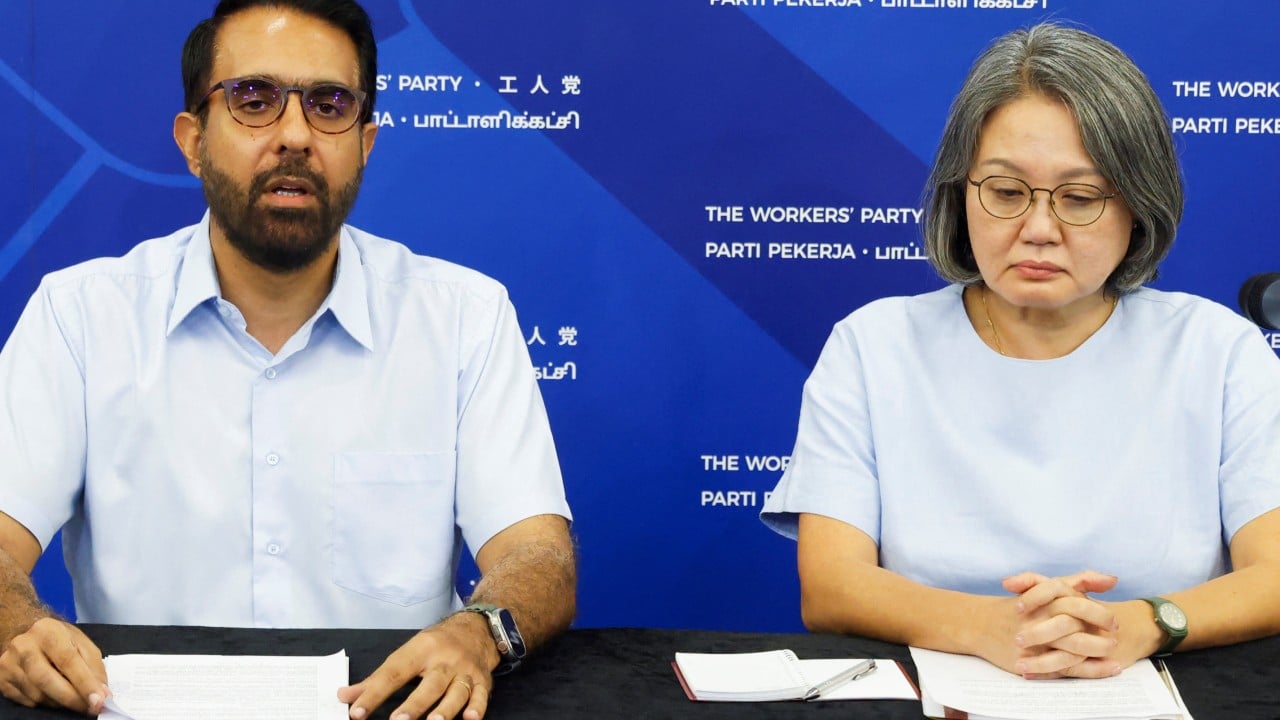
They got away with it. Legally speaking, at least.
Workers' Party chair Sylvia Lim and former Member of Parliament Faisal Manap will face no further parliamentary punishment for lying under oath during the infamous 2021 Raeesah Khan investigation. This stunning twist doesn't come from a lack of evidence. Leader of the House Indranee Rajah made it clear on July 7, 2026, that the High Court's recent judgments practically confirmed they were untruthful. Instead, they walked away clean because of a ticking clock. A strict legal statute of limitations inside parliamentary rules shut the door on any real penalties.
If you're following Singapore politics, this outcome feels deeply anti-climactic. The multi-year saga involving the top leadership of the country's main opposition party has dominated headlines, triggered criminal trials, and altered political careers. Yet, the final chapter for two of its main players ended not with a fiery debate or a hefty fine, but with a quiet nod to a legal technicality.
Understanding how this happened requires looking past the political rhetoric and inspecting the rigid mechanics of parliamentary privilege law. It's a lesson in how procedural fairness can sometimes tie the hands of the state.
The Technicality of Section 22 Explained Simply
The law in question is the Parliament (Privileges, Immunities and Powers) Act 1962, or PPIPA. Specifically, Section 22 of this Act dictates exactly when and how Parliament can punish someone for contempt or dishonourable conduct.
The rule is straightforward. Parliament can only punish offences that happened during its current session, its preceding session, or the final session of the immediately preceding Parliament. It creates a hard boundary. This boundary ensures that political grudges don't get dragged from one decade into the next without end.
Let's look at how the calendar worked against the prosecution here.
- August 2020: The 14th Parliament begins its first session.
- December 2021: Sylvia Lim and Faisal Manap give evidence to the Committee of Privileges (COP). This is when the alleged lying under oath occurred.
- March 2023: The first session of the 14th Parliament officially closes.
- April 2023: The second session of the 14th Parliament begins.
- April 2025: The 14th Parliament is dissolved for the General Election.
- Late 2025: The 2025 General Election takes place, ushering in the current 15th Parliament.
Because we're now sitting in the 15th Parliament, the law says lawmakers can only look back at offences from the second session of the 14th Parliament. The lying happened way back in the first session of that previous Parliament. The clock ran out. The 15th Parliament simply lacks the legal jurisdiction to issue fines, suspensions, or reprimands under the PPIPA for that specific period.
Indranee Rajah admitted openly that she would have pushed for real penalties if the calendar looked different. The law binds her hands. The rule of law means following the rules even when the state finds the outcome frustrating.
The Long Road from the Raeesah Khan Lie
This entire mess started with a single fabricated anecdote. Former Sengkang GRC MP Raeesah Khan stood up in Parliament in August 2021 and claimed police officers mishandled a sexual assault survivor. It was a complete lie. When she finally confessed to her party leaders, a secret meeting took place on August 8, 2021. What happened at that meeting became the core battleground of the entire controversy.
Raeesah Khan told the Committee of Privileges that WP chief Pritam Singh, along with Lim and Faisal, told her to take the lie to her grave. The three leaders strongly denied this under oath. In early 2022, the committee released its findings, declaring that all three senior leaders had been untruthful during their testimony.
However, the committee noted that Lim and Faisal played a secondary role compared to Pritam Singh. Parliament decided to hit pause on punishing them. They wanted to let the criminal justice system handle Singh first to avoid prejudice.
That choice to wait was fair, but it carried a massive tactical risk. Criminal trials take time. Singh was convicted by a district court in February 2025 and fined S$14,000 for lying to the committee. He fought back with an appeal, which the High Court didn't dismiss until December 4, 2025.
By the time the judicial machinery finished grinding away, the political landscape had completely reset. The 14th Parliament was gone. The general election had concluded.
Why Giving the Benefit of the Doubt Backfired for the PAP
Critics might argue the ruling People's Action Party (PAP) dropped the ball by waiting. Indranee Rajah defended the delay, noting it was done out of pure fairness to Lim and Faisal. If the courts had found Pritam Singh innocent, or uncovered evidence that cleared the other two leaders, Parliament would have looked incredibly foolish if it had already handed down punishments.
They gave the opposition politicians the benefit of the doubt. In doing so, they ran directly into the time bar.
Don't mistake this lack of punishment for an exoneration. The state's narrative is that the High Court trial conclusively proved Singh lied about that August meeting. Because Lim and Faisal backed Singh's version of events during their own testimonies, the government views their guilt as a logical certainty. The courts effectively confirmed the committee's original findings.
Sylvia Lim didn't take this sitting down. Rising to respond to the ministerial statement on July 7, she noted the recommendation but made sure to state she still disagrees with the committee's original conclusions. She argued court findings against Pritam Singh shouldn't automatically be used as a weapon against her and Faisal since they weren't the ones on trial in that specific criminal case.
It was a classic, sharp legal counter-move from Lim, who is a trained lawyer. She accepted the safety of the time bar while refusing to concede an inch on the moral argument.
The Post-Election Reality for the Workers' Party
The political fallout of this saga has already rewritten the fortunes of those involved. Faisal Manap is no longer in Parliament. In the 2025 General Election, he moved away from the WP stronghold of Aljunied GRC to contest Tampines GRC. He lost. The legal time bar keeps him safe from parliamentary fines, but voters already handed down their own judgment on his political career.
Pritam Singh faced a massive internal test. After his conviction, Prime Minister Lawrence Wong stripped him of his official title as Leader of the Opposition. The WP formally reprimanded Singh internally, but his position within the party remained rock solid. Just days before this parliamentary statement, on June 28, Singh survived a secret leadership vote, reclaiming his position as WP Secretary-General with a resounding supermajority from party cadres.
The opposition base has made its peace with the scandal. They see the entire affair as a heavy-handed attempt by the ruling party to legally decapitate the opposition leadership. For these voters, the technical escape of Lim and Faisal will be celebrated as a victory against political persecution.
For the government, it leaves a bitter taste. They established the facts, won the court cases, but lost the chance to issue the final penalties to the supporting actors of the drama.
Next Steps for Parliamentary Governance
This case exposes a glaring blind spot in how Singapore handles parliamentary contempt. If a criminal process takes years to complete, a rogue politician can easily escape parliamentary sanctions simply because an election cycle forces a reset of the legislative clock.
Expect to see calls to amend the PPIPA in the near future. Parliament will likely look into changing Section 22 to pause the time bar whenever a matter is officially referred to the courts or deferred by a formal resolution. Lawmakers hate loopholes that leave them powerless, especially when dealing with the integrity of statements made under oath.
For now, the book is closed. Parliament could theoretically pass a generic motion of regret to voice its disapproval, but the House decided its January motion regarding Pritam Singh already sent a loud enough message. No further action will be taken. The saga ends not with a bang, but with a ticking clock running out of batteries.