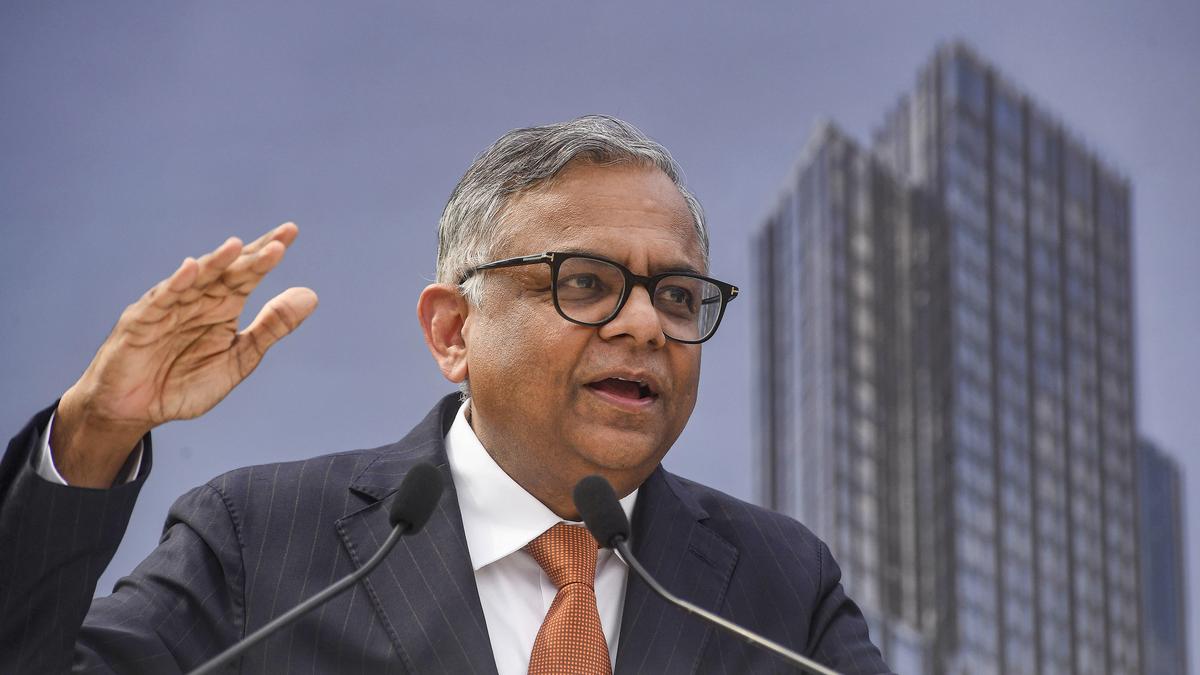
Recognizing cross-border corporate leadership isn't just about handing out shiny medals. It's about acknowledging massive economic footprints. Tata Sons Chairman N. Chandrasekaran just found out what happens when your enterprise employs over 70,000 people inside British borders.
King Charles III awarded him the prestigious Most Excellent Order of the British Empire (Civil Division). It is an honorary knighthood given for exceptional services to U.K.-India business relations.
If you look closely at how modern trade works between New Delhi and London, this honor makes total sense. Let's break down why this recognition matters right now.
The Scale of Tata's British Footprint
People forget how deeply integrated the Tata Group is within the British economy. We aren't just talking about casual exports or small retail storefronts. We are talking about heavy manufacturing, iconic automotive brands, and vital consumer goods.
When Chandrasekaran accepted the honor, he pointed straight to the numbers. The conglomerate owns household British staples like Tetley tea and Jaguar Land Rover. Keeping those industrial engines running requires immense diplomatic and corporate maneuvering.
- Over 70,000 workers employed across the U.K.
- Deep academic ties with institutions like Oxford, the London School of Economics, and Warwick.
- Spanning sectors from steel and chemicals to hospitality and cutting-edge tech.
Corporate Diplomacy Meets Industrial Reality
Running a massive multinational conglomerate means you spend half your time dealing with government relations. Chandrasekaran has spent years navigating policy shifts, supply chain crunches, and shifting economic landscapes in Europe.
Other heavyweights are scoring similar nods. Bharti Enterprises chief Sunil Mittal also picked up a honorary Knighthood (KBE) for boosting bilateral trade and telecom ties.
British authorities rely heavily on these executive bridges. Trade talks between nations stall easily without private sector backing. When business leaders manage massive workforces abroad, they essentially act as unofficial ambassadors.
What This Means for Future Trade
Diplomacy is changing. Governments want private capital to solve macro problems. By honoring industrial leaders who pump billions into local economies, London is signaling that foreign investment remains completely welcome, regardless of political shifts.
For the Tata Group, this validation protects existing investments and clears the path for future tech and green energy ventures. You don't get a civilian award of this caliber by accident. You get it by writing massive paychecks, funding local universities, and keeping factories humming when times get tough.
The relationship between British boardrooms and Indian ownership has evolved past old colonial dynamics into a modern partnership built entirely on mutual profit and scale. Chandrasekaran sits right at the center of that shift.
Keep an eye on how these industrial alliances shape upcoming trade pacts. The real work happens long after the cameras leave the investiture ceremony.