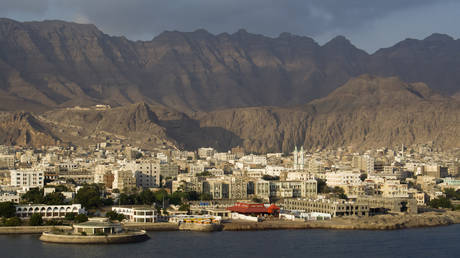
Can the Houthis actually walk into Aden and wipe out Yemen's last major government stronghold? Honestly, the map looks scarier than the reality on the ground. Yes, Ansar Allah forces have pushed along the Red Sea coast, reclaimed positions near the Bab el-Mandeb Strait after Saudi-backed troops pulled back in mid-November 2026, and put units roughly 60 to 100 kilometers outside Aden. Yet capturing a sprawling southern port city with more than 1.2 million residents isn't like rolling over an exposed coastal outpost or a desert checkpoint.
A lot of commentators treat Aden like the final domino waiting to tip. I see it differently. Taking and holding Aden requires solving geography, local politics, and supply logistics that have tripped up every force that tried it since 2015. Even after the Houthis briefly reached the presidential palace back in 2015, coalition airstrikes and local fighters pushed them back out—and today's southern terrain is even more fractured and heavily contested. If you enjoyed this post, you should look at: this related article.
How Close Are the Houthis to Yemen's Last Major Government Stronghold?
Proximity on a map doesn't automatically mean an imminent takeover. Following the collapse of the 2022 truce—which flared back into open war in July 2026 after strikes hit the runway at Sanaa airport and spiraled alongside the wider regional conflict involving Iran—the Houthis made sharp gains along the western coast. In September, they seized Mokha and several Red Sea islands, and after a brief back-and-forth, government-aligned forces withdrew from key areas around Bab el-Mandeb in mid-November, reportedly leaving the Houthis in control of places like Dhubab, Al Omari Base, and Kharaz military base.
Still, there's a big gap between capturing bases and taking a dense coastal city. According to military and security reporting cited by international outlets like Reuters and CFR's Global Conflict Tracker, fighting has raged across multiple fronts—from Taiz and Marib to Al-Bayda and Al-Jawf—rather than forming a single unstoppable wave aimed straight at Aden's gates. Presidential Leadership Council (PLC) forces under Chairman Rashad al-Alimi have launched counter-operations and reinforced western approaches, even as the government passed legislation designating the Houthis a terrorist organization. For another angle on this development, refer to the recent coverage from The Washington Post.
If you've followed conflict maps for years, you know a classic mistake people make: assuming a frontline arrow means a finished fight. Supply lines stretch thin fast when you push south into unfamiliar southern districts. Every extra kilometer from Sanaa or Hodeidah adds fuel burn, drone exposure, and ambush risk.
Why Encirclement Beats a Frontal Assault
Think about how the Houthis operate when they want maximum leverage without paying massive urban casualties. Storming street by street through Aden would invite heavy losses from entrenched local militias, coastal defenses, and Saudi air support—which already hit dozens of Houthi military targets across four governorates in mid-November.
Political scientist Karim Sader and security analyst Ali Al Shaabani have pointed to a much nastier playbook: squeezing the city instead of rushing straight into a meat grinder. You don't necessarily have to hoist a flag over every neighborhood to cripple a government seat. Surrounding approaches, cutting land arteries, and threatening vessels heading toward the harbor can choke off imports, spike prices, and turn the city into a pressure cooker—much like what civilians in Taiz have endured under blockade conditions.
What Makes Aden So Hard to Hold—and Why It Matters Globally
Aden isn't just another provincial town. Sitting roughly 170 kilometers east of Bab el-Mandeb where the Red Sea meets the Gulf of Aden, it has served as the temporary headquarters of Yemen's internationally recognized government since Sanaa fell in 2014. It's also a vital lifeline for food, fuel, and humanitarian aid entering a country where UNICEF has warned that over 330,000 people—including 174,000 children—have been displaced by the renewed fighting.
Here's the catch that often gets glossed over in quick news summaries. The anti-Houthi camp isn't a neat, unified army. Saudi Arabia backs the internationally recognized government and the PLC, while the United Arab Emirates has supported southern separatist forces pushing for southern autonomy or independence, and tensions between Riyadh and Abu Dhabi have spilled into rival Yemeni factions earlier in 2026.
That split cuts two ways. On one hand, bickering between backers weakens coordination and lets the Houthis exploit gaps along the coast and inland fronts. On the other hand, southern Yemeni fighters have deep local roots in the south that northern Houthi forces simply don't have. Holding down a restive port city surrounded by hostile or ambivalent local populations is way harder than winning a maneuver clash on a highway.
The Ripple Effect in the Red Sea and Riyadh
What happens around Aden doesn't stay in Yemen. With shipping through the Strait of Hormuz already hammered by the broader regional war involving Iran, Bab el-Mandeb has become even more crucial—especially as Gulf producers lean harder on Red Sea export routes. Even before the mid-November coastal shifts, maritime data from Lloyd's List Intelligence showed October vessel transits through Bab el-Mandeb were still 46% below pre-crisis levels, while Windward tracked a weekend dip in crossings in mid-November.
Meanwhile, the tit-for-tat escalation has hit Saudi territory directly. Following strikes on Saudi infrastructure and energy-linked sites in November—including damage to Riyadh's 385-meter PIF Tower and an Aramco building—Riyadh replaced its Yemen coalition commander and stepped up airstrikes. Yet airpower alone hasn't given the coalition a clean off-ramp or stopped the Houthis from projecting reach with drones and missiles.
What Could Go Wrong Next—and Where Experts Disagree
Let's be candid about what we don't know. Frontline claims in Yemen are notoriously noisy. Every side inflates enemy casualties, downplays its own losses, and spins tactical withdrawals as "redeployments." Satellite imagery and independent reporting help verify big terrain shifts, like earthen berms or coastal base handovers, but day-to-day control in contested districts shifts fast.
There's also real debate among analysts over whether the Houthis' main goal is occupying Aden outright or maximizing bargaining chips. Some observers worry a push toward Aden could create a dangerous Houthi footprint overlooking the Gulf of Aden and the Horn of Africa corridor. Others argue the Houthis have plenty on their plate holding northern highlands, managing economic strain, fighting in Marib and Taiz, and trading blows with Saudi Arabia and regional adversaries.
From a practical standpoint, if you're tracking this crisis for business, policy, or risk planning, don't wait for a dramatic headline about "Aden falling" to react. Watch three concrete signals instead:
- Coastal logistics around Bab el-Mandeb: Track whether the Houthis can consolidate heavy weapons and coastal surveillance around Mokha, Dhubab, and nearby heights without being pushed back by PLC or coalition counter-strikes.
- Southern unity versus division: Pay attention to whether PLC forces and southern factions coordinate defense lines west and north of Aden or fracture under pressure.
- Shipping insurance and rerouting: Monitor maritime advisories and war-risk insurance premiums for the Red Sea and Gulf of Aden—carriers often reprice risk or detour around the Cape of Good Hope long before a port is formally besieged.