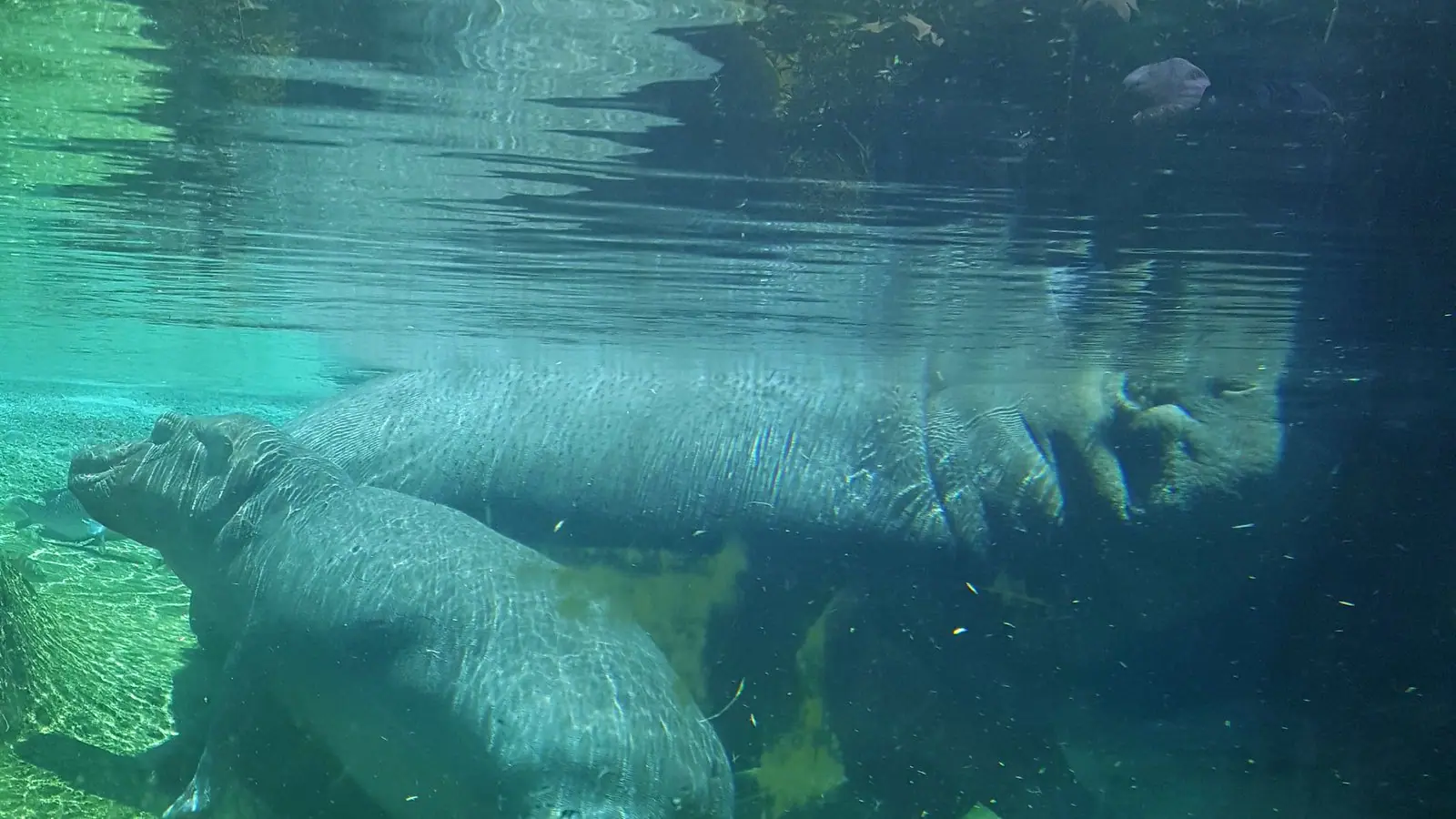
A single knitted hat, launched by a ceiling fan through a narrow gap above a viewing window, ended the life of the most famous hippo on earth.
On November 19, 2026, the Cincinnati Zoo & Botanical Garden announced that Fiona had died, roughly a week and a half after she swallowed the cap. She was nine years old, just weeks shy of her tenth birthday in January. If you grew up watching viral clips of a tiny, wobbly Nile hippopotamus learning to swim and gum her keepers' legs back in 2017, this news hits like a punch to the gut. Honestly, it feels unreal that an animal weighing well over a ton—an animal that survived being born six weeks premature—could be brought down by something you wear on your head in November.
Here is the blunt truth that makes this tragedy even harder to swallow: big size does not equal a forgiving digestive tract. When a knitted hat enters a hippo's gut, it doesn't just sit there harmlessly. It traps moisture, bunches up, and turns into a nightmare that veterinarians cannot simply cut out.
How a freak ceiling fan accident turned into a fatal medical emergency
According to the Cincinnati Zoo & Botanical Garden and news reports from the Associated Press, PBS NewsHour, and The Guardian, the hat didn't get into Fiona's habitat because someone leaned over a railing and heaved it at her. A visitor tossed a hat into the air near the viewing area. It caught on a ceiling fan and got catapulted through a small opening above the viewing windows into her enclosure.
Zoo spokesperson Michelle Curley called it a clear accident, noting that staff probably couldn't replicate the trajectory if they tried. For a brief window after swallowing the hat, Fiona showed no obvious signs of trouble. That early calm is actually pretty typical with foreign-body ingestions in large herbivores—things look normal right up until a partial obstruction becomes a full-blown crisis.
Days later, her appetite dropped. What started as a bizarre fluke turned into round-the-clock veterinary care. Keepers tried to push things along by adjusting her diet and keeping her closely hydrated, while vets monitored how her gut was handling the object.
Why vets could not just operate on fiona the hippo
A lot of people reading the headlines asked the same question: Why didn't they just do surgery to pull it out?
Fair question. If a dog swallows a sock, a vet opens up the abdomen, removes the fabric, and sews the dog back up. With a full-grown hippo, that playbook doesn't work.
Mike Wenninger, the Cincinnati Zoo's director of animal health, explained ahead of Fiona's death that specialists advised surgery wasn't an option for adult hippos. Think about the sheer scale and anatomy involved. A mature Nile hippo carries massive muscle mass, thick skin, and a heavy gastrointestinal tract suspended inside a deep ribcage and pelvis. Reaching deep intestinal loops safely, keeping an animal that size stable under anesthesia for a complex abdominal operation, and managing post-op healing without her tearing stitches or developing fatal complications carries enormous risk.
Instead, the veterinary team had to rely on non-surgical and diagnostic measures:
- Sedation and imaging: Vets sedated Fiona twice to evaluate her condition, with an ultrasound showing bunching in her intestines as her body tried to move the blockage forward.
- Endoscopic exploration: Staff used a nine-foot scope during a colonoscopy attempt to check what was going on, though they couldn't locate the object that way.
- Creative physical support: The zoo even borrowed a vibration plate from a horse farm, encouraging Fiona to stand on it multiple times a day so gentle vibration might help move material along her digestive tract.
- Comfort and monitoring: Keepers tracked her hydration, offered supportive care, and even let her sniff coffee—a scent she liked—to see her respond.
None of it was enough. Zoo director Dave Jenike said the animal care team fought hard and did everything possible, but her body couldn't overcome the obstruction.
Knitted fabric is far worse than people realize
If you haven't worked with large animals or livestock medicine, a knitted hat sounds mild compared to metal, rocks, or hard plastic. In reality, soft textiles and fibrous materials are notorious troublemakers in animal digestive systems.
Knitwear is flexible and stretchy. As it moves through a long, winding digestive tract, it can bunch, fold, and twist rather than pass smoothly. When yarn or knit fibers catch on intestinal walls or get compressed by muscular contractions, you get what vets call plication or bunching—where the gut gathers like an accordion around the obstruction. Once blood flow to pinched tissue is compromised or passage stops completely, systemic decline can move fast.
And this isn't an isolated zoo problem. Zoo professionals have long warned about items dropped or tossed near enclosures. For instance, The Guardian noted past fatal ingestion cases in zoos, including a polar bear in Germany in 2014 after swallowing a dropped jacket and a rare antelope in Tennessee two years earlier that choked on a plastic cap from a snack pouch. One stray item can undo years of expert care.
From six weeks premature to a symbol of Cincinnati
To understand why Cincinnati reacted with shock—leaving flowers and notes by a hippo statue outside the gates within an hour of the announcement—you have to remember how Fiona entered the world.
Born in January 2017, six weeks early, she was the first Nile hippo born at the Cincinnati Zoo in 75 years. She weighed around 29 pounds at birth, struggled to stand on her own, and needed around-the-clock care, bottle-feeding, and help learning to swim in pools. Keepers practically lived alongside her through those early weeks.
Millions of people followed her recovery online. Her spunky personality, her bond with her keepers, and her sheer grit turned her into more than a local attraction. Later, in August 2022, she became a big sister when her brother Fritz was born at the zoo. Ohio Governor Mike DeWine called her a true icon, Cincinnati Mayor Aftab Pureval remembered her as a symbol of perseverance and joy, and local teams like the Reds and Bengals paid tribute.
There's a real sadness here that goes beyond celebrity animal culture. Fiona represented resilience when things looked bleak. Losing her to something so preventable—a freak bounce off a ceiling fan—feels maddening.
What zoo visitors and institutions actually need to do next
Blaming a single person for a bizarre bounce off a ceiling fan misses the bigger practical takeaway. Accidents happen in crowded public spaces, especially when kids are excited, tired, or fidgeting near glass and railings. What matters now is turning grief into sharper habits and smarter design.
If you're visiting any zoo, aquarium, or wildlife park soon, take these steps seriously:
- Keep loose gear secured near habitats. Put hats, sunglasses, phones, toys, and snack pouches in a zippered bag or pocket before stepping up to viewing areas—don't toss items in the air or rest them on ledges.
- Watch kids closely around vents, gaps, and overhead fixtures. Kids don't think about ricochets or airflow openings; keep an eye on small gaps above glass, mesh, or barriers where lightweight objects can slip through.
- Report dropped items immediately. If anything—even something small like a cap, toy, or wrapper—falls or gets launched toward an animal area, tell a keeper or staff member right away instead of walking off.
For zoos and facility managers, incidents like this are a wake-up call to audit every architectural gap, ceiling fan placement, and viewing-area baffle around animal habitats. Even a one-in-a-million trajectory becomes a real hazard if an opening exists above the glass.
Fiona's story started with an uphill battle and ended with a heartbreaking twist, yet the standard she set for survival—and the care her team poured into her for nearly a decade—stays part of the record. Check your pockets before you step up to the glass, speak up if something slips, and treat every barrier as a boundary that protects the animals on the other side.