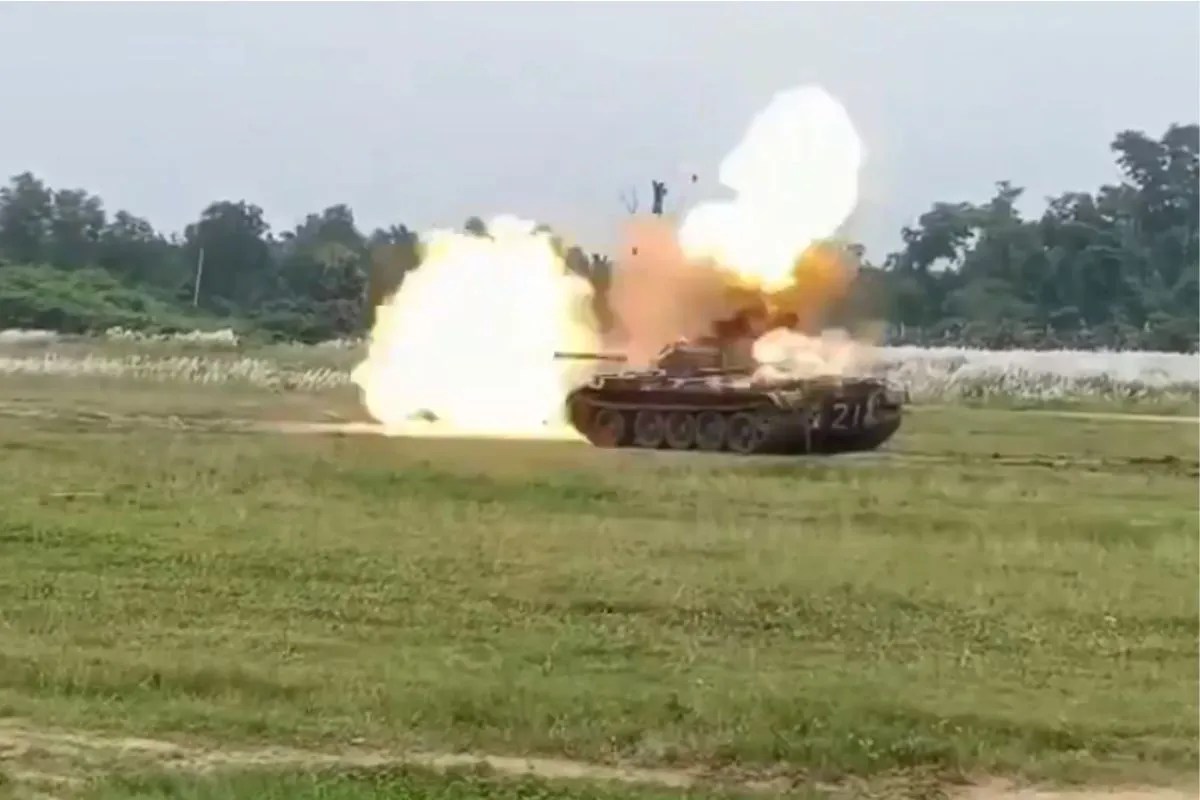
Big battleships and massive tank fleets look great on military parades. They also make terrible investments when you are facing a superpower neighbor determined to absorb you. Taiwan has finally accepted this reality, shifting hard toward asymmetric warfare to deter Beijing before any shooting even starts.
Senior U.S. diplomats and defense officials recently highlighted how Taipei is absorbing brutal lessons from active conflicts around the globe. Instead of trying to match the People's Liberation Army dollar for dollar or ship for ship, Taiwan is investing in smaller, highly mobile, and lethal systems. Think coastal defense cruise missiles, smart maritime mines, and drone swarms.
If you want to understand modern deterrence, look past the aircraft carriers. Look at the hardware that makes an amphibious invasion a logistical nightmare.
The Philosophy Behind Porcupine Defense
Military theorists call it the porcupine strategy. The idea is simple. You make yourself so painful to swallow that any predator thinks twice before taking a bite.
For decades, Taiwan bought traditional heavy platforms. Fighter jets and diesel submarines carry immense prestige, but they are vulnerable to pre-emptive missile strikes parked just across the Taiwan Strait. A modern rocket artillery battery hidden in a dense urban mountain tunnel is a completely different problem for an aggressor.
Beijing commands overwhelming superiority in raw numbers. Ships, planes, and personnel vastly outnumber Taiwan's forces. But hardware statistics matter less when you are fighting on your own heavily fortified home turf.
Senior American diplomatic channels note that Taipei's current procurement focus relies heavily on survivability. Mobile High Mobility Artillery Rocket Systems, known as HIMARS, and portable anti-armor munitions give decentralized units the power to fight back even if command centers take initial hits.
Learning From Global Conflict Zones
Modern combat in Eastern Europe and the Middle East completely changed how military strategists view conventional power. Cheap commercial drones and software-driven targeting systems are destroying multi-million-dollar armor with ease.
Taiwan's defense planners are watching these developments closely. They know that electronic warfare, satellite tracking, and rapid communication networks decide modern outcomes long before infantry forces engage.
You cannot afford to build a static defense line. Everything must move, hide, and strike back instantly.
Buying expensive equipment is only half the battle. Training regular forces and reservists to operate decentralized networks requires a cultural shift in military command structures. Historically, rigid hierarchies slowed down tactical adjustments. Today, junior officers need the autonomy to make split-second decisions when communication links fail.
What Washington and Taipei Get Right Together
The relationship between Washington and Taipei remains the anchor of regional stability. U.S. law requires the provision of defensive arms, and congressional support for Taiwan stays remarkably bipartisan despite shifting political winds in Washington.
Critics often argue about delivery timelines or weapon prioritization. Bureaucratic backlogs in defense manufacturing sometimes delay hardware arrival. Yet, the strategic intent remains clear. The United States expects Taiwan to pull its own weight, and Taipei is actively answering that call.
Taiwanese leadership has repeatedly stated they aren't waiting for foreign rescue fleets to magically appear over the horizon. Self-reliance is the baseline requirement for survival.
Buying American defense hardware provides the necessary tech edge, but the political will to fight and adapt remains entirely local.
Shifting Realities in the Taiwan Strait
Every single day, Chinese military aircraft and warships cross median lines or patrol close to Taiwanese airspace. This psychological pressure aims to exhaust defensive readiness and wear down public morale.
Instead of panicking, Taiwan's military treats these daily incursions as live training data. Every radar track and electronic signature gets analyzed.
The deterrence equation relies on uncertainty. If Beijing calculates that an invasion will succeed swiftly and cleanly, conflict becomes more likely. If Beijing calculates that an assault will trigger catastrophic economic ruin, massive military losses, and a protracted insurgency, the calculus changes entirely.
Asymmetric strategies are designed precisely to alter that math. Make the cost too high to bear. Protect your infrastructure. Decentralize your forces. Keep your adversaries guessing about where the next counter-strike originates.
Stop looking at the raw size of opposing armies. Pay attention to how effectively a smaller force can deny the enemy what they want. That is how deterrence works today.